
Latest articles by Joe Rao

The annual Lyrid meteor shower peaks overnight on April 21-22, but unfortunately a bright moon will make it difficult to spot any 'shooting stars' this year.

All you'll need to see comet 12P/Pons-Brooks this month, besides fair weather and a little luck, are good binoculars or a telescope and sky map to help guide you.

Jupiter and a slim crescent moon are the stand-out night sky sight in the evening sky right now.

What does the weather look like for the April 8 total solar eclipse? Here we take a look at the national weather forecast to find out.
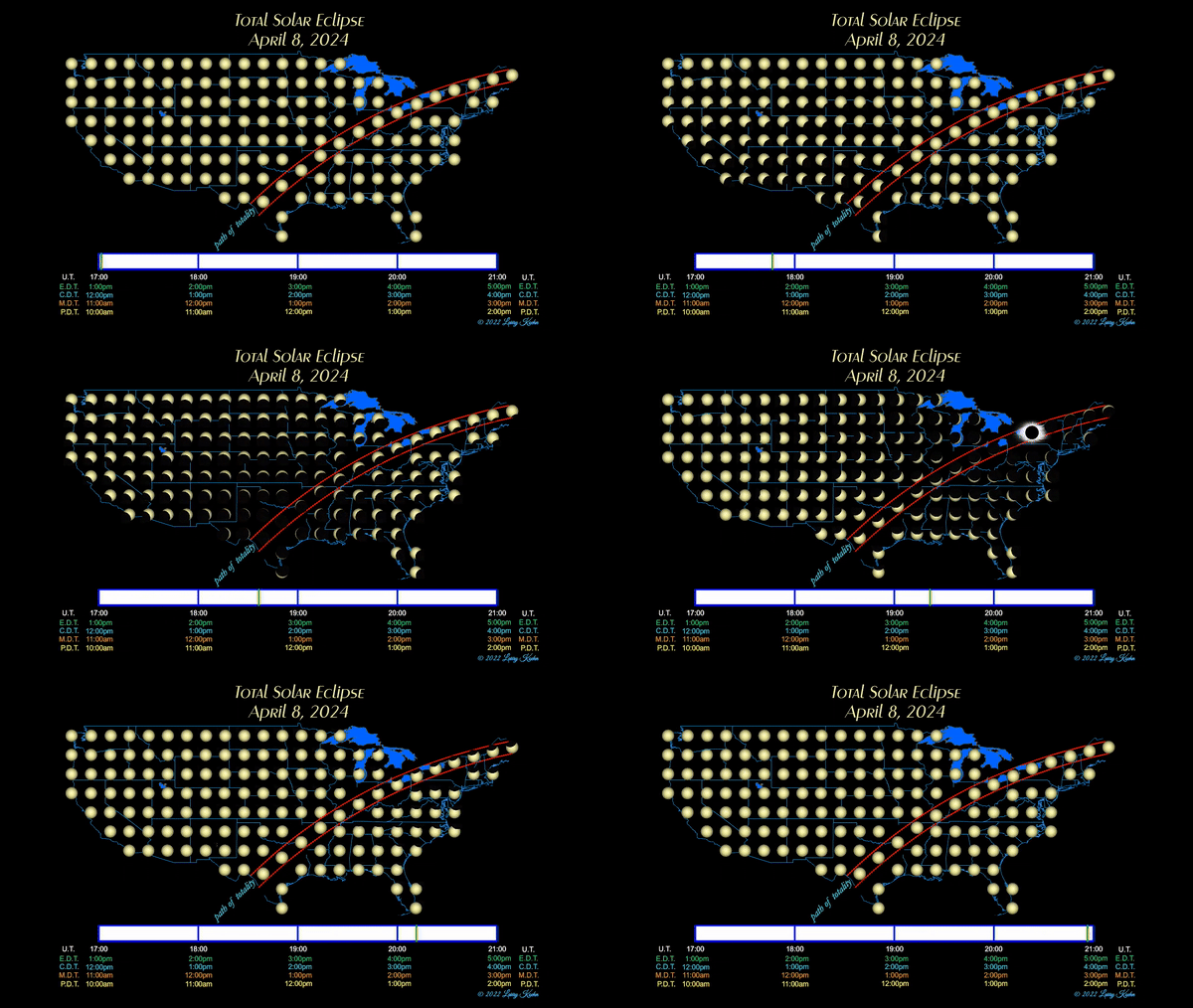
On April 8, 2024, if the weather is fair, you should have no difficulty observing a partial eclipse of the sun from much of North America - even outside the path of totality.

Here's why clouds might not be a big issue for the total solar eclipse on April 8 and what you can see if they decide to make an appearance.

When the total solar eclipse travels across North America on April 8, the skies will darken. Here's what to look for during totality.

We explore how eclipses repeat and what it takes to earn a 'black belt' in eclipse chasing, according to our skywatching columnist Joe Rao.

Two weeks before the total solar eclipse, during the overnight hours of March 24 - 25, it will be the moon's turn to undergo an eclipse.

Everyone is hoping for clear skies for the solar eclipse on April 8. Here we look at past examples of when this didn't work out and how to increase your chances of good eclipse weather.

As we prepare for the upcoming solar eclipse on April 8, we take a look at some famous incidents of viewing total eclipses near the edge of totality.

As the solar eclipse approaches, we take a look at some alternative methods of viewing the eclipse.

On March 19, the vernal equinox will see spring come to the Northern Hemisphere as the sun reaches the spot where the ecliptic and celestial equator cross each other.

For those in the Northern Hemisphere, we're in the midst of a fine "window of opportunity" for viewing Mercury in the evening sky throughout March.

A waxing crescent moon and the solar system's largest planet Jupiter will meet up in the night sky on Wednesday, March 13.
A total solar eclipse is the greatest show on Earth. Here's what to look for on April 8 to ensure you make the most of the total solar eclipse 2024.

Here we break down the entire chronology of the upcoming total solar eclipse on April 8, beginning one month out.

Thursday is Feb. 29 — the bissextle or "leap day," an artifact that dates back to the year 46 B.C. Find out how this calendar oddity came to be.

The "Great North American Solar Eclipse" of April 8, 2024 will last longer and be more visible than any other total solar eclipses over the past century.

Shadow bands may be the most unusual of the eerie phenomena that can accompany a solar eclipse. Here's what we do and don't know about them.

On Monday, Jan. 8, the waning crescent moon will occult the 1st-magnitude red supergiant star Antares, one of the brightest stars in the sky.

Early each January, the Quadrantid meteor stream provides one of the most intense annual meteor displays, but unfortunately, there's a stumbling block this year in the form of the moon

This guide to the planets in our solar system will show you what to look out for in the sky in 2024.

