Jupiter (WFC3/UVIS, April 21, 2014)

Jupiter's Great Red Spot — the most powerful storm in the solar system — is an planetary icon. See photos of the giant storm, which has been shrinking over time, in our full gallery here. This image was released May 15, 2014, which scientists first announced that the Great Red Spot was shrinking. [See full story.]
This gallery, first posted in October 2014, was updated with new images on May 22, 2018.
Juno View of Jupiter and Great Red Spot

NASA's Juno spacecraft captured this image of Jupiter on April 1, 2018. Citizen-scientists Gerald Eichstädt and Seán Doran processed data from Juno's JunoCam instrument into this stunning view.
Jupiter's Great Red Spot vs. Earth

An illustration comparing the size of Jupiter's Great Red Spot to that of Earth. While the reddish-hued storm is massive, it was once much larger. According to observations taken in the 1800s, the Great Red Spot was once about four times the diameter of Earth.
Jupiter's Great Red Spot, 1992 to 2017
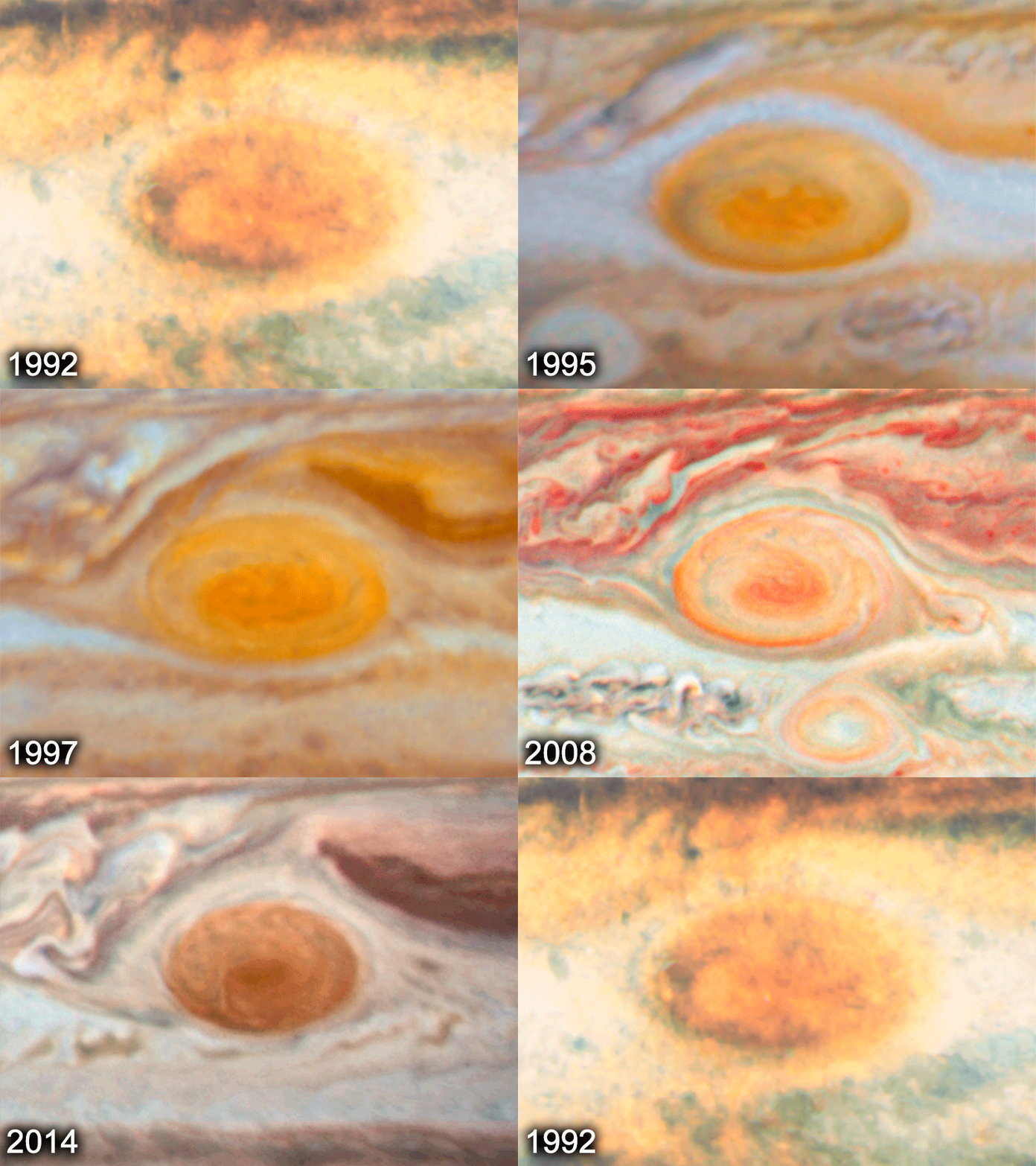
Animation showing Hubble Space Telescope observations of Jupiter's Great Red Spot from 1992 through 2017.
Jupiter's Great Red Spot as Seen by Voyager

Close-up of Jupiter's Great Red Spot as seen by a Voyager spacecraft.
Cassini View of Jupiter's Great Red Spot

Jupiter's famous Great Red Spot features prominently in this true-color mosaic, which was constructed from images taken by NASA's Cassini spacecraft on Dec. 29, 2000, during its closest approach to the giant planet at a distance of approximately 6.2 million miles (10 million kilometers). At the time, Cassini was on its way to Saturn, which the probe reached on July 1, 2004.
Juno View of Jupiter’s Great Red Spot

This true-color image shows what Jupiter’s Great Red Spot would look like to a human observer from the position of NASA’s Juno Jupiter orbiter. Citizen scientist Björn Jónsson created the photo using data from Juno’s JunoCam imager.
Jupiter's Great Red Spot in layers

Juno's microwave radiometer instrument provided this look down into Jupiter's Great Red Spot. Each of the instrument's six channels detects microwaves from a different depth within the planet.
Jupiter's Great Red Spot

Citizen scientists Gerald Eichstädt and Seán Doran processed this image of Jupiter's Great Red Spot using data gathered by NASA's Juno spacecraft on April 1, 2018.
Jupiter's Great Red Spot Shrinking

The new image of Jupiter, captured by the Hubble Space Telescope, reveals that the shrinking of the Great Red Spot is slowing, as well as identifying a rare feature. The image, released on Oct. 13, 2015, was captured on Jan. 19.
JunoCam Great Red Spot 2

This enhanced-color image of Jupiter's Great Red Spot was created by citizen scientist Jason Major using data from the JunoCam imager on NASA's Juno spacecraft.