

• TechMediaNetwork
  • LiveScience
  • SPACE.com
  • Newsarama
  • TopTenREVIEWS
advertisement


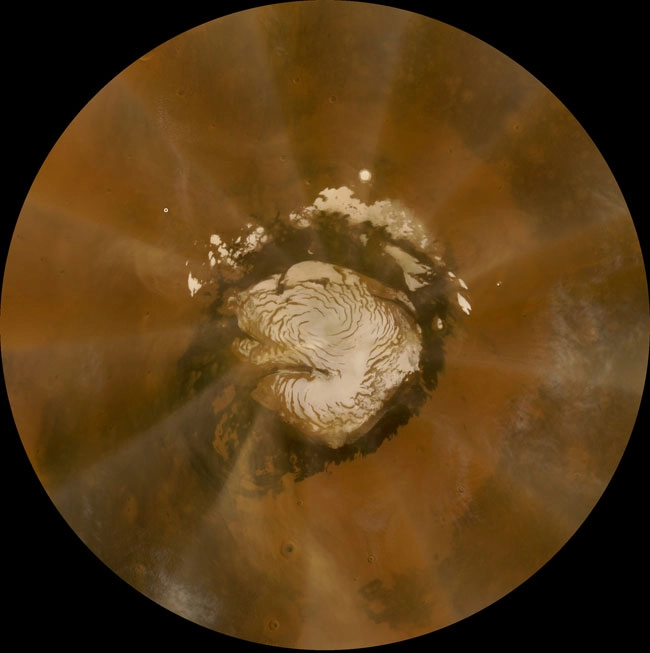
Captured in this image taken from orbit by the Mars Reconnaissance Orbiter's Mars Color Imager (MARCI) is a 37,000 square-kilometer (almost 14,300 square miles) dust storm that moved counter-clockwise through the Phoenix landing site on Oct 11, 2008, or Sol 135 of the mission. Viewing this image as if it were the face of a clock, Phoenix is a shown as a small white dot, located at about 10 o'clock. The storm, which had already passed over the landing site earlier in the day, is located at about 9:30 AM. Credit: NASA/JPL-Caltech/Malin Space Science Systems
Phoenix Lander Scoops Dirt from Under Martian Rock
Frozen Death Looms for Phoenix Mars Lander
Listening In: Lander to Record Mars Sounds
Snowfall Seen on Mars
Video: Looking for Life in All the Right Places
NASA scientists pick spots to search for signs of extraterrestrial life. Credit: NASA/JPL-CalTech
Very Short Movie: The Clouds of Mars
A series of still images taken by the Phoenix Mars Lander of water-ice clouds sailing overhead on the red planet was turned into a short animation by NASA mission scientists.
Video: Phoenix Speaks!
Europe's Mars Express orbiter recorded this audio signal from the Phoenix lander during its May 25, 2008 landing in the Martian arctic. Credit: ESA/NASA/JPL/Univ of Arizona/Texas A&M

Europe to Delay Mars Rover Mission
By Peter B. de Selding
Space News Staff Writer
posted: 17 October 2008
02:11 pm ET

PARIS — European Space Agency (ESA) governments tentatively have agreed to delay the launch of Europe's first-ever Mars rover by a little more than two years, to 2016, as part of a broader effort to rein in project costs and seek deeper cooperation with NASA and the Russian space agency, European government officials said.

The decision, made at an Oct. 15-16 meeting of ESA member governments at the agency's headquarters here, remains fragile because some governments still are resisting the price tag of the Enhanced ExoMars mission: 1 billion euros ($1.34 billion), not including the 23 instruments to be paid for by various national laboratories.

ESA had received informal estimates from Enhanced ExoMars prime contractor Thales Alenia Space-Italy that the upgraded ExoMars project demanded by scientists would cost about 1.2 billion euros for a launch in late 2013.

Several governments, including Italy, balked at the price and said they would not participate at the expected level in the program.

Seeking to find a compromise in time for a Nov. 25-26 meeting of ESA government ministers, who will issue a formal yes-or-no decision on the mission, ESA proposed that the launch slip to early 2016, and that the ESA-funded budget be capped at 1 billion euros.

Agency officials already had said the 2013 date would be difficult to meet. Fixing the later date will permit project managers to run Enhanced ExoMars less like a crash program, where costs are often under pressure. It also gives them more time to reach formal agreements with NASA and the Russian space agency, Roskosmos, on possible contributions to the rover payload and other mission elements.


All Hazards Alert Monitor with Cradle
$39.00
Explore More


Site Map | News | SpaceFlight | Science | Technology | Entertainment | SpaceViews | NightSky | Ad Astra | SETI | Hot Topics
Image Galleries | Videos | Reader Favorites | Image of the Day | Amazing Images | Wallpapers | Games | Community | Reviews
about us | FREE Email Newsletter | message boards | register at SPACE.com | contact us | advertise with us | terms & conditions | privacy statement
DMCA/Copyright
  What is This?