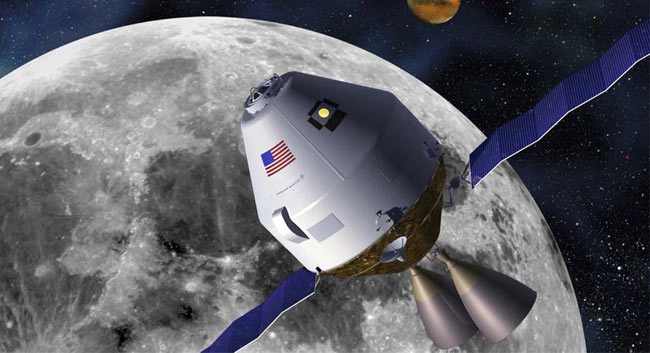
Lockheed Martin says it would bring1,200 jobs to the Houston area if NASA selects the company to build the Crew ExplorationVehicle (CEV).
John Karas, Lockheed's vicepresident for space exploration, made the announcement March 24 at theUniversity of Houston-Clearlake before an audience of state and localofficials, including U.S. Rep. Sheila Jackson Lee (D-Texas).
Lockheed Martin submitted its final CEVproposal to NASA last week. The firm is competing against a NorthropGrumman and its teammate Boeing for a contract valued at billions ofdollars to help NASA design and build an Apollo-likecapsule that would be used to transport astronauts to the internationalspace station starting around 2014. The CEV would also be used in combinationwith other systems to transportastronauts to the Moon starting around 2018.

Karas said the 1,200 mostlyengineering jobs would represent about half of the Lockheed Martin team's CEVworkforce.
Lockheed Martin currently has about800 employees in Houston spread across several NASA engineering supportcontracts.
"We are following the vein that weare going to do our CEV program with NASA side by side at the human spaceflight centers and help the transition from shuttle and station to CEV," Karassaid in an interview.
NASA's Johnson Space Center inHouston is managing the CEV program. Karas said the Lockheed jobs would bespread between the center itself and contractor facilities in the immediatevicinity.
Lockheed Martin announcedin late February that it would perform final assembly and checkout of the CEVin Florida, using facilities a Kennedy Space Center that would be improved withthe aid of statefunding. A Lockheed win on CEV would mean 400 to 500 new jobs for Florida,Karas said in an interview.
About 300 to 400 jobs also would becreated at Lockheed Martin Space Systems' Denver base of operations if thecompany wins the CEV competition, Karas said.
Texas, like Florida, has offeredfinancial incentives to lure the CEV jobs to the state.
Karas declined to quantify thedollar value of the Texas incentive package, but said they were significant andwould help pay for worker training, infrastructure and facility improvements neededfor the CEV program.
Northrop Grumman so far has notannounced where it would locate its CEV workforce should it win thecompetition.
Brooks McKinney, a spokesman forNorthrop Grumman Integrated Systems in El Segundo, Calif., said that thecompany has provided its workforce plan to NASA as part of it CEV proposal butwould not be discussing job locations publicly until summer.