Thisstory was updated at 5:45 p.m. EST.
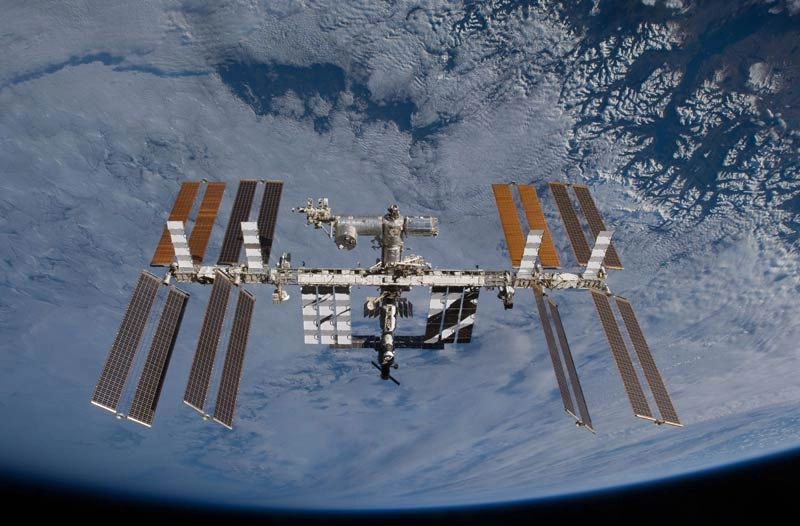
A tinypiece of a defunct Russian satellite zipped by the International SpaceStation Tuesday, but was far enough away that outpost?s two-man crew did nothave to strap into their lifeboat to wait out the close shave, NASA officialssaid.
Thedebris - a small piece of a Cosmos satellite less than four inches (10 cm)wide - zoomed by the station at 1:19 p.m. EST (1819 GMT) and came less than amile (1 km) of the outpost at its closest point.
?Updatesshowed that it would not come close enough to the space station to require anychange in the processes onboard or require precautionary measures,? said NASA spokespersonKylie Clem.
NASAdetected the object too late to move the space station clear of the incomingspace trash by firing its thrusters.
Instead,NASA told the station?s American commander Jeffrey Williams and Russian flightengineer Maxim Suraev that they might have to wake up during their sleep periodand take refuge in their Soyuz spacecraft. The Russian-built Soyuz vehiclesferry crews to and from the station, and also serve as lifeboats in caseastronauts must leave the orbiting laboratory in an emergency.
Butadditional analysis of the object?s trajectory found that, despite its closepass, the satellite remnant posed no danger of hitting the space station. NASAtypically moves the space station if there is a 1-in-10,000 chance of an objectstriking the $100billion orbiting laboratory.
Tuesday?sspace debris event marked the third time in less than a week that stationmanagers kept a watchful eye on debris near the space station. An old piece ofan American rocket flewby the station Saturday and part of a defunct experiment payload buzzed theoutpost on Monday. Neither of those objects posed a threat to the station -they were several kilometers away - but NASA tracked them anyway to be sure.
MissionControl receives multiple space debris alerts every month for the spacestation, but most times the orbital junk passes well clear of the orbitinglaboratory, NASA spokesperson Kelly Humphries told SPACE.com. While there havebeen some recent spikes in debris events near the space station, the overall long-term outlook is stable, he said.
NASA worksto maintain a clear safety perimeter that extends 15 miles (25 km) around thespace station, as well as about a half-mile (0.75 km) above and below it. Theorbiting laboratory flies about 220 miles (354 km) above Earth at a speed ofabout 17,500 mph (28,163 kph).
Williamsand Suraev are the only residents aboard the space station after a series ofplanned spacecraft departures cut the outpost?s crew size by two-thirds.
Threemembers of the station?s six-person crew landedearlier today on the frigid steppes of Kazakhstan to end their months-longspace mission. Another crewmember returned home last week on NASA?s spaceshuttle Atlantis.
Williamsand Suraev will watch over the space station by themselves until late December,when a new Russian Soyuz will ferry three more crewmembers to the orbiting laband boost its population back up to five people.
- U.S. 'Decades Behind' on Space Debris Threat, Official Says
- SPACE.com Video Show - Inside the International Space Station
- Video - The Expanding Danger of Space Junk