


This story was updated at 5:05 p.m. EDT.
NASA?s firstversion of the rocket slated to replace the space shuttle and send astronauts back to the moon will make its debut test launch Oct. 27, four daysearly, the space agency announced Tuesday.
The rocket,a demonstration booster calledAres I-X, was previously scheduled to blast off Oct. 31, butengineers preparing the booster were able to complete work in time for theearlier liftoff, NASA officials said. Launch is set for 8:00 a.m. EDT (1200 GMT)on Tuesday, Oct. 27 from the Kennedy Space Center in Florida.
?They aredoing a launch countdown simulation today,? NASA spokesperson Amber Philmantold SPACE.com from the spaceport. ?That?s ongoing as we speak.?
Philmansaid the current launch target must still be finalized by mission managers duringa series of review meetings in coming weeks. Engineers padded their workschedule by two full weeks to handle any unexpected glitcheswhile priming Ares I-X for an Oct. 31 flight, but ultimately did not need some of that buffer, which allowed the earlier date,she added.
NASA?snew rocket
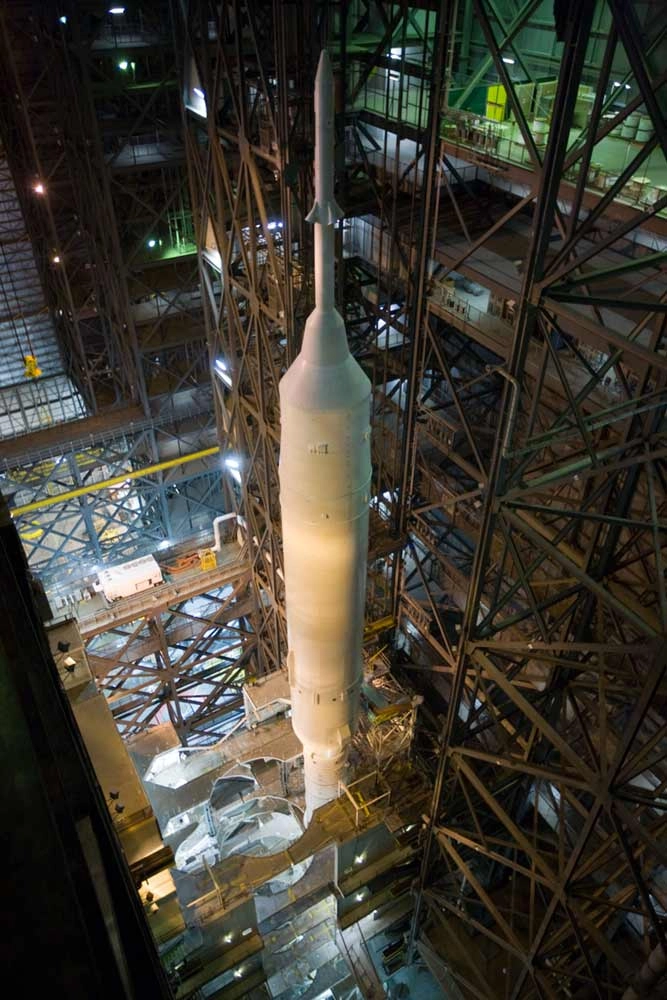
The Ares Irocket is a two-stage booster designed to launch theOrion spacecraft, which NASA plans to replace its three aging spaceshuttles once they retire in the next year or two. It stands about 327 feet(100 meters) tall - 14 stories higher than launch-ready shuttles - when fullyassembled.
NASA hassaid that the rocket and its Orion vehicles will not be ready to ferryastronauts to orbit until at least 2015, but a White House-appointed committee thatevaluated the agency?s exploration plans this summer has said that date couldlikely slip to 2017.
Thecommittee has submitted a set of five options to overhaul NASA?s spaceflightplan for President Barack Obama?s review. Some of them do not include the AresI rocket. NASA?svision of returning astronauts to the moon by 2020 is critically underfunded andwould require at least $3 billion a year in extra funding just to meet the lunar goal by the mid-2020s, the committeehas said.
Earlierthis year, NASA had hoped to launch the Ares I-X flight in July or August, but had topush the test back several times. Not so for the Oct. 27 target, Philman said.
?Everythingis looking good with the hardware,? Philman said. ?They?ve done the power up ofthe vehicle and that test went well.?
The Ares I?sfirst stage is a giant solid rocket similar to the four-segment boosters used to launchNASA space shuttles, but with an extra fifth segment for more power. The secondstage is a liquid-fueled engine that would push Orion capsules to orbit.
NASA conducted the first successful test firing of the Ares I rocket's first stage on Sept. 10.
For theAres I-X test flight, NASA has built a four-segment first stage capped with adummy fifth segment, as well as a dummy second stage. The launch is designed todemonstrate the rocket?s launch concept, ground processing and stageseparation.
The testflight is expected to reach an altitude of about 25 miles (40 km) in about twominutes, with 700 onboard sensors recording its performance. After the firststage separates, the dummy upper stage and Orion simulator will crash into theAtlantic Ocean.
NASA plansto roll the Ares I-X rocket out to Launch Pad 39B at the Kennedy Space Center on Oct.19. The pad has been refitted to host the Ares I-X rocket with the finishing touches to be completed by next week.
??Theyshould be ready at the pad by the end of the month,? Philman said.
- Video - NASA's Ares I-X Test Flight Unveiled
- Video - Back to the Moon with NASA's Constellation
- Video Show - NASA's Vision for Humans in Space
|
