CAPECANAVERAL, Fla. - NASA engineers are working to settle fuel tank sensorconcerns for the space shuttle Atlantis today in order to clear the orbiter anda European lab for a Saturday launch toward the International Space Station(ISS).
The failureof two fuel gauge sensors during a standard preflight test inside Atlantis?15-story external tank prevented a plannedThursday afternoon launch for the orbiter and its seven-astronaut crew hereat NASA?s seaside Kennedy Space Center.
Shuttlecommander Stephen Frick and his STS-122 crewmates hope to try again onSaturday, with liftoff currently pegged at 3:43 p.m. EST (2043 GMT) and a 60percent chance of favorable launch weather, mission managers said late Thursday.The astronauts will haul the European Space Agency?s (ESA) Columbus lab to the ISSduring their11-day mission.

?We?restill hoping, and have reason to believe, that we?re going to get off inDecember,? said Doug Lyons, NASA?s shuttle launch director, after Thursday?slaunch delay. ?And that?s what we?re shooting for.?
NASA hasuntil Dec. 13 to launch Atlantis toward the International Space Station (ISS),where the shuttle?s seven-astronaut crew will deliver the European SpaceAgency?s (ESA) Columbus laboratory during a planned 11-day mission. If Atlantiscannot launch by the window?s close, mission managers have said they would waituntil Jan. 2 at the earliest to try again to avoid unfavorable sun angles onthe station?s solar arrays.
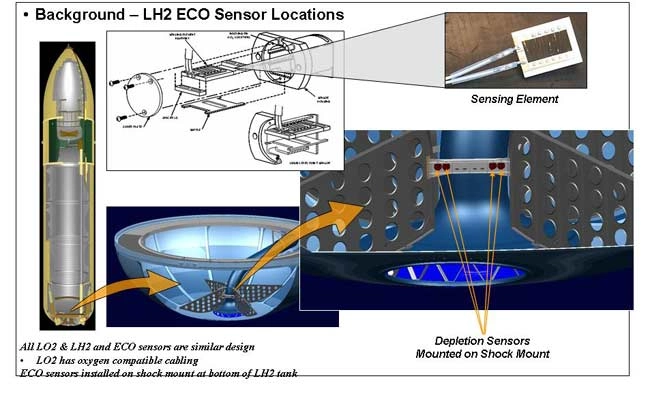
Today,engineers are expected to decide whether Atlantis can launch with only two offour critical liquid hydrogen enginecut-off sensors operating properly on Saturday. The sensors are used aspart of a backup system to shut down a shuttle?s three main engines before itsliquid hydrogen propellant supply runs dry.
NASA fuels itsshuttle external tanks with more than 500,000 gallons (1.9 million liters) ofsuper-chilled liquid hydrogen and liquid oxygen propellant to feed an orbiter?sthree main engines during the 8.5-minute launch into orbit. Current flightrules require at least three working sensors to support liftoff. While enginecut-off sensors have afflicted shuttle flight preparations in past - mostrecently causing a day?s delay duringa September 2006 launch - those glitches included only one failed sensor,not two.
Engineerssuspect that an open circuit, not the sensors themselves, may be the source ofAtlantis? current fuel gauge woes, and will take a close look at the risksinvolved in launching with only two working units.
?The intentwould be to have rationale that says, operationally, we can work around thisand still drive the crew safety risk down to zero or as close to zero as wecan,? said LeRoy Cain, head of Atlantis? mission management team, lateThursday.
Shuttleofficials will meet this afternoon to study Atlantis? launch options and willhold a press briefing no earlier than 5:00 p.m. EST (2200 GMT) tonight discusstheir findings.
Mission managers don?t currently plan tocall for a hardware repair inside Atlantis to address the glitch. Replacing thesensors completely, which engineers may be able to perform at the orbiter?s Pad39A launch site, if required, would delay Atlantis? STS-122 mission well intomid-January should engineers believe it is necessary, Lyons said.
Frick andhis crew plan to stage at least three spacewalks to install Columbus at the ISSduring their spaceflight. One STS-122 crewmember, French ESA astronaut LeopoldEyharts, will replace U.S. spaceflyer Dan Tani as space station flight engineerduring the shuttle flight. Atlantis? STS-122 mission will mark NASA?s fourthshuttle flight of the year when it launches this month.
ESAofficials said that while they were disappointed with Thursday?s launch scrub,the delay is rooted in maximizing crew safety during liftoff, which is moreimportant than an on-time departure for the 13-ton Columbus.
?This isperfectly normal,? said Alan Thirkettle, the ESA?s space station programmanager, of the scrub. ?We want to launch on time, but we want to launchright.?
NASAwill broadcast Atlantis' STS-122 mission live on NASA TV. Click here for SPACE.com's shuttle mission coverage and NASATV feed.
- SPACE.com Video Interplayer: NASA's STS-122: Columbus Sets Sail for ISS
- IMAGES: Discovery's STS-120 Mission in Pictures
- VIDEO: ISS Commander Peggy Whitson Takes Charge
