





The delayof NASA's next space shuttle flight has thrown a monkey wrench into plans toreturn a U.S. astronaut home from the International Space Station (ISS),mission managers said Tuesday.
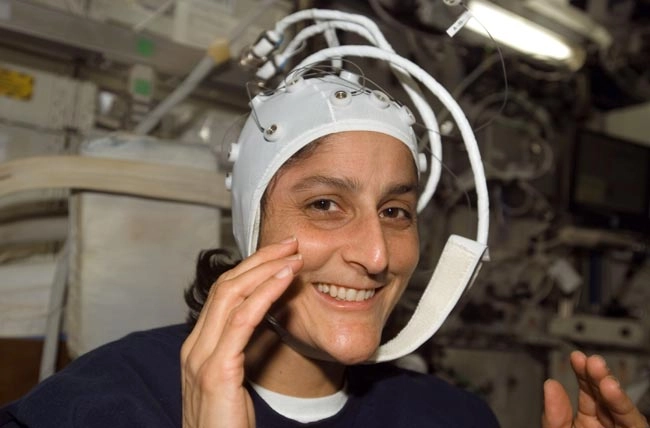
NASAastronaut Sunita "Suni" Williams was slated to return to Earth in July withspace shuttle Endeavour's STS-118 crew after a six-month flight that bridgesthe Expedition 14 and Expedition 15 station missions.
But the delayof the ISS construction flight immediately before Williams' return ticket - NASA'sSTS-117 mission to fly no earlier than mid-May - may push the astronaut'sEarth homecoming later into this summer, Kirk Shireman, NASA's deputy ISSprogram manager, told reporters in a Tuesday briefing.
Hail damageto the space shuttle Atlantis' external tank prevented the orbiter's plannedMarch 15 launch. NASA is expected to set a new liftoff target on April 10.
"We'relooking at..exactly what that means and what the delay is, and we're certainlykeeping Suni abreast of what the developments are on the ground," Shireman said."Medically, we're talking to her and doing things as best we can to make herhappy and perhaps launch some special items that'll make her more comfortablefor that extended period of time.
"Aside fromthat, there's not a whole lot that we can do. She's up there, and [STS-118 is] theride home and she knew that before she launched," Shireman added.
Williamslaunched to the ISS aboard the Discovery orbiter in December during NASA'sSTS-116 mission, where she replaced European Space Agencyastronaut Thomas Reiter as a flight engineer on the Expedition 14 crew. Hercrewmates, Expedition 14 commander Michael Lopez-Alegria and flight engineerMikhail Tyurin, are scheduled to return to Earth on April 20 after their replacementsarrive, but she will stay on for the first leg of Expedition 15.
The spacestation's Expedition15 mission includes a convoluted series of ISS astronaut swaps that beginwith the planned April 9 arrival of Williams' next crewmates - cosmonauts FyodorYurchikhin and Oleg Kotov - aboard their Russian-built Soyuz TMA-10 spacecraft.
Williams isdue to be relieved by NASA astronaut Clayton Anderson, who will launch aboardEndeavour on the STS-118 mission and himself be replaced by U.S. spaceflyerDaniel Tani during the STS-120 shuttle mission currently targeted for a late August liftoff.
"Itdoes add a lot of complexity," Williams said of the crew rotation plan during apreflight NASA interview.
NASA hashistorically limited its long duration astronauts to missions that span asclose to six months as possible, though there is some leeway in determiningtheir maximum flight time, mission managers said.
"There areno specific flight rules that dictate that. We have to look at the entireenvironment that they're in," Dave Alexander, NASA's lead Expedition 14 flightsurgeon, said Tuesday, adding that factors such as physical fitness, space radiationexposure and mental health are examined. "Right now, the predictions are that Sunican stay for an extended period of time."
Shiremansaid that there is a remote possibility that Williams could return home with theSTS-117 crew, but only if a significant problem arose with the preparations ortiming of her STS-118 return trip. In that case, Anderson could be added as aseventh member of Atlantis' STS-117 crew.
"It'sunlikely at this point, but not out of the realm of possibility," Shiremansaid.
AddingClayton to the STS-117 mission prompts a series of challenges, the least of whichbeing the fact that Discovery's cargo of new ISS solar arrays attached to a17.5-ton pair of truss segments leaves little weight allowance for the RussianSokol spacesuit, Soyuz seat liner and other vital supplies required for a newstation crewmember, Shireman said.
The planned11-day mission to perform three spacewalks to install those new solar arraysand also leaves little time for handover activities between Williams andAnderson, he added.
"So we'dprefer not to do that," Shireman said.
From ahealth standpoint, Williams - who joined NASA's astronaut corps hoping for a berthaboard the spacestation - is as sharp as ever for her long spaceflight, flight controllerssaid.
"She's fitand ready to continue on in most of her adventures," Alexander said.
- ISS Astronauts Discard Trash Ship, Prepare for Crew Swap
- Astronauts Squeeze in Extra Science Aboard Space Station
- Complete Coverage: ISS Expedition 14
- All About the International Space Station
