





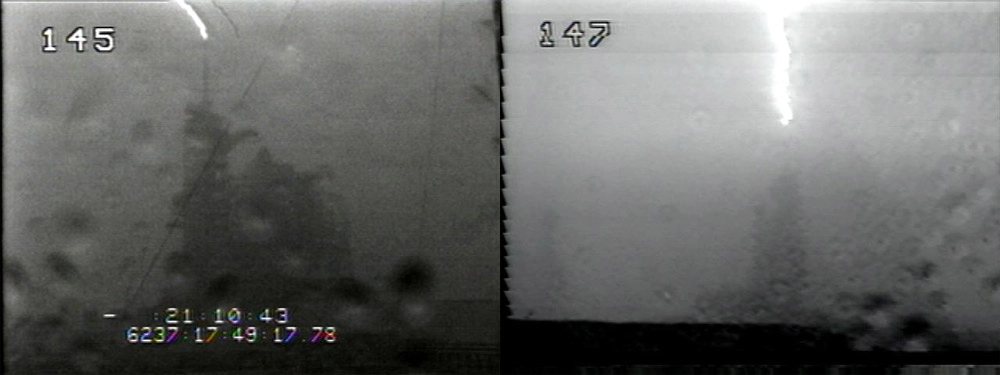
CAPECANAVERAL, Fla. - NASA engineers are poring over systems that control the space shuttle Atlantis' twinsolid rocket boosters to determine whether to once more delay the orbiter'splanned liftoff due to a powerfullightning strike at the launch pad, agency officials said Sunday.
Atlantisand its six-astronautcrew could still launch toward the International SpaceStation (ISS) as planned on Monday at 4:04:14 p.m. EDT (2004:14 GMT), butif more invasive booster checks are needed a delay to Tuesday or beyond ispossible, NASA spokesperson George Diller told SPACE.com.
"We havenot officially made a decision to go for Tuesday," Diller said. "It is adeveloping story."
Atlantis' STS-115mission to deliver a $371.8-millionset of new trusses and solar arrays to the ISS has already been delayedone day - from a plannedSunday launch - due to a powerful bolt of lightning that struck the orbiter'sPad 39B launch site Friday. The 100,000-amp bolt of lightning struck the pad'slightning protecting system, though engineers registered a small spike in oneof the Atlantis' three electrical buses and a larger surge in a system thatallows a hydrogen vent arm to pull free from the orbiter's external tank justbefore launch.
STS-115Mission Management Team chairman LeRoy Cain opted Saturday to scrub the plannedspace shot for 24 hours to allow the system checks necessary to determine whetherother orbiter or launch pad systems were affected by the lightning strike,which is considered the strongest ever seen at a NASA launch pad.
Whileengineers have good data on Atlantis' systems during the strike - it was thatdata that showed the electrical bus spike - they do not know whether theshuttle's two solid rocket boosters experienced a similar glitch since theywere powered down at the time, NASA spokesperson Bruce Buckingham said.
Engineerswant to determine whether the electronics associated the boosters' explosivepyrotechnics, used to separate the rockets from the launch pad at liftoff andfrom Atlantis' external tank about two minutes into flight, NASA officialssaid.
Diller saidengineers are working to determine whether they have enough data on orbiter'ssolid rocket booster systems. Based on that assessment, mission managers willdecide whether Monday is still a viable launch day or whether to push to aTuesday flight plan.
Cain'smanagement team assembled in an impromptu meeting late Saturday night, and willmeet again today for an update on that work.
Weatherforecasts for both Monday and Tuesday are favorable, with an 80 percentchance of good launch conditions, shuttle weather officials have said.
NASA'swindow to launch Atlantis extendsthrough Sept. 7, when the agency plans to stand down to allow a RussianSoyuz spacecraft to launch toward the ISS on Sept. 14 with a new station crewaboard.
A pressbriefing is expected some time around midday, NASA said.
An addedcomplication in NASA's Atlantis launch preparations is HurricaneErnesto, which grew from a tropical storm into a full-blown hurricane oneday earlier than expected today, with current forecasts predicting a path boundfor the west coast of Florida later this week.
Spaceshuttles are typically rolled back into the safe shelter of the agency'smassive, 52-story VehicleAssembly Building if flight controllers expect winds in excess of 70 knotsat the launch pad, according to NASA documents.
NASA continuesto watch Hurricane Ernesto's development and path to determine if it willimpact launch preparations should an extended flight delay become necessary,NASA spokesperson Lisa Malone said.
Today'splanned midday status update will be held on NASATV. You are invited to follow the briefing using SPACE.com's NASATV, which is available by clickinghere.
- VIDEO: First Tasks of NASA's STS-115 Mission
- Gallery: Prepping Atlantis
- Complete Space Shuttle Mission Coverage
- NASA's STS-115: Shuttle Atlantis to Jump Start ISS Construction
- The Great Space Quiz: Space Shuttle Countdown
