





CAPECANAVERAL, Fla. – NASA's second space shuttle flight since the Columbia tragedy will launch asplanned on July 1 after two days of intense debate that included dissent fromtwo senior officials, the space agency said Saturday.
"There weremany different viewpoints on the issue of whether we are ready to fly or not,"NASA chief Michael Griffin told reporters here at the Kennedy Space Center(KSC). "We've decided that we are."
Discoverywill launch on July 1 at 3:48:15 p.m. EDT (1948:15 GMT).
Griffinsaid the decision came after two days of "intensive and spirited exchange"during a FlightReadiness Review for NASA's STS-121 shuttle flight aboard the Discoveryorbiter.
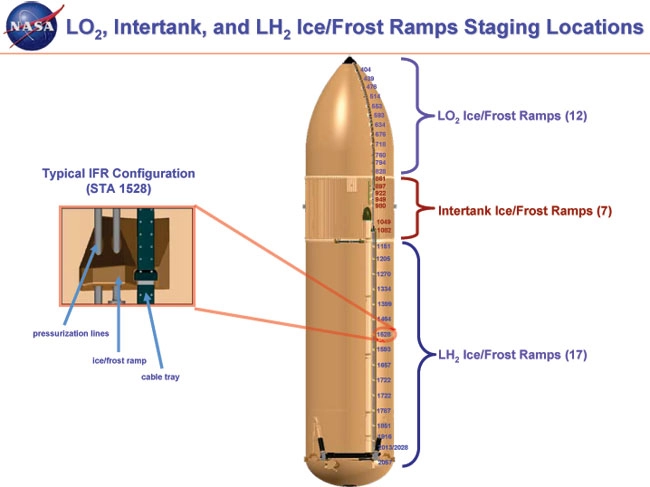
Two seniorNASA managers – chief engineer Chris Scolese and Bryan O'Conner, theassociate administrator of Safety and Mission Assurance – did haveconcerns over the potential risk of foam debris posed by a number of insulatedice frost ramps along Discovery's external tank, NASA officials said.
About 34foam-covered ice frost ramps line the shuttle fuel tank, insulating bracketsthat connect a cable tray and pressurization line.
"From theirparticular discipline, they felt they wanted their statement to be No-Go,"William Gerstenmaier, NASA's associate administrator for space operations said."But they do not object to us flying and they understand the reasons and therationale that we laid out in the review for flight."
That flightrationale, Griffin added, states that while foam debris damage – such asthat which led to the loss of Columbia – could affect a shuttle'savailability to reenter the Earth's atmosphere, the spacecraft's astronaut crewcould reach the orbit.
NASA'sability to inspect the spacecraft in orbit, conduct rudimentary repairs, andeven keep shuttle astronauts aboard the International Space Station (ISS) untila rescue shuttle or Russian Soyuz vehicle can be launched were all factors thatcontributed to the positive launch decision, Griffin said.
But theNASA chief also said that much is riding on Discovery's flight and its safereturn to Earth.
"Leavingaside the issue of crew, if we were to leave another vehicle...I would be movingto shut the program down," Griffin said. "I think, at that point, we're done."
Acritical spaceflight
Discovery'sSTS-121 mission – commanded by veteran shuttle astronaut StevenLindsey – is NASA's final return to flight test to shuttle fuel tankchanges, orbiter inspection and repair techniques, as well as deliver vitalsupplies to the ISS.
It's been almostone year since NASA's first post-Columbia accident mission, STS-114 also aboard Discovery, tookflight. The STS-121 crew has filled that time with additional trainingwhile shuttle engineers developed new externaltank foam modifications and subsequent tests to prevent large chunks from detachingduring launch.
A one-pound(0.4-kilogram) piece of foam insulation fellfrom a protective ramp – since removed– from Discovery's external tank during the STS-114 launch in July 2005.That chunk of launch debris did not strike Discovery, but a similar foamshedding event did occur during the Columbia orbiter's 2003 launch, piercingthe spacecraft's heat shield and ultimately leading to its destruction and lossof seven astronauts.
The STS-121crew will launch on a 12-day mission to the ISS, with two planned spacewalks– and a third if shuttle resources permit – on tap for theirspaceflight.
Thespaceflight will also deliver European Space Agency astronaut Thomas Reiter tothe station to join the orbital outpost's Expedition 13 crew.
Reiter willraise the ISS crew size back up to three astronauts for the first time sincethe Columbia accident, and is the first long-term ISS crewmember to be from acountry other than the U.S. or Russia.
- Decision Day: Launch Date Expected for Space Shuttle Discovery
- STS-121 Shuttle Commander: 'We're ready.'
- NASA Shuttle Managers Discuss STS-121 Launch Plan
- Return to Flight: NASA's Road to STS-121
