NASA's effortsto build on its moon landing triumphs between the 1970s and the present are thehallmark of a new documentary set to air tonight.
Unlike itspredecessor, which focused on NASA's space race with Russia to send astronautsto the moon, Beyond the Moon: Failure is Not an Option 2 picks up afterthe contest is already won. The two-hour program will air tonight at 9:00 p.m.EDT on the History Channel (check local listings).
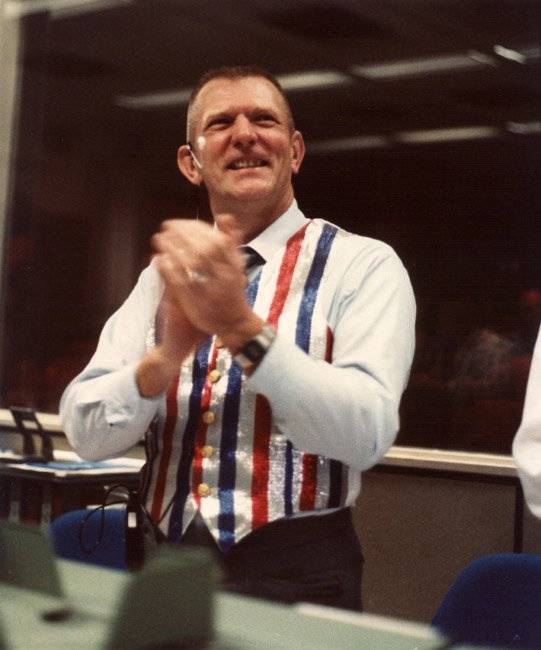
Based onthe memoir Failure is Not an Option by former flight director Gene Kranz,the program highlights NASA's struggle to maintain its relevancy and developspace stations and shuttles, even as public interest in human spaceflight flagged.

"I alwayslooked at it as something broader than just the Cold War," Kranz says. "Ilooked at it as the spirit of our nation."
Beyondthe Moon covers alot of ground - in space - to relate the more than 30 years that spanned NASA'slaunch of its Skylab space station in 1973 through the development of the orbiterfleet, Hubble Space Telescope and International Space Station (ISS), as well asthe two tragedies - Challenger and Columbia - that killed 14 shuttle astronauts.The primary storytellers are past and present flight controllers, from Kranzhimself during the post-Apollo years through Paul Hill, LeRoy Cain and otherswho oversaw the shuttle Discovery's most recent STS-114 flight.
With somuch focus on the astronauts who fly NASA's space missions, it's refreshing torevisit the space agency's landmark missions from the point of view of flightcontrollers.
However,with the exception of some astronaut comments on NASA's difficulties withSkylab, which included one stuck solar panel and the loss of another oneentirely, the spacefarers themselves are curiously absent.
Kranzserves as a solid anchor, though the recollections of former flight directorJay Greene, who was on duty when Challenger exploded during liftoff in Jan. 28,1986, and Hill and Cain - who also worked on Columbia's doomed 2003 flight -are key to understanding the weight flight directors carry when they makedecisions that could spell success or disaster for their astronaut crews.
"That isour job, to live with this risk, and some days it's bad," Kranz says.
The filmstops short of detailing the safe return of Discovery's STS-114 mission that landedon Aug. 9 after a 14-day trip to the ISS - NASA's first shuttle flight sincethe Columbia disaster - where the risks of human spaceflight weighed heavy onmission managers.
But whileit may seem slightly dated, Beyond the Moon offers a different side ofhuman spaceflight, one that sheds light not on the rockets and spacemen, butthe people who put them in orbit.
Beyond the Moon airs at 9 p.m. EDT on the History Channel. Check local listings.
- Return to Flight Special Report
