NASA announced the science instruments for its mission to Europa, SpaceX was certified for U.S. military launches and a tiny solar-sailing spacecraft suffered a glitch in orbit. Here's a look at Space.com's top stories of the week.
NASA announces Europa mission's science gear
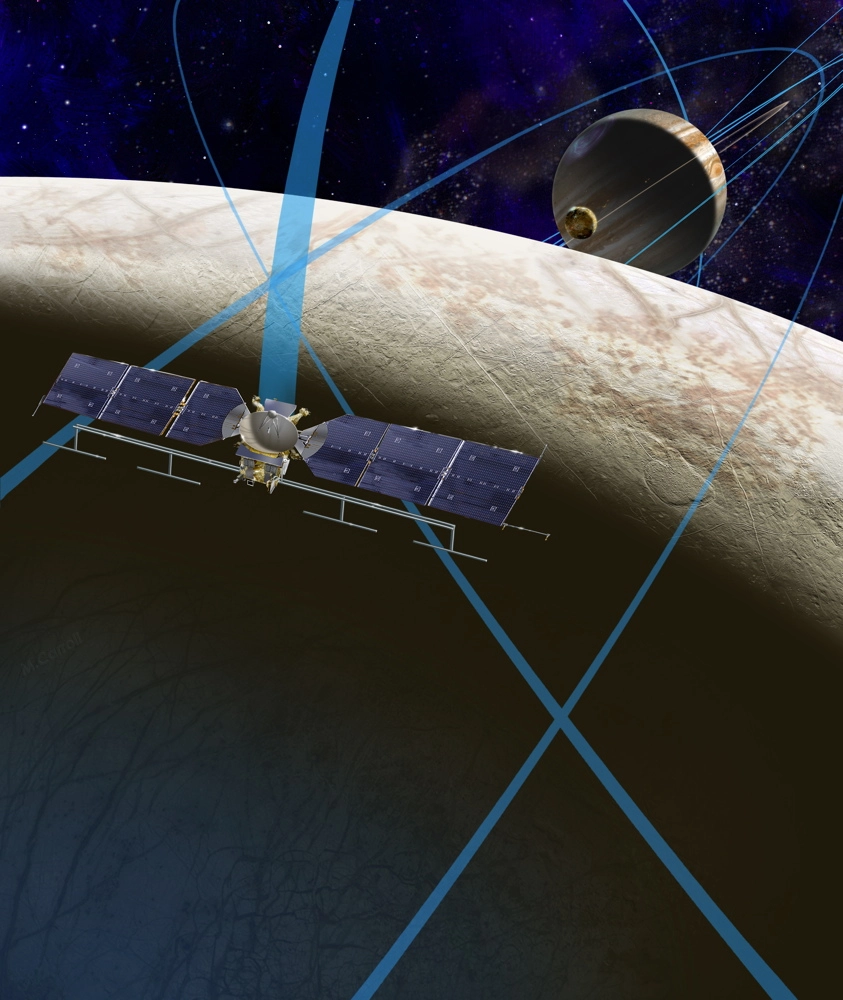
NASA's Europa probe will use nine scientific instruments to assess the icy, ocean-harboring Jupiter moon's ability to support life, agency officials announced May 26. [Full Story: NASA Mission to Europa Will Seek Conditions for Life]

SpaceX can bid on U.S. military launches
The U.S. Air Force has certified SpaceX’s Falcon 9 rocket to launch military satellites, completing a nearly two-year process that at times strained the two parties' relationship and establishing a competitor to United Launch Alliance in the national security marketplace. [Full Story: SpaceX's Falcon 9 Rocket Certified for Military Launches]
Solar-sailing CubeSat goes silent in orbit
The Planetary Society's tiny LightSail spacecraft has gone silent in Earth orbit, apparently victimized by a software glitch. [Full Story: LightSail Solar Sail Test Flight Stalled by Software Glitch]
Satellite trackers spot X-37B space plane
A global team of vigilant satellite watchers has caught the U.S. Air Force's robotic X-37B space plane on camera as it circles Earth on its fourth mystery mission. [Full Story: Air Force's Mysterious X-37B Space Plane Spotted by Amateur Astronomers]
Curiosity rover may be source of Mars methane spike
NASA's Curiosity rover may be responsible for an intriguing "burp" of methane detected recently on Mars, one researcher says. [Full Story: Did Curiosity Rover Cause Mars' Mysterious Methane Spike?]
Pluto revealed in unprecedented detail
New photos taken by NASA's New Horizons spacecraft reveal more intriguing details of Pluto's complex and varied surface. [Full Story: Pluto-bound Spacecraft Bringing Dwarf Planet into Focus (Photos)]
CubeSats to Mars
NASA will launch a pair of tiny CubeSats into deep space next year to provide real-time landing coverage for the space agency's next mission to Mars, officials say. [Full Story: Two Tiny 'CubeSats' Will Watch 2016 Mars Landing]
Did stellar corpse rip alien planet apart?
Scientists have found evidence that a planet in an ancient cluster of stars on the edge of the Milky Way drifted too close to a white dwarf star and was ripped apart. [Full Story: Dying Star May Have Torn Alien Planet Apart (Video)]
Getting the space station ready for private astronaut taxis
Astronauts on the International Space Station moved a closet-like storage module to a new spot on the orbiting lab on May 27 to make room for a new docking port to welcome private space taxis in 2017. [Full Story: Space Station Module Move Makes Room for Private Spaceships]
Probe's path to Pluto all clear so far
The New Horizons spacecraft's hunt for new moons, rings and other potential hazards near Pluto ahead of the probe's historic July 14 flyby has turned up nothing so far. [Full Story: Pluto Shows No Danger Signs Yet for Incoming NASA Probe]
The steampunk tech of 'Tomorrowland'
Disney's epic "Tomorrowland" features space technology done in steampunk style, and brings in early 20th-century science heavyweights Jules Verne, Thomas Edison, Nikola Tesla and Gustave Eiffel. [Full Story: Disney Does Steampunk Rockets in 'Tomorrowland']
The tools that repaired Hubble
NASA engineers talk about the specialized tools they developed to keep the agency's Hubble Space Telescope running for a quarter of a century. [Full Story: Repairing the Hubble Space Telescope: The Tools Astronauts Used]
Follow Mike Wall on Twitter @michaeldwall and Google+. Follow us @Spacedotcom, Facebook or Google+.