




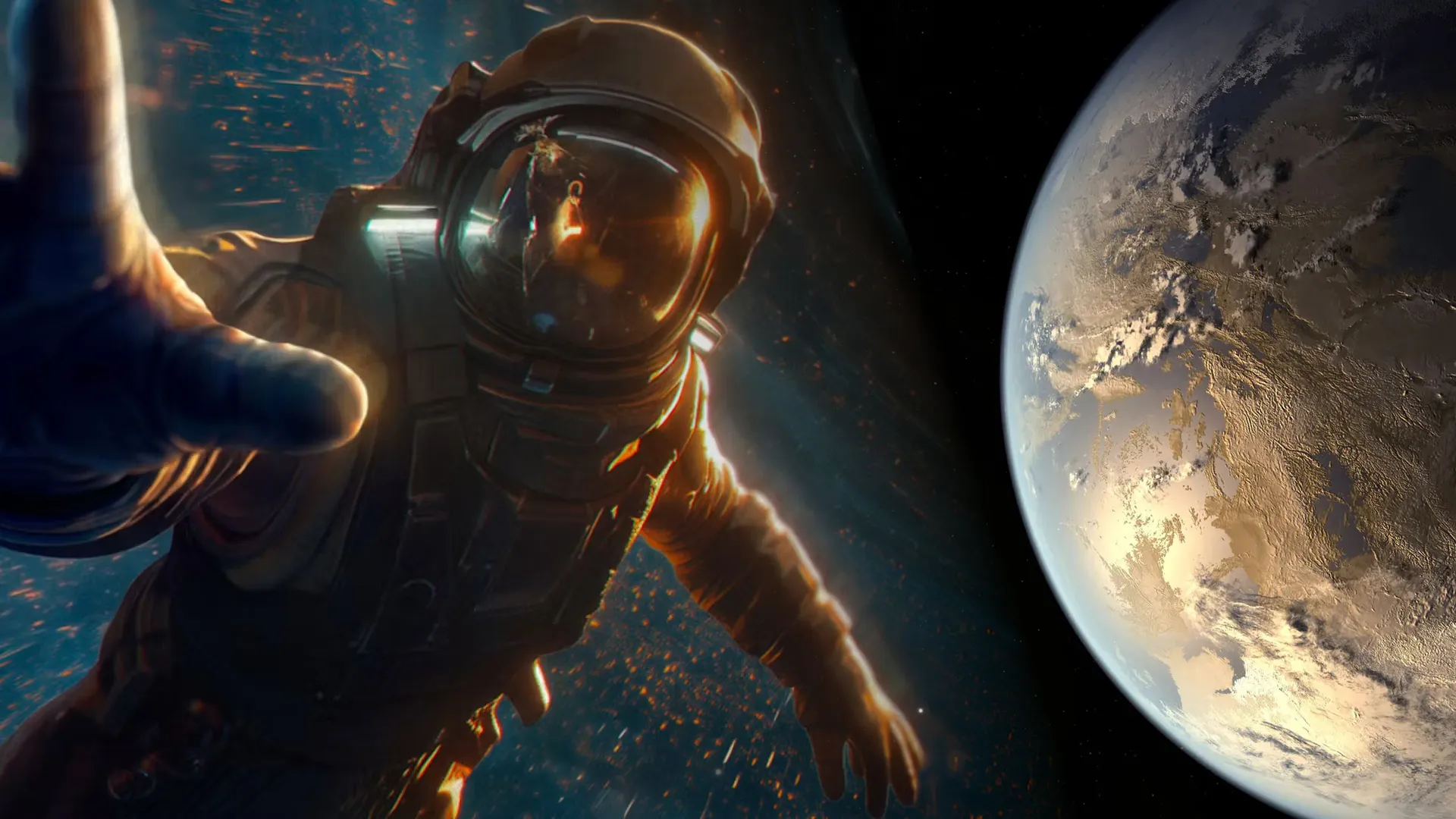
Imagine you’ve crash-landed on an alien planet. Your ship is destroyed, your oxygen supply is dangerously low, and the landscape around you is completely unknown. Where would you begin looking for clues to your survival? Surprisingly, the best place to start could be the star overhead.
This is the predicament that three crew members of the Wild Blue Yonder face in Audible’s new sci-fi thriller, "Exoplanet." This sci-fi thriller is written by acclaimed comic writer Benjamin Percy, executive produced by Andy Weir (Project Hail Mary, The Martian), and features an all-star voice cast including Anthony Mackie, Ariana DeBose, and John Leguizamo.
Stranded on an unfamiliar planet, they encounter volcanic wastelands, unknown skies, and environments that seem to defy reason. But behind the extraordinary events of this audio drama is a very real scientific question: what makes a planet habitable?
Learning from the stars

In “Exoplanet”, the crew view skies that are not only unfamiliar but also seemingly different from one another. One character sees a sun as so dim that he can look directly at it, while another suffers under a blazing heat, surrounded by stretches of sun-scorched red rock.
For astronomers, the light emitted by a star is one of the most crucial tools for understanding planets orbiting it.
Using a technique called spectroscopy, astronomers split starlight into its constituent wavelengths, producing a spectrum much like a rainbow. By studying this spectrum, they can investigate the temperature, composition, and other physical properties of the star.
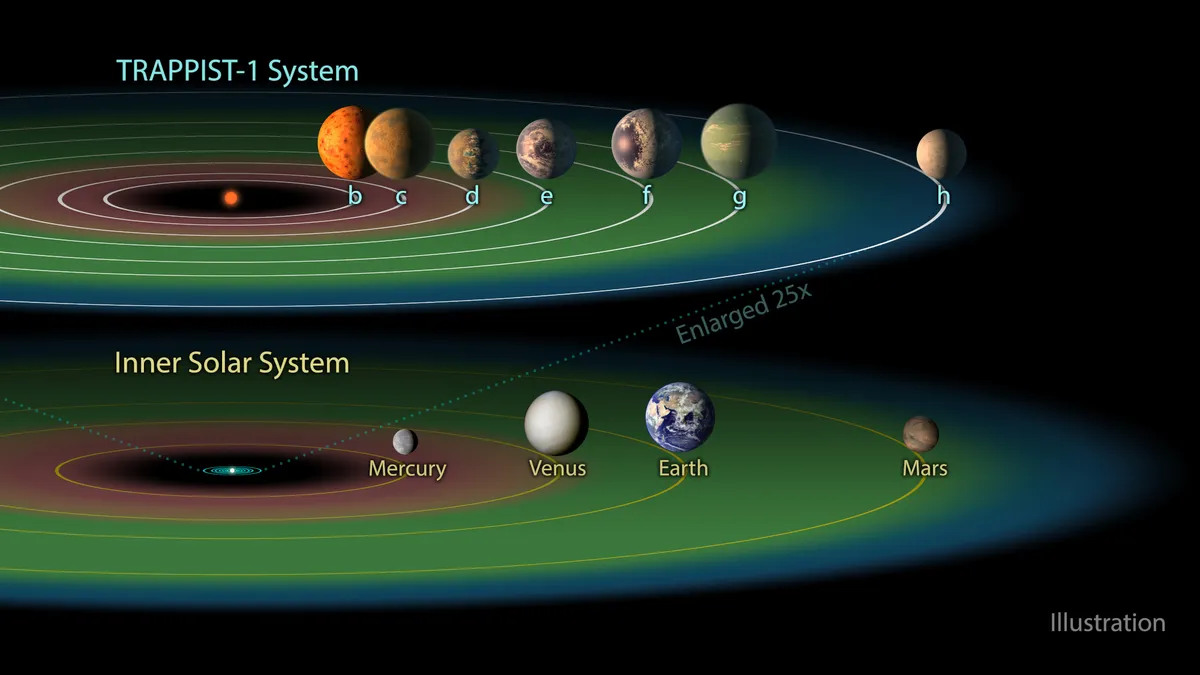
However, stellar temperature is only part of the picture. The amount of energy a planet receives depends on both the luminosity of the star and its orbital distance.
Astronomers use these measurements to determine whether a world lies in the habitable zone of a star, where temperatures could allow liquid water to exist on the surface given a suitable atmosphere.
A planet orbiting a cool red dwarf would need to be much closer to its star than Earth is to the Sun to be in this habitable zone. Unfortunately, being in this zone is no guarantee of a planetary paradise.
Hostile stars
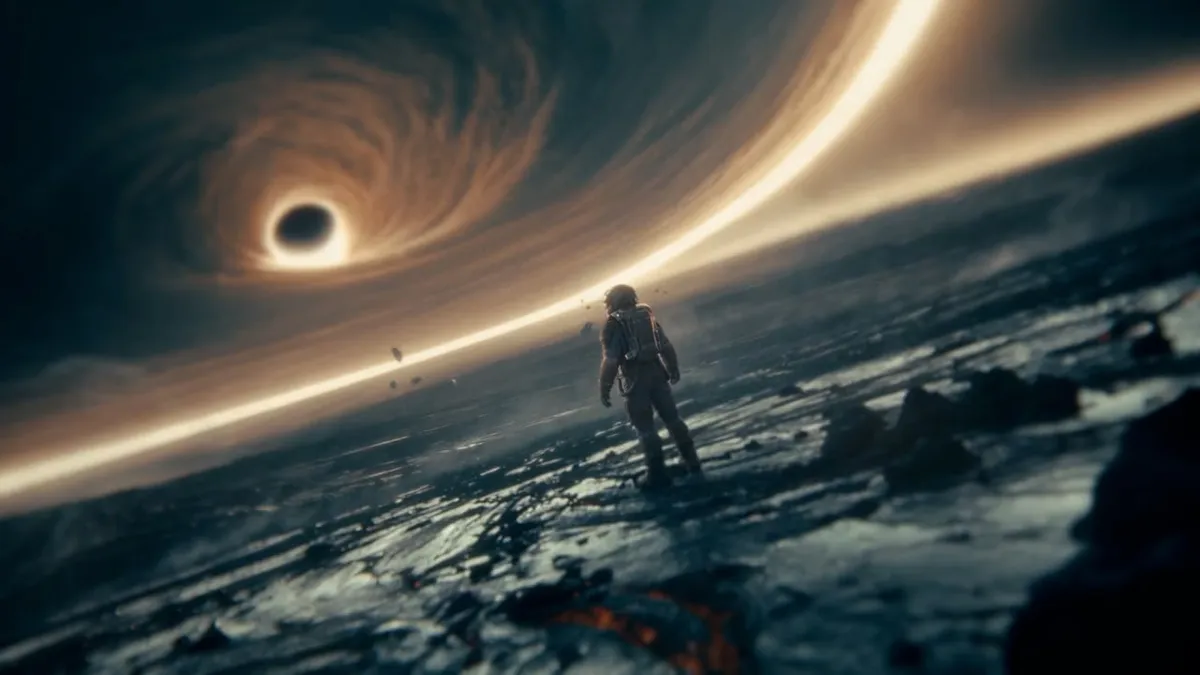
A planet that sits comfortably in the habitable zone is ultimately still at the mercy of its star. Stars emit more than just the light we see. Ultraviolet radiation and X-rays can interact with planetary atmospheres, altering chemistry and even contributing to the loss of the atmosphere.
Violent stellar flares can produce bursts of high-energy radiation. A planet could offer a wonderfully balmy temperature, only to be bombarded with radiation from the host star.
The age of a star matters too. Young stars tend to be more active, with radiation that could erode a planet’s atmosphere over time. Meanwhile, as stars age and evolve, their changing luminosities can drastically alter the conditions a planet experiences.
For the stranded crew in “Exoplanet”, understanding the star overhead may therefore be as important as knowing the landscape beneath their feet.
Is the air breathable?
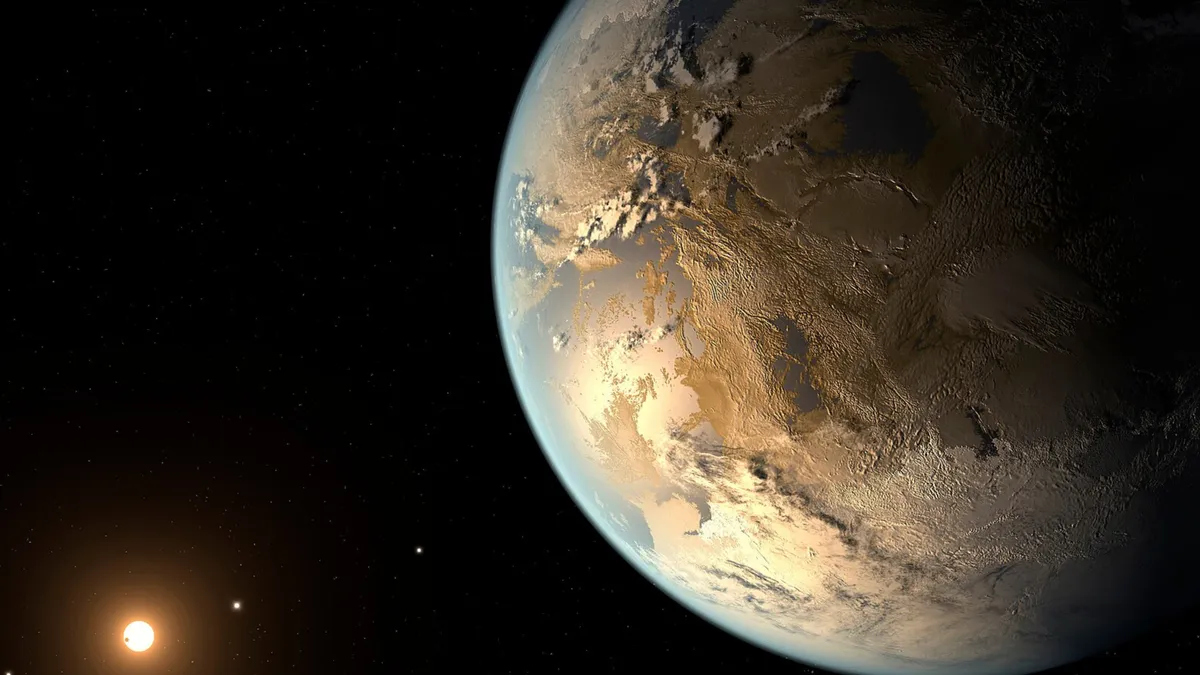
Even if a planet has survived all the complications we’ve just thrown at it, there’s still a rather important question: could we actually breathe the air?
In "Exoplanet", one crew member discovers that the planet’s atmosphere contains enough oxygen for him to breathe without his spacesuit. On Earth, oxygen makes up around 21% of our atmosphere. However, finding a similar percentage on another planet wouldn’t automatically mean the air is safe to breathe.
Atmospheric pressure matters just as much. At high altitudes on Earth, the oxygen percentage remains the same, but the lower pressure means less oxygen is available to our lungs.
Oxygen isn’t the only concern, either. The fictional planet’s volcanic landscape releases gases such as sulfur dioxide and hydrogen sulfide, both of which are hazardous at high concentrations. Even an oxygen-rich atmosphere could still be lethal.
Searching for life
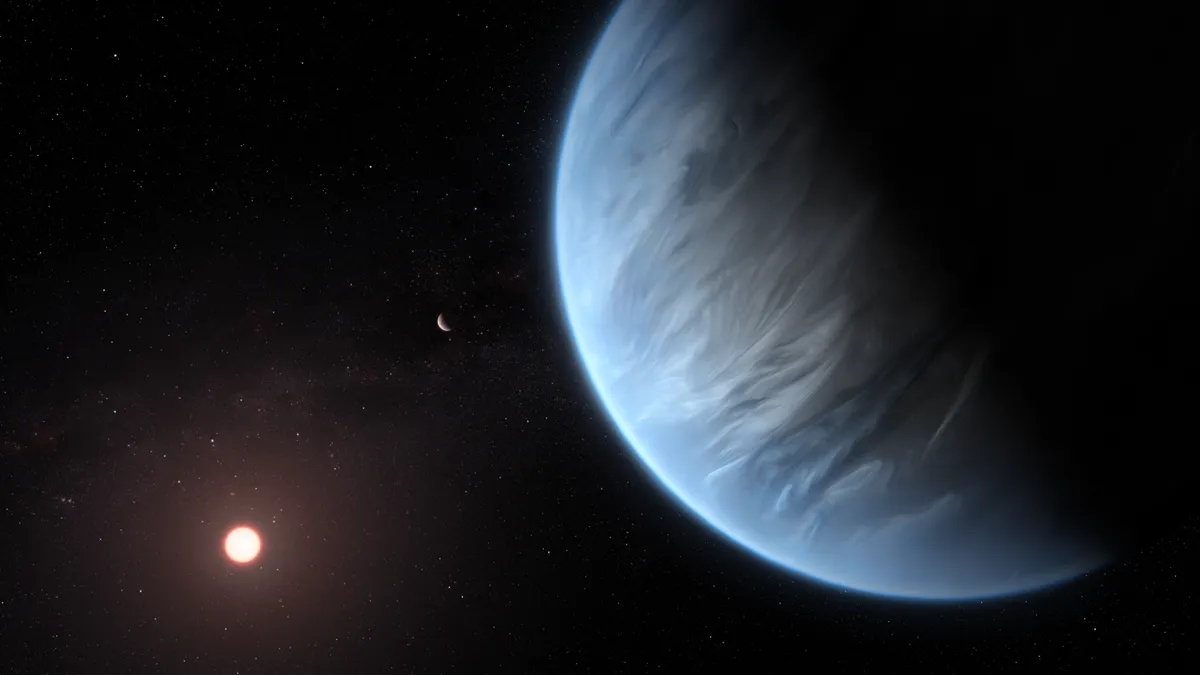
But what if you don't just need to know if a planet is habitable? What if you need to know if something already lives there?
Before the Wild Blue Yonder arrived at the planet, probes detected dimethyl sulfide, a molecule we associate with biological activity on Earth. This is a beautifully timely detail, as this very molecule has been at the heart of a scientific debate about one of the most intriguing exoplanets discovered so far.
Astronomers have investigated possible signs of dimethyl sulfide in the atmosphere of K2-18 b, an exoplanet orbiting a red dwarf. However, both the detection itself and the biological interpretation remain heavily disputed.
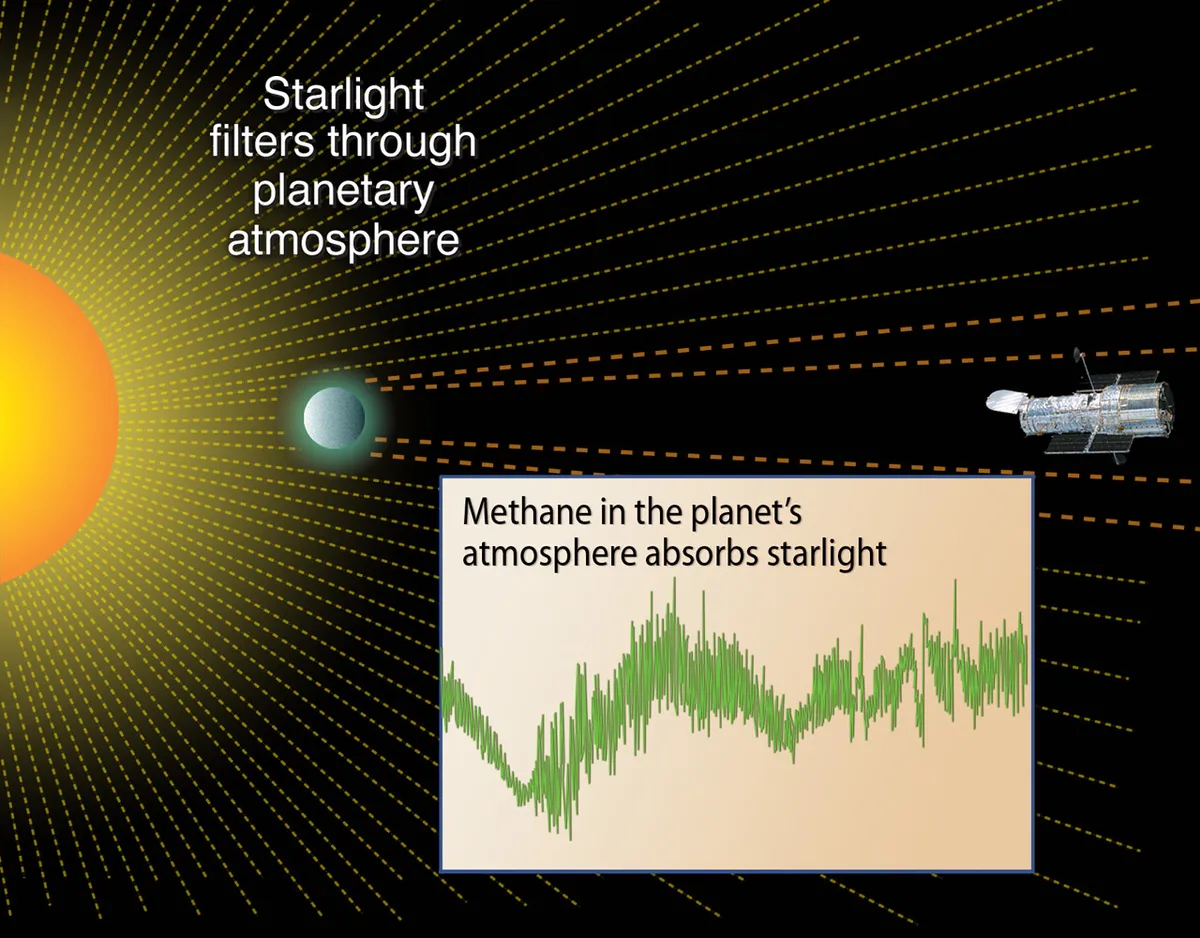
The challenge is that detecting a single molecule isn’t definitive evidence of life. Its presence can be influenced by factors other than biology, like atmospheric chemistry and stellar radiation.
Understanding whether such a molecule could actually indicate life means studying not just the planet’s atmosphere, but also the radiation it receives from its star.
More than Earth Mark 2
Astronomers have discovered thousands of exoplanets. Understanding whether any could support life is, however, an extraordinary challenge.
The distance between the planet and the star might give us a good clue, but its atmosphere, geology, and stellar environment are all interconnected in determining whether life could survive. For the unfortunate crew of the Wild Blue Yonder, those distinctions could mean the difference between survival and utter disaster.
We might one day identify a planet with Earth-like temperatures, liquid water, and abundant oxygen. But even then, there’s still a huge gap dividing a potentially habitable planet from one where we could safely remove our helmets.
"Exoplanet" is available now exclusively from Audible. It is free for members of its subscription tiers or available to purchase separately.