





The International Space Station (ISS) is easy to spot with the naked eye if you know when and where to look. A new notification service on Twitter will tell you exactly when to go out and look up.
As with many data services and applications (or apps, as developers call them) these days, this one was created by a couple guys who were interested in the topic.
Dutch science reporter Govert Schilling and journalist/web developer Jaap Meijers created @twisst, a Twitter service that will tell you when the space station will fly over your location.
There are other online sites that provide spotting information. What's new is to get the notifications through Twitter, a social network site that's turning out to be much more.
The new service is in a test phase, according to a statement from Schilling. Twitter users can follow it at @twisst (twitter.com/twisst). Others can learn about it at a regular web site.
The service "basically is an app," Schilling told SPACE.com. "Twitter is such a great platform for an app like @twisst, because people can be sent information on a very personal level. And the Twitter users choose who they want to follow and what information they want to receive."
As with other satellites that are easy to spot in the evening or pre-dawn sky, the space station is visible only for a few minutes on each pass.
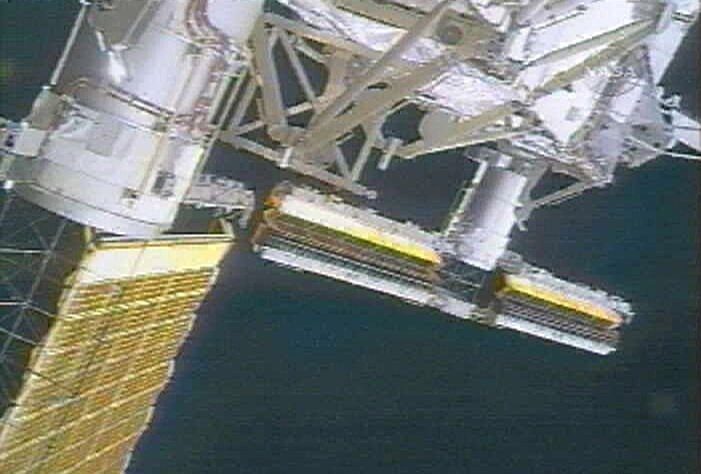
The orbiting outpost constantly passes over different parts of the planet as it circles Earth every 90 minutes or so. It flies at an average altitude of 216 miles (348 km) and speeds along at 17,200 mph (27,700 kph). It is about as big as a football field and has highly reflective solar panels. It's the reflection of sunlight that makes it visible from Earth.
Europe will enjoy several passes this week, Schilling said. Good passes will occur for the United States on July 7 and East Asia on July 10.
- How to Spot the ISS and Satellites
- More Skywatching Features
Editor's Note: This article was updated at 10::12 a.m. ET 6/27 to include a comment from Schilling about the service being an app.
