





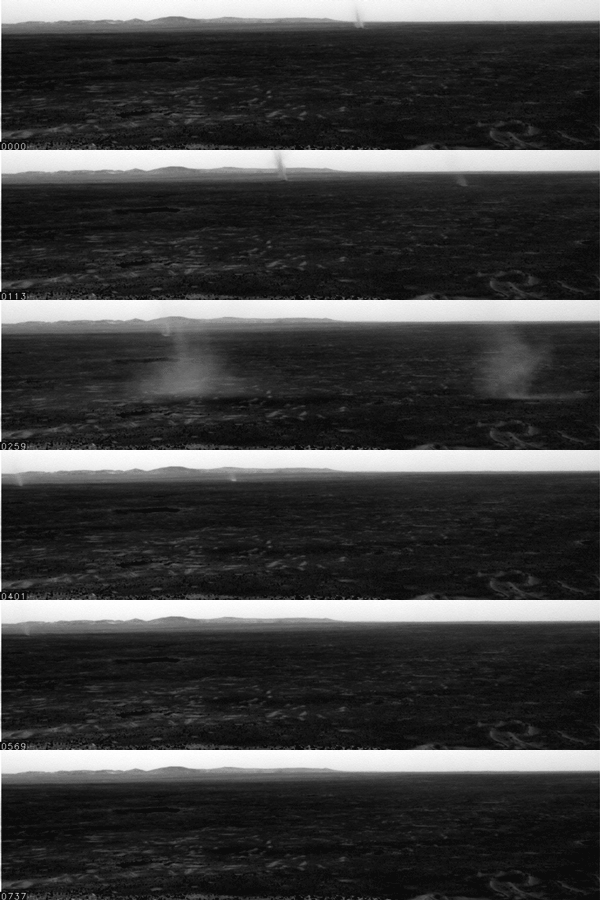
Mars is avery windy place--so windy, in fact, that bright, oxidized martian soil is beingscoured away by martian winds and dust devils to reveal darker, sub-surfacesoil with the end result of making the whole planet warmer. Mars isexperiencing its own brand of climate change. Is this related to planet earth'sgreenhouse gas driven climate change? No. Is understanding the processimportant for our understanding of how planets evolve and change over time? Absolutely.
In earlyApril of this year, a young Carl Sagan Center Principal Investigator named LoriFenton, together with her colleagues at NASA Ames Research Center and the USGSin Flagstaff Arizona, published an article in the journal Nature revealingthe phenomenon of the rise in the martian global temperature over the past 20years. The rise, less that 2? for both surface and air temperature, is stillsignificant from a geologic perspective.
The mechanism for the warming is due to the change in brightness, or "albedo" of the martian surface. The light,bright, oxidized martian surface soil reflects a significant amount of solarradiation, tending to keep Mars cool, just as wearing white on a hot summer's dayis cooling. The darker, more absorbent subsurface soil, revealed after awindstorm or dust devil passes through on Mars, retains more heat, just aswearing dark clothes will on that same hot summer's day here on earth. Theresult of more exposed dark soil is that the temperature of Mars has gone upbetween one and two degrees over the last two decades.
Such achange is very intriguing and has never before been seen on any planet. The martianatmosphere is significantly thinner than that on earth. It's similar to what isfound on our home planet at about 100,000 feet. Even so, the winds that resultfrom the movement of even such a thin atmosphere are clearly strong enough tohave a profound impact on the planet. Comparative planetologists and climate modelerswill be monitoring Mars closely for the next 20 years and beyond, trying todiscern if there is some sort of pattern to the changes and if the trend seemsto be continuing. The truth is, we have only begun to monitor and record suchdata and are just beginning to track changes as they unfold.
Mars dustdevils have been in space news before now. In fact, the Mars Rover twins,Spirit and Opportunity, owe their lives to the quixotic martian winds. Gusts ofwind and dust devils pass over the solar arrays on the intrepid roboticexplorers just often enough to scour away the ubiquitous martian dust from thesurface of their mission prolonging solar arrays and sweep away the dustbuild-up, allowing the 4 year old batteries to recharge. This helpful process wascompletely unforeseen.
With newhigh resolution instruments on Mars, thanks to the Mars Reconnaissance Orbiter,and advanced landers and rovers in the pipeline with Phoenix Scout and MarsScience Laboratory due to launch in the next few years, we will continue to getinformation on martian winds and weather and discover just what else is gonewith the wind.
- Image Gallery: Visualizations of Mars
- Sun Blamed for Warming of Earth and Other Worlds
- Dust Devils on Mars Electrified, Study Suggests