





Apollo 11 Crew

The Apollo 11 crew, from left: Commander Neil A. Armstrong, Command Module Pilot Michael Collins, and Lunar Module Pilot Edwin E. "Buzz" Aldrin Jr. On July 20th 1969 at 4:18 PM, EDT the Lunar Module "Eagle" landed in a region of the moon called the Mare Tranquillitatis, also known as the Sea of Tranquility.
Apollo 11 Crew Walks to Launch Pad

The Apollo 11 crew leaves Kennedy Space Center's Manned Spacecraft Operations Building during the pre-launch countdown. Mission commander Neil Armstrong, command module pilot Michael Collins, and lunar module pilot Buzz Aldrin prepare to ride the special transport van to Launch Complex 39A where their spacecraft awaited them. Liftoff occurred at 9:32 a.m. EDT, July 16, 1969.
Apollo 11 Launch

The Apollo 11 mission launched from the Kennedy Space Center, Florida on July 16, 1969, bearing the first humans to walk on the moon.
Placing the Flag on the Moon

The deployment of the flag of the United States on the surface of the moon is captured on film during the first Apollo 11 lunar landing mission.
Apollo 11 Liftoff and Flag

A Saturn V rocket launches the Apollo 11 crew on the first moon landing mission on July 16, 1969 in this image framed by an American flag. Four days later, Apollo 11 astronauts Neil Armstrong and Buzz Aldrin landed on the moon while crewmate Michael Collins orbited above.
Apollo 11 Launch

The Apollo 11 Saturn V space vehicle climbs toward orbit on July 16, 1969, bearing astronauts Neil A. Armstrong, Michael Collins and Edwin E. Aldrin, Jr. Armstrong and Aldrin would make history as the first men on the moon.
Aldrin Inside Lunar Module

Apollo 11 astronaut Buzz Aldrin poses for a snapshot while inside the Lunar Module in this July 1969 NASA image. Aldrin and astronaut Neil Armstrong were the first humans to land and walk on the moon on July 20, 1969.
Michael Collins Before Boarding Apollo 11 Mission

Clad in his spacesuit, Command Module (CM) pilot Michael Collins does a final check of his communications system before the boarding of the Apollo 11 mission on July 16, 1969.
Tranquility Base with Lunar Lander

Tranquility Base, the Apollo 11 mission's Eagle lunar lander touchdown site as seen in July 1969.
Aldrin Outside Lunar Lander

Sunlight and shadows are cast on the Apollo 11 lunar lander Eagle and lunar module pilot Buzz Aldrin in this image by mission commander Neil Armstrong during the first manned moon landing on July 20, 1969.
Buzz Aldrin Walks on the Moon in 1969
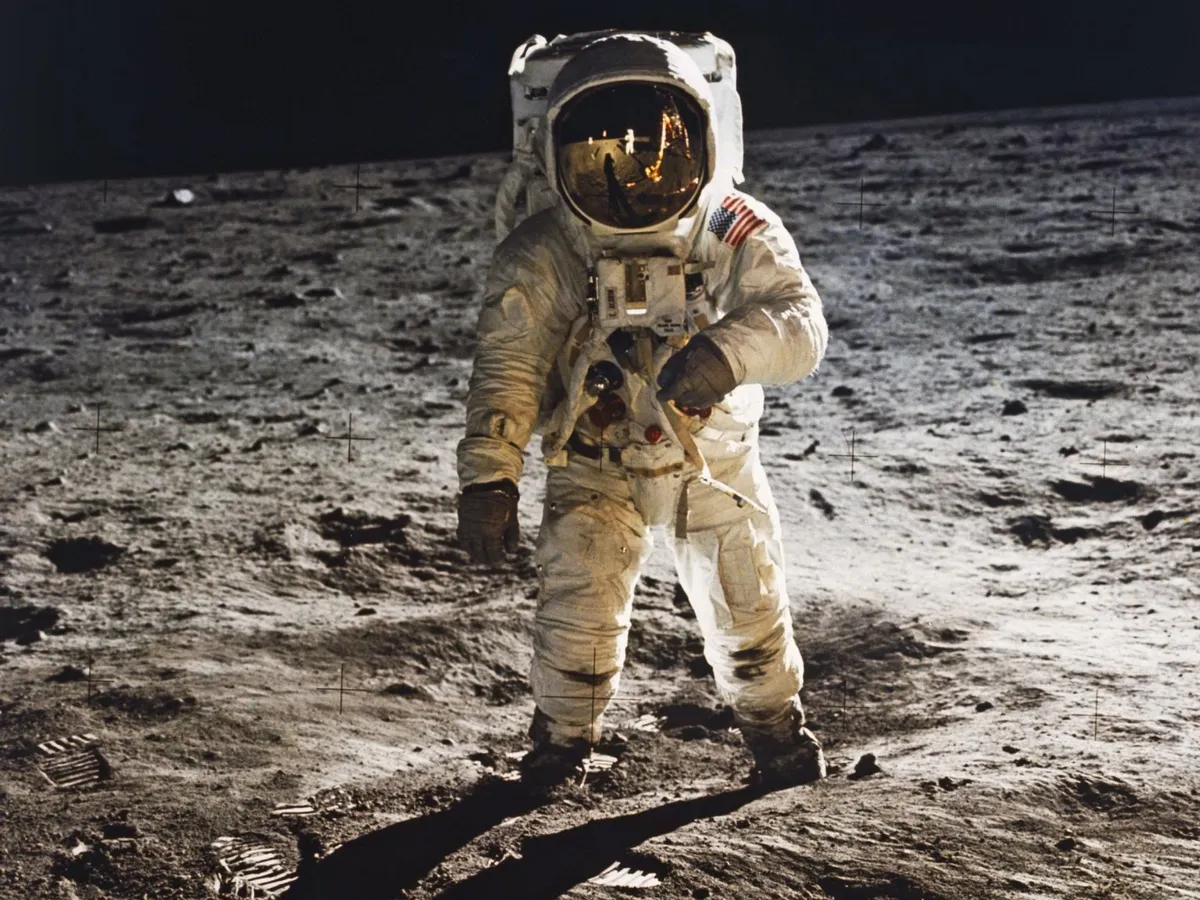
Apollo 11 astronaut Buzz Aldrin walks on the moon in July 1969 in this photo snapped by Neil Armstrong.
