


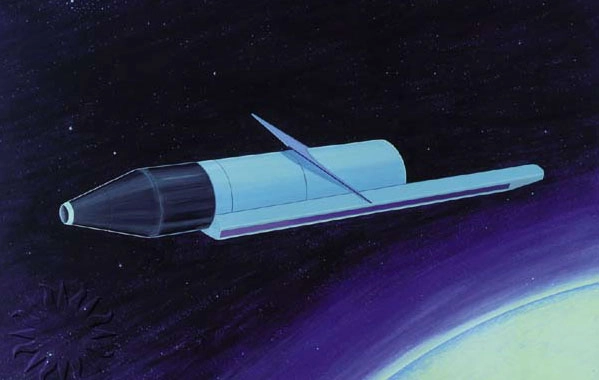
Russia'sSpace Forces minimized the risk posed by a long-retired nuclear-poweredsatellite that the U.S. Space Surveillance Network (SSN) identified asproducing "an unexpected debris cloud" in July.
Instatements released Jan. 21, the Space Forces said the Cosmos 1818 satellite,orbiting at 800 kilometers, is not a dangerto other satellites in that orbit and will disintegrate when it reentersthe Earth's atmosphere sometime in the middle of this century.
A NASAanalysis of SSN data found that Cosmos 1818, launched in February 1987, was thesource of a "fragmentation event" around July 4 that released atleast 30small pieces of debris.
In itsOrbital Debris Quarterly News report issued Jan. 15, NASA's Orbital DebrisProgram Office says the debris could be droplets of sodium-potassium, which wasused as a coolant for the satellite's nuclear power generator. Direct exposureto the sun could have warmed the coolant to a liquid state. NASA said thereleased objects resemblemetallic spheres.
A satellitefeaturing a similar design, called Cosmos 1867, has not released any similardebris up to now, NASA said.
The NASAanalysis said Cosmos 1818 and 1867 were test satellites to demonstrate a newkind of nuclear power in low Earth orbit, but at an altitude much higher thanthe 250-kilometer operating orbit of Russia's Rorsat ocean-reconnaissancesatellites. A Rorsat satellite failed in orbit in 1978, breaking up in theatmosphere and causingradioactive debris to fall over Canada.
The NASAreport said that two years after China used a ground-based missile to destroythe retired Chinese Fengyun-1C weather satellite in an 800-kilometer orbit, SSNis tracking nearly 2,800 pieces of debris measuring at least 5 centimeters indiameter. "The estimated population of debris larger than 1 centimeter isgreater than 150,000," NASA said. "The Fengyun-1C debris cloud easilyconstitutes the largestcollection of fragments in Earth orbit."
- Video - The Fiery Demise of Europe's Jules Verne Spaceship
- The Most Memorable Space Junk That Fell to Earth
- Video - Successful Satellite Kill
