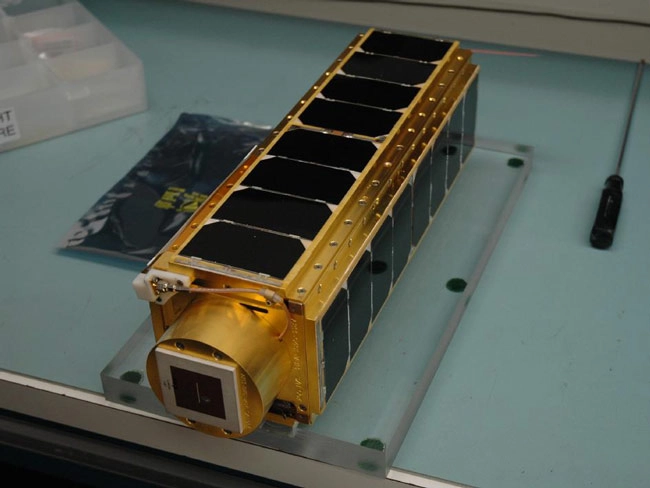
A small satellite the size of a bread loaf could helpscientists figure out how drugs work in space.
The nanosatellite, called PharmaSat, weighs 10 poundsand is designed to study how yeast responds to antifungal drugs while circlingthe Earth at 17,000 mph.
"PharmaSat is an important experiment that willyield new information about the susceptibility of microbes to antibiotics inthe space environment," said David Niesel, PharmaSat's co-investigator atthe University of Texas in Galveston.
PharmaSat is slatedfor launch aboard a U.S. Air Force Minotaur1 rocket on the evening of May 5, as a secondary payload. The rocketcarries a TacSat 3 satellite as its primary payload.
Weather permitting, the launch might offer a remarkablesight to many residents along the East Coast.
The satellite holds a micro-laboratory packed withsensors that can detect the growth, density and health of yeast cells.Scientists plan to use three different doses of the antifungal treatment andsee how the yeast responds over the course of 96 hours.
NASA spaceflight engineers could contact the satellite assoon as one hour after launch and send a command to start the yeast experiment.The satellite would then send data back to Earth in near real-time for as longas six months, if all goes well.
"Secondary payload nanosatellites expand the numberof opportunities available to conduct research in microgravity by providing analternative to the International Space Station or space shuttle conductedinvestigations," said Elwood Agasid, PharmaSat project manager at NASA'sAmes Research Center in Moffett Field, Calif.
Previous nanosatellite missions include GeneSat-1, a shoebox-sizedsatellite that launched in December 2006 and tested how well E. colibacteria thrived in space.
PharmaSat would start transmitting radio signals to NASAAmes and a secondary radio station at Santa Clara University, once itsuccessfully enters low Earth orbit at 285 miles above Earth.
Santa Clara University has extended an invitation to hamradio operators around the world to tune in and hear the satellite's broadcast.
- Video - Amazing Minotaur Rocket Launch: 'This Is So Cool'
- Image Gallery: 20 Great Rocket Launches
- The Top 10 Weapons in History