





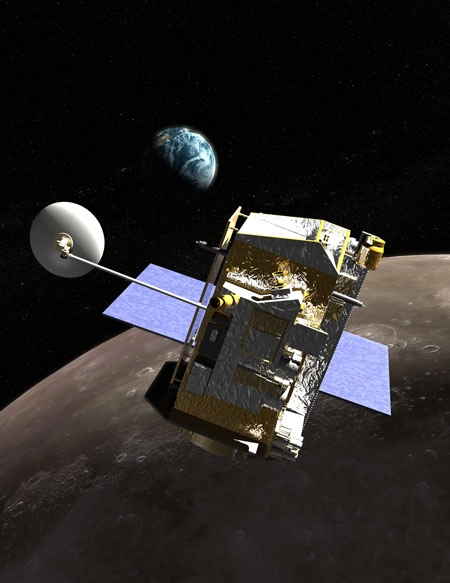
NASA haspushed back the launch of its Lunar Reconnaissance Orbiter (LRO) mission again,this time to June 2 at the earliest, due to a launch delay of the U.S. AirForce's Wideband Global Satcom-2 (WGS-2) communications satellite.
The lunar orbiteris NASA?s vanguard mission for the agency?s plan to returnhumans to the moon by 2020 aboard its new Orion spacecraft and Altair lunarlanders. NASA also plans to launcha second probe with the orbiter to slam into the moon?s surface as partof a hunt for water ice.
Both LROand the military?s WGS-2 satellite are slated to launch from the same pad atCape Canaveral Air Force Station in Florida aboard Atlas 5 rockets.Denver-based United Launch Alliance, manufacturer and operator of the Atlas andDelta rockets, needs about 60 days between launches for ground processing.
The launchof WGS-2, now set for April 3, was scrubbed in March when a leak was detectedin the Atlas 5 Centaur upper stage's oxidizer valve. Once the WGS-2 launchoccurs, United Launch Alliance can begin preparations for the LRO liftoff.
NASA has delayed LRO?slaunch several times due to a crowded launch manifest and now two WGS-2delays. The original goal was to launch LRO before the end of 2008. Otherlaunch dates had been set in April and May.
Todd May,NASA?s deputy associate administrator for science, said the agency?s launch windowsfor LRO span a limited four-day period that begins once every 12 days. NASAwill try to launch LRO between June 2 and June 6, May said Wednesday.
LRO willmap the moon in unprecedented detail and search for water and other resourcesthat could pave the way for humans to stay for extended periods on the lunarsurface. Its companion spacecraft, the Lunar Crater Observation and SensingSatellite (LCROSS) is designed to crashinto the lunar surface and create a plume so large that it can be observedby scientists on the ground. The plume will be studied for signs of water icein the shadowed polar regions of the moon.
- Video - How the Moon Was Made
- Video - NASA's Constellation Journey Begins: Part 1, Part 2
- The Best Moon Crashes of All Time
