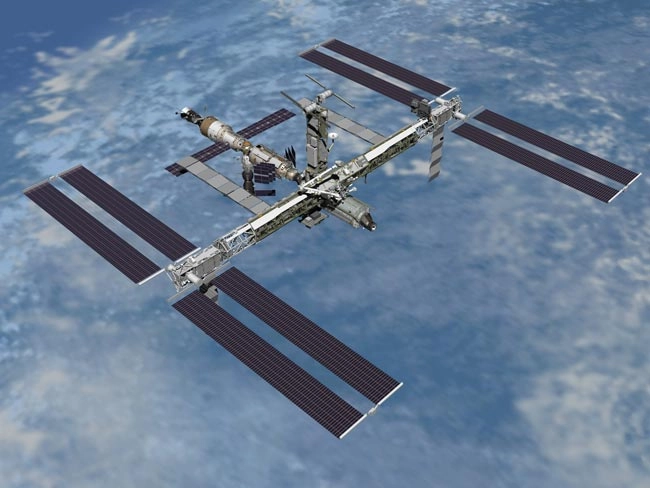
TheInternational Space Station (ISS) is primed to unfold new radiators later thismonth after successfully furling its oldest solar arrays.
Once sportinga wingspan of almost 80-feet (24.4 meters), the two wing-like solar arrays ofthe space station's Russian Zarya control module folded away after nearly nineyears generating power for the orbital laboratory.
The solararrays had been deployed since November 1998 shortly after Zarya, the firstpiece of the ISS to fly, launched into space to begin the station's construction.They were retractedlast weekend to clear space for future radiators that will unfold duringand after NASA's next shuttle flight, STS-120 aboard Discovery, slated tolaunch on Oct. 23.

"Theyhave to be out of the way for the radiators to deploy," NASA spokespersonJames Hartsfield, of the agency's Johnson Space Center in Houston, Texas, told SPACE.com."Each one took about one minute to two minutes to retract. There were noglitches at all."
Zarya'ssolar arrays are still generating some power, but not the average threekilowatts they once provided while fully unfurled, NASA said. The electricity fromthe station's expansive U.S. solar arrays, which reach out from the station'sport and starboard sides and each generate about 66 kilowatts of power, is morethan sufficient to make up for the drop in Zarya's production, the space agencyadded.
Anotherpair of Russian solar arrays continues to produce power from their perch on thestation's aft-mountedZvezda service module.
With thesuccessful retraction of Zarya's solar arrays, the stage is now set for NASA'sSTS-120 shuttle mission.
Commandedby veteran shuttle flyer Pamela Melroy, Discovery's seven-astronaut crew willdeliver a new connecting node to the ISS, relocate an older U.S. solar wing andtest orbiter heat shield repair methods during a planned 14-day mission.
- Top 10 Revelations of the Space Age
- VOTE: Your Favorite Manned Spacecraft
- Looking Back on 50 Years of Spaceflight
