





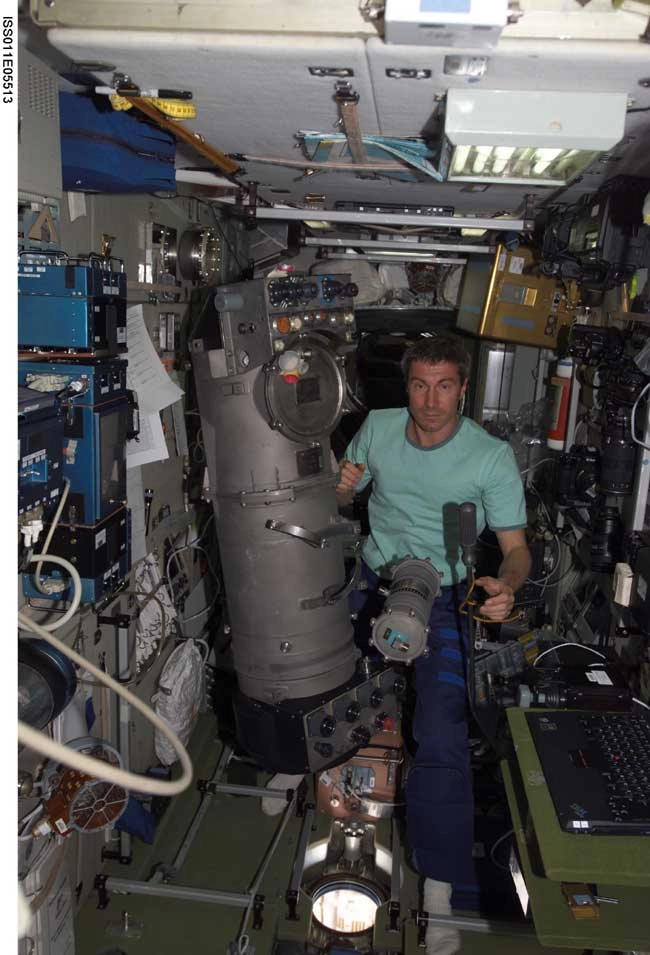
After four months of down time, theprimary oxygen generator aboard the International Space Station (ISS) is backonline.
Space station commander Sergei Krikalev and flightengineer John Phillips, the eleventh ISS crew, reactivated the orbitallaboratory's oxygen generator Monday at 9:41 a.m. EDT (1341 GMT), NASAofficials told SPACE.com.
While the generator appeared tofunction normally at first, it had failed into backup mode by the day's end, NASAspokesperson Kylie Clem said.
"It is still running," she said.
The Russian-built oxygen generator,known as an Elektron device, produces oxygen and hydrogen from water throughelectrolysis. Despite a series of repairs, the station's Elektron failedin May 2004.
Last week, Krikalevreplaced the Elektron's liquids unit with a sparethat arrivedat the ISS aboard the unmanned Progress 19 resupplyship on Sept. 10 in order to repair it. The astronauts, as well as U.S. andRussian flight controllers, continue to monitor the system.
While the Elektron device wasoffline, Krikalev and Phillips relied on oxygensupplies stored in tanks aboard the ISS and the unmanned Progress cargo ships.Before the arrival of Progress 18, which dockedat the ISS in June, the two astronauts also used solid fuel oxygen generator"candles" to maintain their atmosphere.
Krikalev and Phillips were never in anydanger of running out of oxygen, NASA officials said at that time.
The ISS Expedition 11 astronauts arenearing the end of their space station mission and are expected to return toEarth aboard their Soyuz spacecraft on Oct. 10 EDT, though it will be Oct. 11local time at their Kazakhstan landing site when they touchdown. Returning toEarth with Krikalev and Phillips will be U.S.scientist and entrepreneur Greg Olsen, who is paying $20 million to become thethird space tourist to visit the ISS.
Olsen will fly to the space stationwith NASA astronaut Bill McArthur and Russian cosmonaut ValeryTokarev, the crew of ISS Expedition 12. Their Soyuzspacecraft will launch toward the ISS on Sept. 30 at 11:54 p.m. EDT (0354 Oct.1 GMT) from Baikonur Cosmodromein Kazakhstan.
- Complete Coverage: ISS Expedition 11
- Complete Coverage: ISS Expedition 12
