Heightened solar activity has spurred the National Oceanic and Atmospheric Administration (NOAA) Space Weather Prediction Center to issue a geomagnetic storm watch for Dec. 25.
An incoming coronal mass ejection (CME) could spread aurora cheer this Christmas. Its anticipated arrival is predicted to spark minor geomagnetic storm conditions with auroras possible at high latitudes, such as northern Michigan and Maine.
The CME left the sun on Dec. 23 during a powerful M8.9 solar flare eruption and is currently on track to land Earth with a glancing blow.
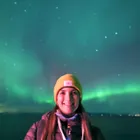
When CMEs strike Earth's magnetosphere, they bring electrically charged particles called ions that collide with our planet's magnetic field. These collisions can spark geomagnetic storms. During these storms, ions collide with atmospheric gases, releasing energy that manifests as light. This creates the stunning displays known as the northern lights, or Aurora Borealis, in the Northern Hemisphere, and the southern lights, or Aurora Australis, in the Southern Hemisphere.
NOAA classifies geomagnetic storms using a G-scale, which ranks their intensity from G1 (minor) to G5 (extreme). The recent geomagnetic storm watch issued by NOAA is currently rated as a G1, indicating minor storm conditions.
When will the geomagnetic storm occur?
Current forecasts predict possible G1 conditions on Dec. 25. Check out NOAA's 3-day forecast for the latest timings.
Space weather physicist Tamitha Skov has provided an informative space weather forecast for the days ahead in a post on X.
A set of #solarstorms comes in time for the holiday festivities! A wispy storm is expected on the 24th, with bigger impacts following. #Aurora possible to mid-latitudes on Christmas Day. Amateur #radio & #GPS operators expect moderate noise on the dayside radio bands this week. pic.twitter.com/CY3EbhO3hJDecember 24, 2024
Keep in mind that space weather, much like Earth's weather, is unpredictable and difficult to forecast. Even though geomagnetic storm warnings at this level are rare, they can occasionally amount to nothing.
Northern Hemisphere aurora forecast courtesy of the Met Office
If you're interested in tracking space weather and knowing when and where to spot auroras, download a space weather app that provides forecasts based on your location. One option I use is "My Aurora Forecast & Alerts," available for both iOS and Android. However, any similar app should work well. I also use the "Space Weather Live" app, which is available on iOS and Android, to get a deeper understanding of whether the current space weather conditions are favorable for aurora sightings.