





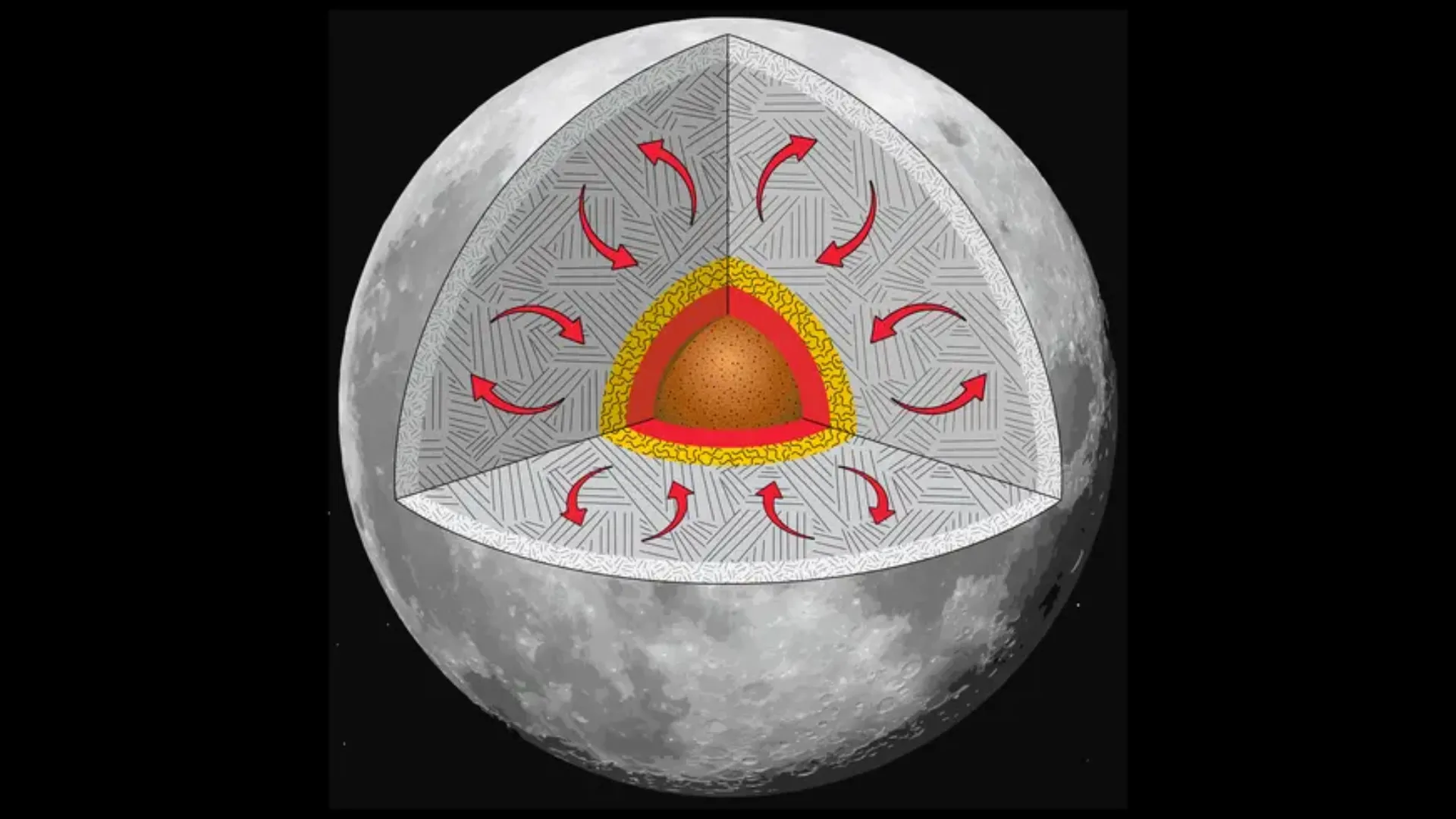
The moon is shrinking, and scientists are narrowing in on exactly how much our natural satellite has dwindled over the years.
The moon is thought to have formed from a violent collision between a massive object and our young Earth roughly 4.5 billion years ago, and its interior is still gradually cooling off from this ancient collision. As it cools, the moon contracts, leading to a long, slow shrinking process. Now, in a new study, scientists think that they have figured out how much smaller the moon is actually getting.
In this new study, scientists analyzing images snapped by the Lunar Reconnaissance Orbiter Camera (LROC) have spotted over 10,000 young faults, or cracks across the moon's surface. This helped them to figure out how much the moon has contracted over time, and they now estimate that the moon's radius has decreased by about 148 feet (45 meters) over the past 400 to 800 million years.
"The number of these young faults revealed in LROC images is much greater than I ever imagined," study lead Thomas Watters, a geologist and scientist emeritus at the Center for Earth and Planetary Studies at the Smithsonian's National Air and Space Museum, said in a statement. "As the interior of the moon continues to cool and contract, it is expected that the growth of existing faults and formation of new faults continues today."
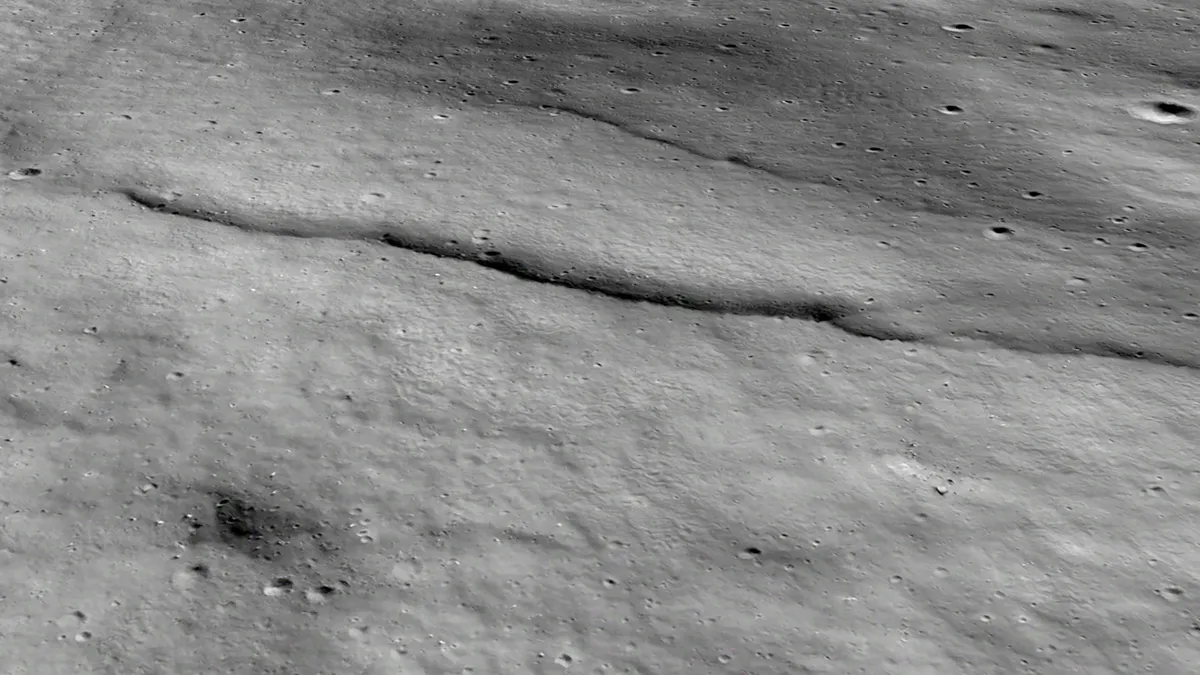
With these LROC observations, researchers in this study saw a variety of different types of cracks and landforms across the lunar surface. This included lobate scarps, or long, curved structures that form when the moon's surface contracts, cracks and is pushed upwards; and small mare ridges, or narrow "wrinkles" in the lunar surface, across the dark plains on the moon.
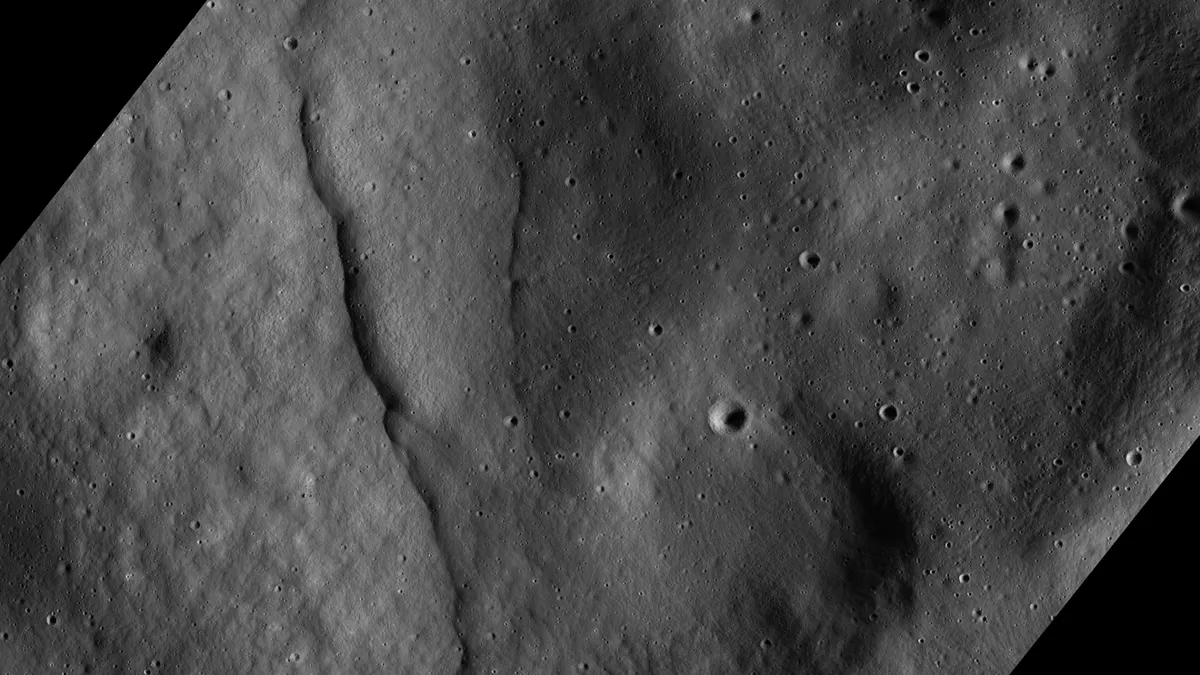
Tectonic activity on the moon looks a lot different than it does on Earth. On our own planet, there are about 15 major tectonic plates. On the moon, there are no tectonic plates at all. Instead, the moon has a single-plate body meaning its outer shell is a single piece only broken by faults or other such cracks created by the moon contracting. This means that instead of faults or cracks appearing at tectonic plate boundaries, they are instead scattered all over the moon.
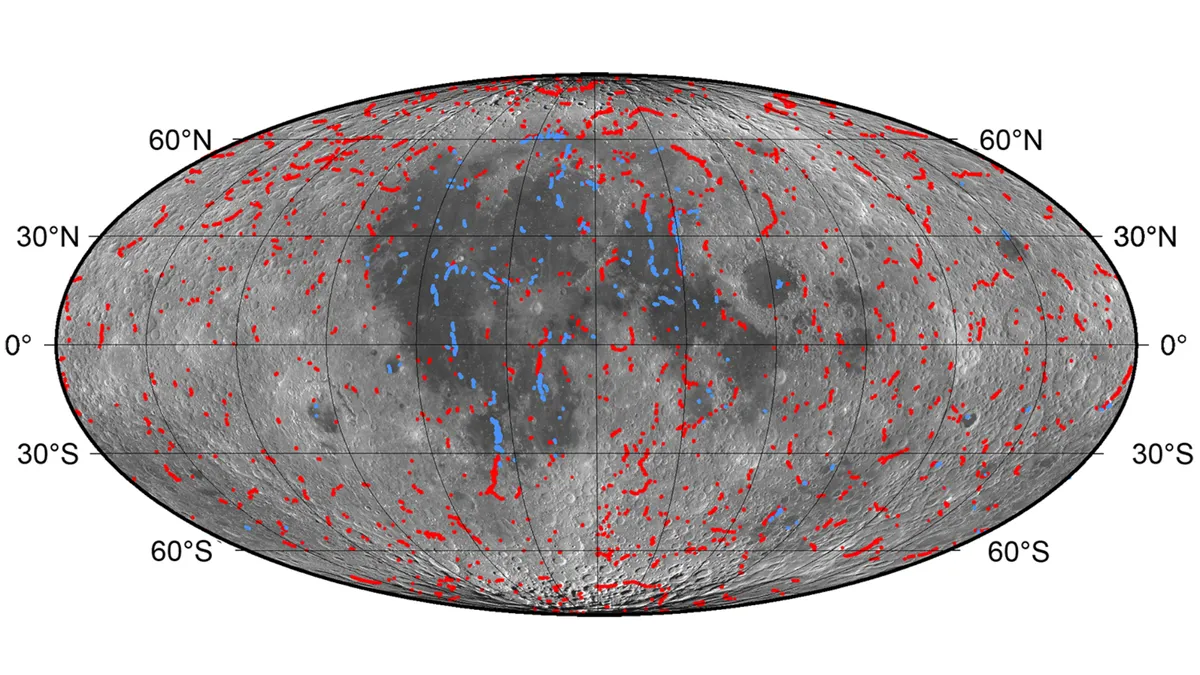
By mapping these thousands of different features, all created from the moon cooling and contracting over time, the researchers are piecing together lunar history. In addition to finding the extent to which the moon has shrunk over time, they also found that some areas of the moon are covered in many more faults than other areas, and the areas with fewer cracks and faults have thicker moon crust.
This led them to conclude that not only are these areas with thicker crust more stable, but they suggest that a great deal of the widespread cracks in the lunar surface were created later in the moon's history as, in its earlier years, its thick crust would have insulated the moon's warm interior and prevented cooling, contracting and cracking.
This work was described in a study published Oct. 14 in The Planetary Science Journal.