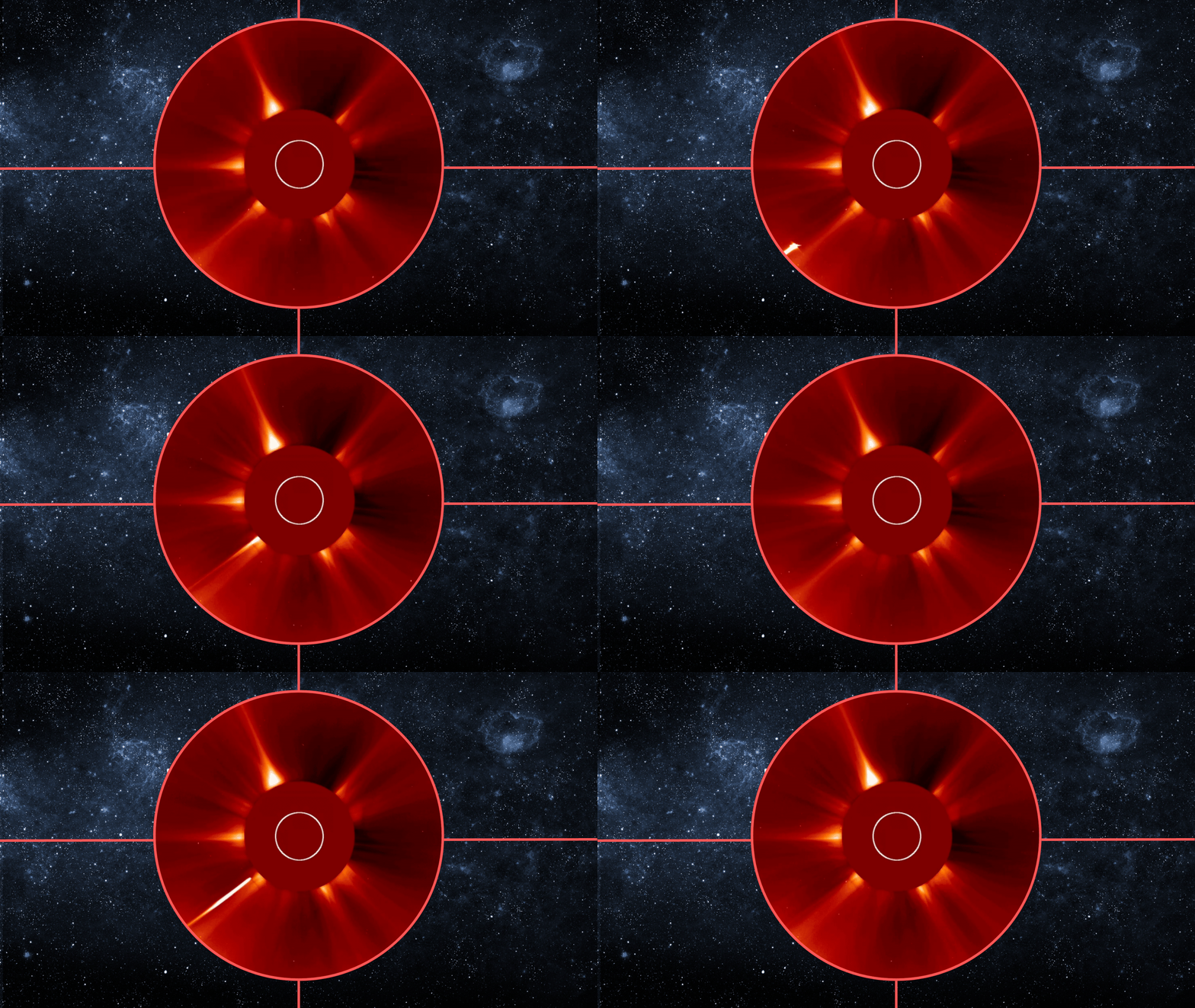
The solar system has one less comet.
The much-heralded Comet MAPS, proclaimed by some as "The Great Easter Comet," met its end this past Saturday (April 4). The comet apparently underwent a cataclysmic fragmentation just hours before it was to make its closest approach — called perihelion — to the sun. Such was not completely unexpected, for Comet MAPS was a Kreutz sungrazer, a type of comet that comes literally within a hairbreadth of the sun. They may all have evolved from the breakup of a usually large comet's close approach to the sun, perhaps a millennium ago. From this progenitor, countless fragments of different sizes have been circling the sun in similar orbits.
Most of these fragments have themselves shattered into several pieces following their own solar rendezvous. In a few cases, these broken comets have escaped total annihilation by sweeping back out into the depths of space; survival is primarily dependent on how large the comet nucleus is. Kreutz comets on the order of a few miles or more in diameter, such as the Great Comets of 1843, 1882 and Ikeya-Seki of 1965, put on spectacular displays and managed to avoid total annihilation.
But this was not to be for Comet MAPS.
Much smaller than originally thought
Initially, when discovered in January, it was arbitrarily assumed that Comet MAPS might be rather large, as most Kreutz comets go. Indeed, many such comets have escaped detection on their way toward the sun until only some days or at most several weeks before perihelion. But Comet MAPS was found nearly four months before it arrived in the vicinity of the sun. No Kreutz comet had ever been detected so far out in space.
But it had since been determined that the initial sightings were due more to improved technology in picking up very faint objects as opposed to this being a large comet. Indeed, when it was first sighted on Jan. 13 using the 11-inch f/2.2 Schmidt telescope with a CCD camera at the AMACS1 Observatory at San Pedro de Atacama, Chile, the comet was exceedingly faint: magnitude +18 or about 12,000 times dimmer than the faintest sky objects at the threshold of a normal person's eyesight.
More recently, utilizing images taken with the James Webb Space Telescope, researchers suggested that the nucleus of Comet MAPS was, in fact, unusually small: only about 0.2 miles (0.4 kilometers) in diameter. Since the comet was destined to pass only about 100,000 miles (160,000 km) above the sun's surface at around 14 hours UTC (10 a.m. EDT) on Saturday, the odds did not look good for Comet MAPS to survive its close brush with the sun.
Poor prospects for endurance
In a Space.com article published on March 31, we suggested that the comet could likely either completely disintegrate on its way to the sun, or, if it somehow survived, disintegration would come later, leaving only a trail of dusty debris in its wake, producing a display similar to the Great Southern Comet of 1887 (described as "The Headless Wonder") or Comet Lovejoy of 2011.
As it turned out, the former option was how Comet MAPS met its ultimate fate.
Comet's date with destiny
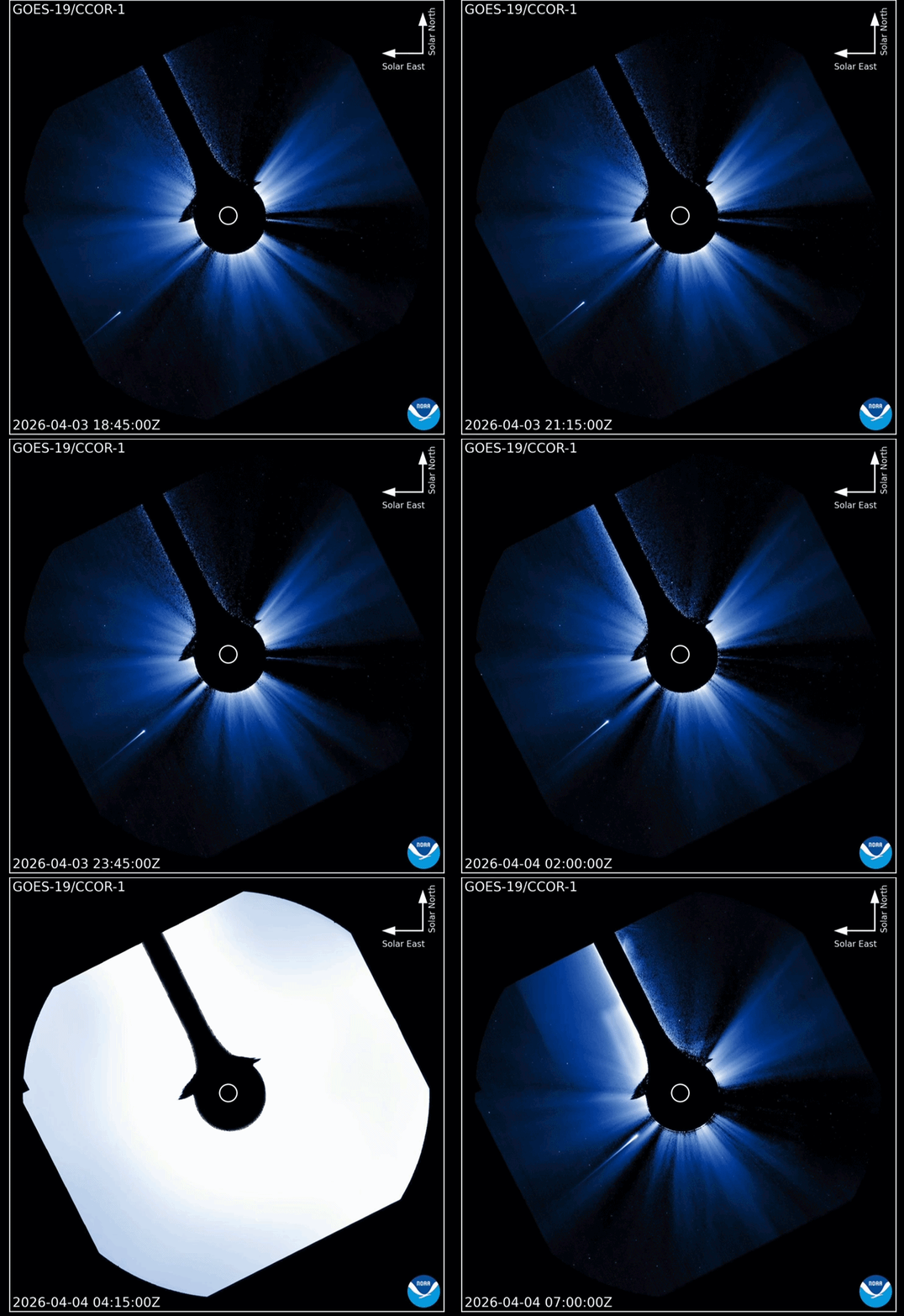
On Saturday, all eyes were monitoring the comet's progress using the Solar and Heliospheric Observatory (SOHO) Large Angle and Spectrometric Coronagraph (LASCO) C2 and C3 cameras, as well as the Compact Coronagraph (CCOR) on the GOES 19 satellite. All showed Comet MAPS rapidly approaching the sun — at perihelion, the comet would be racing along a hairpin curve at a maximum of 300 miles (500 km) per second.
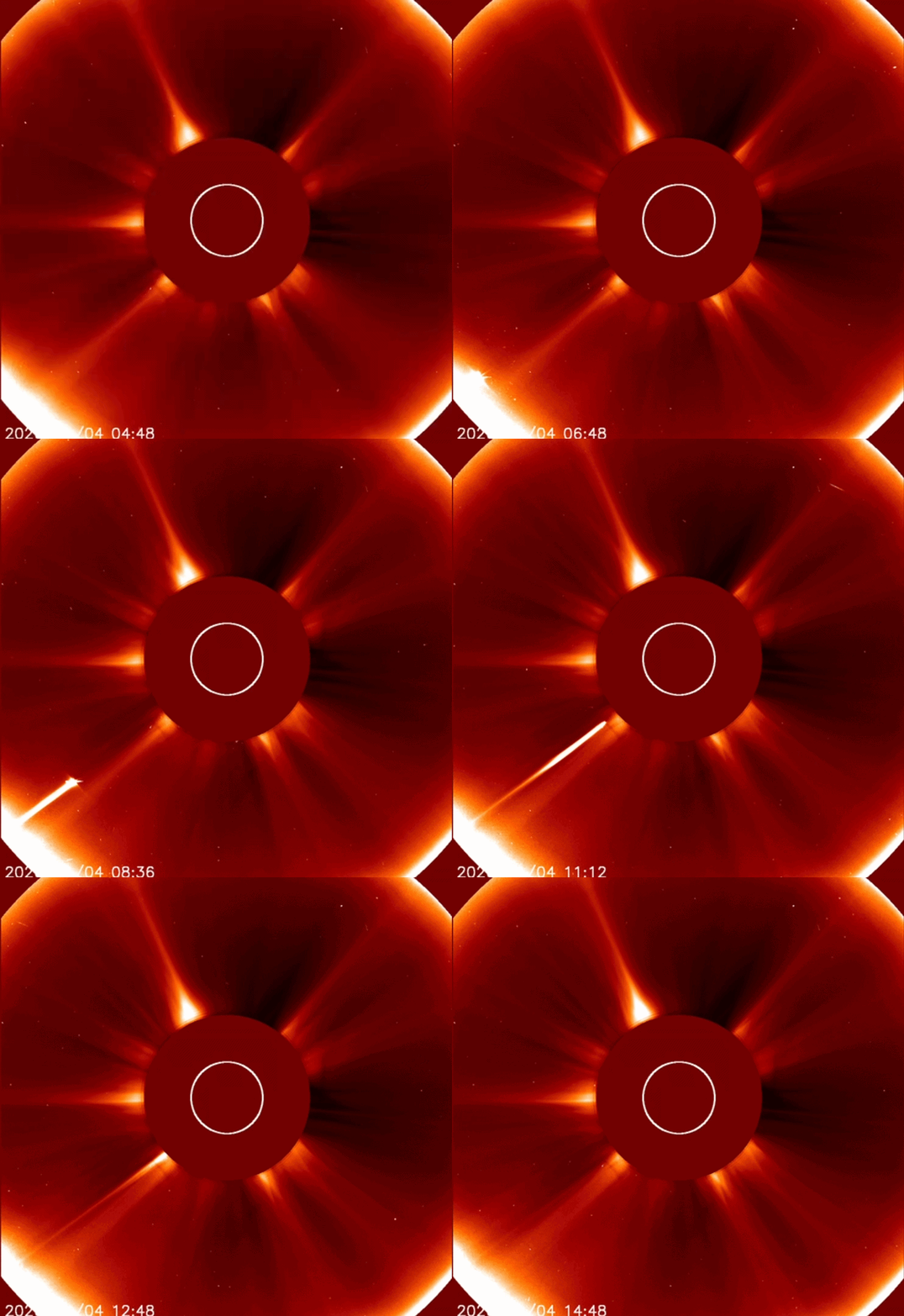
Sometime between 07 and 09 hours UTC, the comet noticeably brightened, reaching a magnitude of approximately -1 (nearly as bright as Sirius, the brightest star). This may have signaled a major disruptive event for the comet nucleus. By 11:36 UTC, the comet on LASCO imagery appeared as an elongated streak with no head.
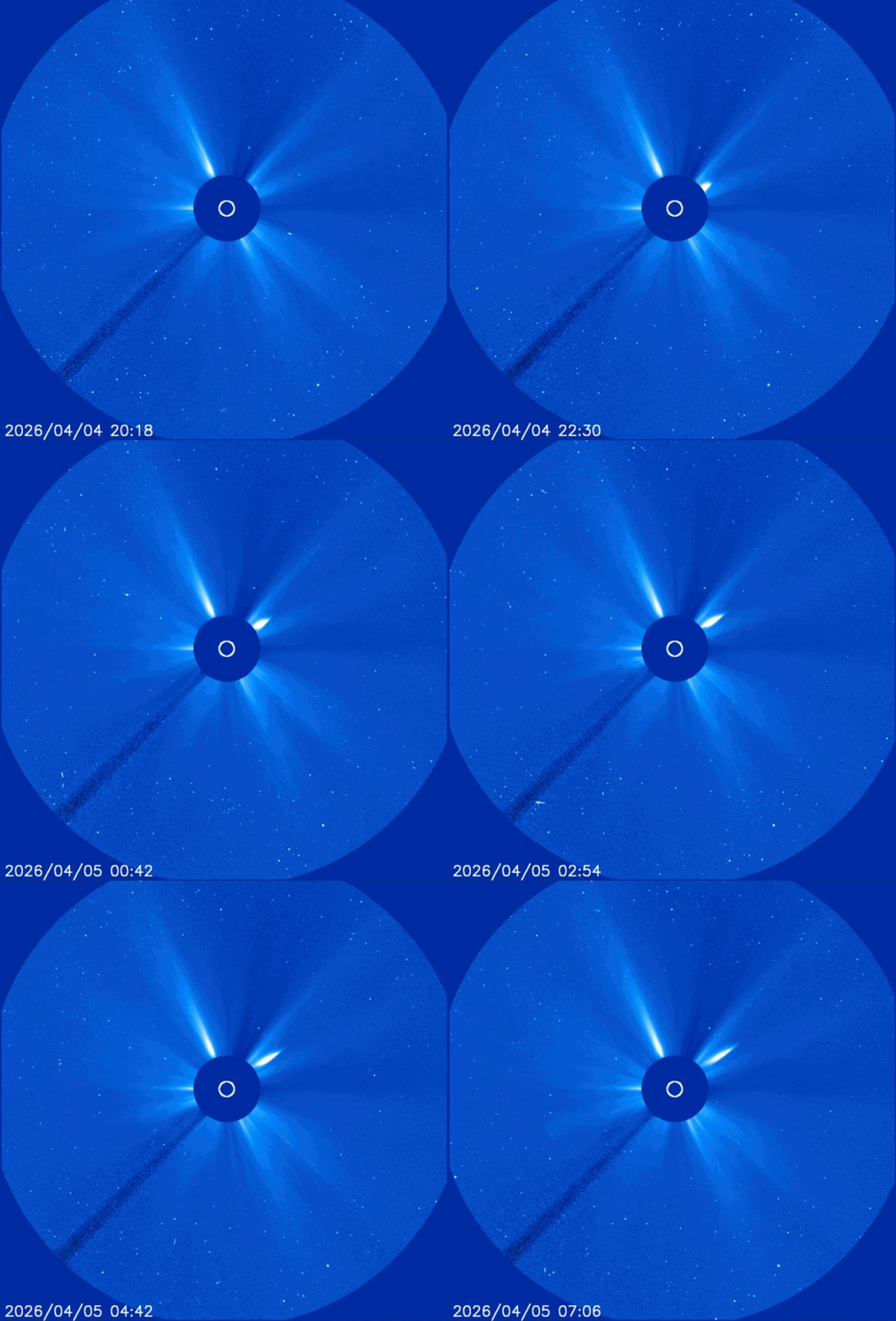
During the few hours surrounding the time of the comet's closest approach to the sun, the comet was hidden behind the occulting disk, which also blocks the direct light of the sun. Observers anxiously awaited the comet's reappearance but saw nothing. Then, at around 22 hours UTC, the remains of the comet appeared as a sort of "blob" of material at 2-3 o'clock (if the occulting disk were imagined as the face of a clock).
No show this week
In short, MAPS went in, but only a cloud of debris came out: Obviously, sometime between 12 hours and 22 hours UT (8 a.m. and 6 p.m. EDT), the nucleus of Comet MAPS completely shattered, leaving behind in its wake an immense cloud of dust, which has since rapidly dissipated. As such, there will be nothing for skywatchers to see in the western evening sky this week. Hopes for a spectacularly bright comet or even a conspicuous narrow appendage of light (the tail) have been taken away this week in the wake of the comet's destruction.
What happened?
It's easy to understand how this celestial wanderer met its end. Having spent much of the last 18 centuries out beyond the known limits of our solar system, Comet MAPs was literally "soaking up the cold." Temperatures out there are likely to be within a few degrees of absolute zero: −459.67 °F ( −273.15 °C).
Suddenly, the comet finds itself hurtling headlong toward the sun and its nucleus begins heating up very rapidly. On the outside, temperatures begin climbing to above 3,000° F (5,000° C), though on the inside it's still frigidly cold. In addition to the sun's intense heat, it was also likely subjected to tremendous solar gravitation and tidal forces.
Question: What happens when you pour very hot tea into a very cold glass?
That's probably what happened to Comet MAPS. Simply a matter of too much stress on its relatively tiny nucleus, combined with dramatic temperature differences inside and out, sadly led to the comet's extinction.
Joe Rao serves as an instructor and guest lecturer at New York's Hayden Planetarium. He writes about astronomy for Natural History magazine, Sky and Telescope, The Old Farmer's Almanac and other publications.