
See our amazing collection of stories and features about the increasingly important topic of space weather (aka solar storms).
Related Topics: Solar Eclipse, Aurora Borealis
Latest about space weather

Scientists propose spraying chemicals into Earth's magnetic field to protect us from powerful solar storms
Scientists have proposed a spacecraft-based system to actively strengthen Earth's magnetic shield and reduce the impact of powerful solar storms.

Incoming CME could spark impressive northern lights over the northern US tonight
A coronal mass ejection is currently racing toward Earth and could trigger G2 to G3 geomagnetic storm conditions on June 8, potentially boosting aurora displays across northern latitudes.

Aurora alert! 4 Earth-bound CMEs could spark northern lights as far south as Illinois and Oregon tonight
Heads up aurora chasers! We could be in for a show! Multiple CMEs are en route and could spark strong geomagnetic storm conditions and auroras deep into mid latitudes.
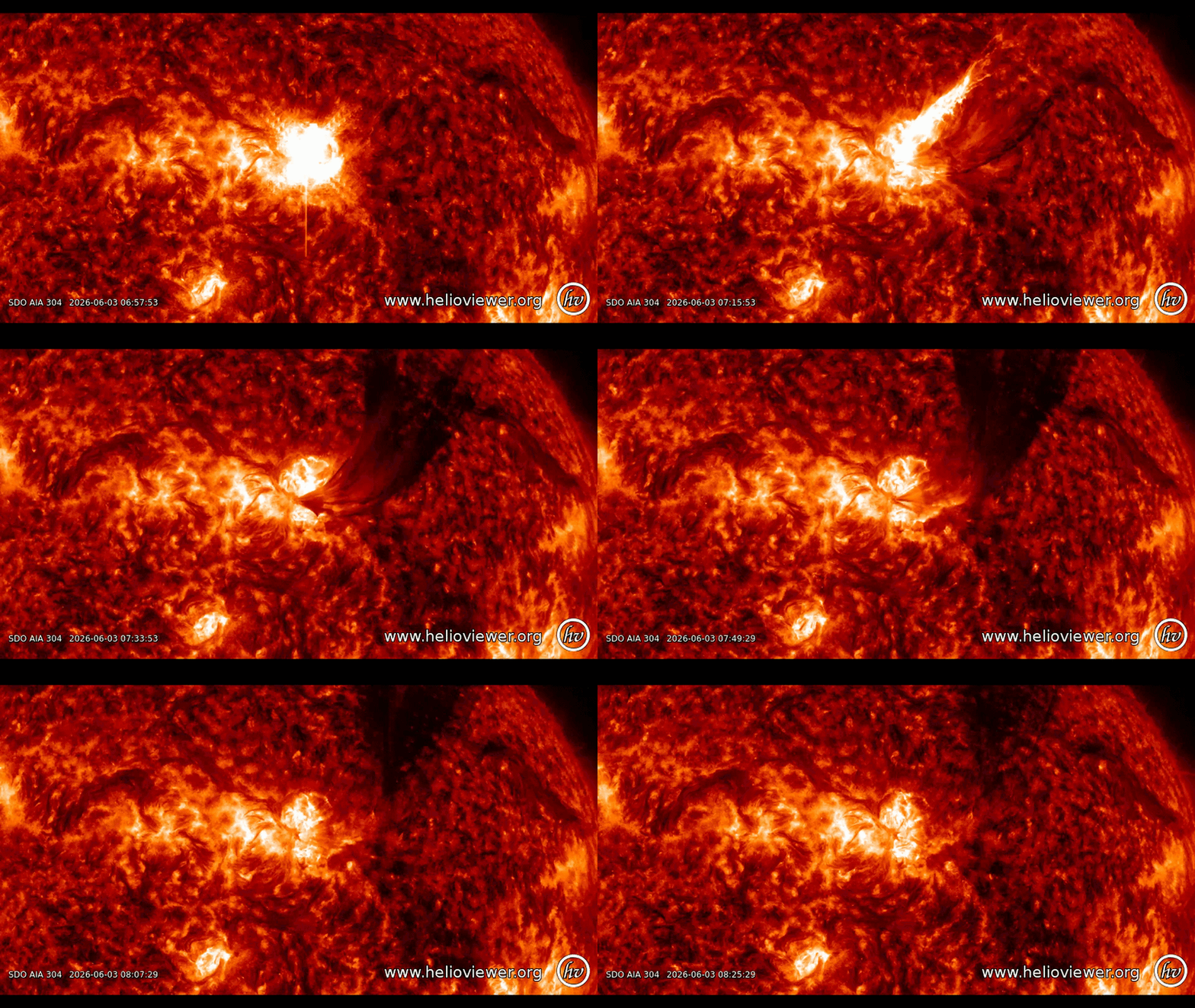
Sun erupts with 3 colossal solar flares in less than 24 hours, boosting chances for northern lights
A trio of major solar flares triggered radio blackouts across Earth and may spark impressive northern lights as possible solar storms head our way.

Vega C rocket launches European-Chinese space weather satellite to orbit
A Vega C rocket launched the European-Chinese SMILE space weather mission to orbit on Monday night (May 18).

Northern lights may be visible in several US states tonight as 3 CMEs race toward Earth
Forecasts say up to three glancing CME impacts could trigger G1 and possible G2 geomagnetic storms through May 20, boosting aurora chances across parts of the northern U.S.

Geomagnetic storm could spark northern lights as far south as Michigan and Maine May 15-17
A fast stream of solar wind could trigger G1 geomagnetic storm conditions overnight, boosting aurora chances across parts of the northern U.S.

Aurora expert captures rare pulsating northern lights in remarkable detail: 'One of the most profound sightings of my career'
An unusually powerful pulsating aurora display lit up skies over Arctic Norway for nearly three hours during a colossal geomagnetic storm.

