





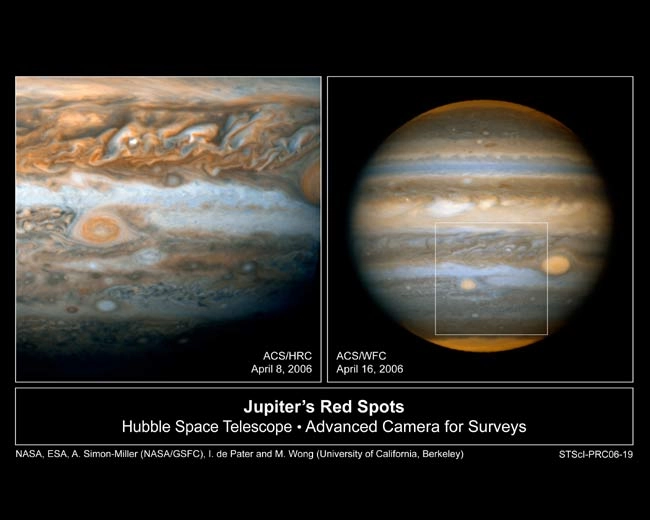
WASHINGTON (AP) - Just alittle more than a year ago, the smallspot on Jupiter was a palewhite; now it matches the reddish hue of its bigger sibling, the Great RedSpot, and boasts 400 mph winds, according to new data from the Hubble SpaceTelescope.
Both spots are actuallyfierce storms in Jupiter's atmosphere. While the red spot - at three times thesize of Earth - is much more noticeable, strangethings are happening to the smaller spot.
Scientists aren't quitesure what's happening to the smaller storm, nicknamed the Little Red Spot orRed Spot Jr. but officially called "Oval BA.'' It probably gained strength asit shrunk slightly, the same way spinning ice skaters go faster when they movetheir arms closer, said NASA planetary scientist Amy Simon-Miller. Her findingsfrom the Hubble data were published in the astronomical journal Icarus.
As the storm has grownstronger it's probably picked up red material from lower in the Jupiteratmosphere, most likely some form of sulfur which turns red as part of achemical reaction, she said.
The color change tookastronomers by surprise. And now they figure more surprises are in store as thesolar system's largest planet goes into hiding from Earth's prying eyes untilJanuary, moving behind the sun.
"We found that Jupitertends to do interesting things behind the sun and we can't see it,''Simon-Miller said.