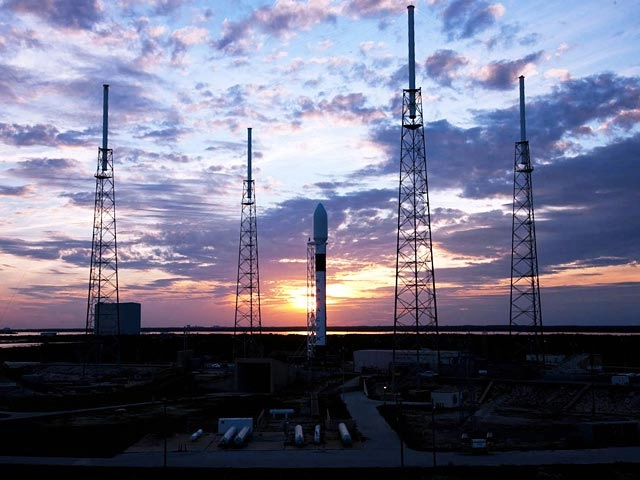
A Texas zero gravity experiment has won a $25,000 cashaward and a free ride into space aboard a privately built rocket.
The winning team from the University of Texas would seetheir work go up on a Falcon9 rocket from private spaceflight firm Space Exploration Technologies(SpaceX), one of the sponsors for the first Microgravity Research Competition.Other competition sponsors included The Heinlein Prize Trust and the RiceAlliance.
"Microgravity opensa new window on biological and physical processes, enabling innovation inbiotech, nanotech, and other fields," said Art Dula, a trustee for theHeinlein Prize Trust. "Furthermore, microgravity can now be accessed bycompanies and universities on a commercial basis."
The proposed experiment focuses on developing drugdelivery systems for medical applications. The results could help promote thescience and technology of implantable devices for controlled, long-term drugrelease — research which could yield treatment means for diseases such ascancer.
"The winner's experimental payload will be launchedon a future flight of SpaceX'sFalcon 9 rocket and remain in a microgravity environment onboard SpaceX'sDragonLab spacecraft for an extended period of time before returning to Earth,"SpaceX officials said in an online statement.
The Hawthorne, Calif.-based SpaceX has begun testing onits Falcon 9 rocket at Florida's Cape Canaveral Air Force Station for its firstlaunch later this year. The firm has already signeda contract for its rocket and Dragon spacecraft to help haul NASA cargo toand from the International Space Station, and could take on private payingcustomers too.
SpaceX previously celebrated its firstsuccessful launch of the smaller Falcon 1 rocket in September 2008, provingthat fourth time's the charm after three failed attempts.
The company had delayed its latest launch attempt, aplanned Monday Falcon 1 liftoff to carry a Malaysian satellite into orbit,while engineers study compatibility issues between the rocket and its payload.
- Video - SpaceX's Falcon 1 Rocket Success!
- Video: ATV's Successful Mission
- Future of Flight: Space Tourism, Investment and Technology