





The nextspace tourist bound for the International Space Station could launch as earlyas September despite the lack of available seats aboard Russian spacecraft, theprivate firm arranging the multimillion-dollar joyrides announced Friday.
Eric Anderson,president and CEO of the Vienna, Va.-based space tourism company SpaceAdventures, said there is a chance that a paying customer could ridea Russian-built Soyuz spacecraft to the station in a seat that is currentlyreserved for a professional cosmonaut from Kazakhstan.
?In fact,there is a possibility that one of Space Adventures? clients could launch on SoyuzTMA-16, which is currently scheduled for launch this Sept. 30,? Anderson toldreporters in a teleconference. ?
Andersonsaid that the possibility is still unconfirmed, but his announcement comesafter recent reports by Russian and NASA officials claiming that spacetourist seats will be unavailable on Soyuz spacecraft for the next fewyears once the International Space Station doubles its crew size up to six peoplein late May.
Whocould fly?
Should theSeptember Soyuz seat become available, Space Adventures has alerted itspotential customers to the opportunity, Anderson added. The company has atleast two customers already trained for spaceflight: entrepreneur Esther Dyson -the backup forspace tourist Charles Simonyi, who is in space today - and Australianbusinessman Nik Halik, who served as the back up for the launch of American computergame developer Richard Garriott last year.
SpaceAdventures is currently the only firm offering tickets to orbital space forpaying customers. The company began arranging seats aboard Russia?s three-seatSoyuz spacecraft for private spaceflyers bound for the International SpaceStation in 2001. Once the space station shifts to a six-person crew, Russiawill have to launch two separate, but fully crewed, Soyuz spacecraft to ferry astronautsand cosmonauts to and from the orbiting laboratory.
Andersonsaid that aside from the September Soyuz launch, there is also a remote possibilitythat other seats will be available for purchase on future Russian spacecraftflying to the station before 2012, when Space Adventures plans to launch thefirst all-private Soyuz mission to the orbiting lab.
?We havereason to believe that from time to time, there may be sets of circumstancesthat allow for a private citizen to be a spaceflight participant on one ofthose flights,? Anderson said. ?It?s too early to tell, but we do believe thatwill be possible in the future.?
Andersonsaid the first all-private Soyuz mission, which would include two spacetourists and one professional cosmonaut commander, is on track for a 2012 launch.It would require Russia?s Federal Space Agency to build an additional Soyuzvehicle beyond the four per year it must provide to support six-person stationcrews.
Therepeat space tourist
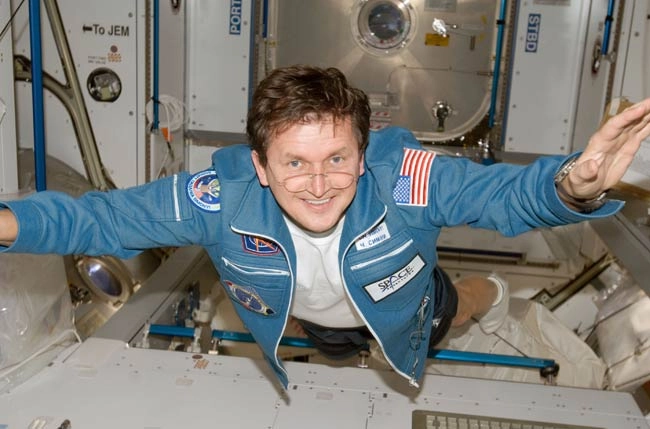
SpaceAdventures? seventh private spaceflight is currently in mid-flight, with Americanbillionaire Charles Simonyi aboard the space station on what is his secondorbital trek arranged by the company. Simonyi, 60, is paying about $35 millionfor a 13-day spaceflight to the station.
TheHungary-born computer software developer firstflew to the station in April 2007, paying more than $20 million for thatflight, which set a record for the world?s longest space tourist flight. Thecost of private spaceflights has been increasing in recent years due toinflation, and Anderson said he believes that trend will continue for theforeseeable future.
?The costsof the trip are definitely going up,? Anderson said, attributing the rise toincreased demand and inflation. ?I think that the cost will only get moreexpensive for the Soyuz over time.?
NASA andRussia?s Federal Space Agency announced today that the Soyuz ferrying Simonyi andtwo professional astronauts back to Earth from the space station has beendelayed one day to April 8, extending his private spaceflight by one dayand tying his previous record-setting flight.
Russian space agency officials have said that Simonyi?s flight will likelybe the last orbital space tourist flight for several years due to the plannedshift to larger, six-person crews later this year.
The space station has had a maximum permanent crew of three since 2000, whenthe first astronauts and cosmonauts took up residence aboard the outpost. Thestation?s current three-man Expedition 19 crew - which launched last week withSimonyi aboard - is expected to double in size in late May, when a second Soyuzspacecraft is due to arrive with another three spaceflyers.
Andersonsaid that Space Adventures customers are extremely dedicated and patient, andwilling to set aside funds to experience spaceflight even in the current economiccrisis.
?Someonewho?s had a life dream is not going to let an economic downturn, even if it?s alonger one than we would have hoped, change their long-term objective,?Anderson said, adding that Space Adventures is not immune to the current economicclimate. ?Certainly the interest is still there, despite all the hardship.?
Spacetourist Charles Simonyi is chronicling his second spaceflight on his website:www.charlesinspace.com.
- New Video - Space Tourist Tours the ISS
- New Video - Charles Simonyi: World's 1st Repeat Space Tourist
- Image Gallery - Charles in Space!
