





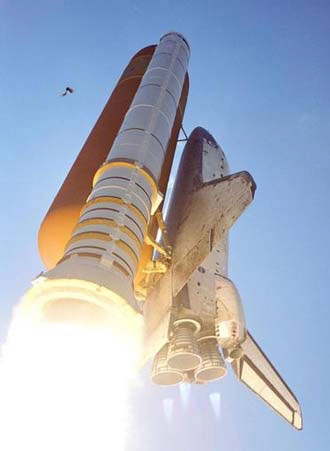
Thereported crash of a passenger jet in New York?s Hudson River after a birdstrike is a reminder of NASA?s preparations to safeguard its space shuttlefleet against the same threat.
Officialsthink one or more engines were struck by birds. The jet engines are fragile,and slight damage can causea cascade of failure.
Airplane-birdstrikes are common. NASA has some experience with the risk, too.
Since 2005,officials at NASA?s Kennedy Space Center in Cape Canaveral, Fla., have kept akeen eye for flocks of birds nearby launching and landing space shuttles tomake sure the birds don?t endanger astronauts aboard the spacecraft orthemselves.
?There?sbeen a bird abatement program,? NASA spokesperson Allard Beutel told SPACE.comfrom the spaceport today. ?We actually have bird radar.?
In 2005, alarge turkey vulture collided with the back of the space shuttle Discovery?sexternal tank during NASA?s first flight since the 2003 loss of the Columbia orbiter,which was destroyed during re-entry due to heat shield damage incurred duringits launch two weeks earlier. The 2005 bird strike incident proved fatal forthe turkey vulture, but posed no risk to the shuttle Discovery since itoccurred on the side of the external tank that faces away from the attachedorbiter.
As a safetyprecaution, NASA undertook measures to reduce the potential for a bird striketo rain debris on a launching shuttle and damage its fragile heat shield. Thefirst step calls for employees to call in any reports of road kill around thespace center, which can attract flocks of large, ravenous turkey vultures.
?We?re inthe middle of a wildlife refuge,? Beutel said of the Florida launch site, whichsits in the Merritt Island National Wildlife Refuge. ?There are going to bebirds out there.?
Since 2005,NASA launch officials now track flocks of birds by radar during a launch. Thereis also a point during launch countdowns when NASA officials can hold theliftoff a few minutes to allow an interfering flock to fly out of a shuttle?slaunch path.
Soundcannons are used to scare birds away from the space centers Shuttle LandingFacility before an orbiter returns to reduce the risk of interference duringlanding.
A massiveflock of birds slamming into a landing space shuttle, which has no engines andfunctions as a 100-ton glider, can damage the orbiter or even slow its descentto the point that it lands well short of its intended spot, Beutel said.
?You don?twant to run into a bird and possibly slow your glide down, because we can?tcome around again for another try,? he said.
At the sametime, Beutel said, efforts are made to not injury the preserve?s avianpopulation.
?We?re notlooking to kill any wildlife,? Beutel said. ?But you?ve also got to protect theastronauts.?
- How Birds Can Down a Jet Airplane
- Images - Stunning Night Launch for Shuttle Endeavour
- NASA's Most Memorable Missions
