WASHINGTON— Space Exploration Technologies (SpaceX) Chief Executive Elon Musk recentlyaccepted a $20 million investment from Founders Fund, a $220 million venturecapital firm managed by his fellow PayPal co-founders.
"FoundersFund has a track record of investing in companies with the potential torevolutionize industries. We are pleased to be included in their portfolio andwelcome [Founders Fund managing partner] Luke Nosek to our Board," Musk saidin an Aug. 4 statement. "Founders Fund shares the SpaceX vision ofcreating a world-class company that will shape the future through technologicalinnovation."
Nosek,like Musk and two of Founders Fund's other three managing partners, was aco-founder of PayPal, which was sold to online auctioneer eBay in 2002 for $1.5billion.

Muskfirst mentioned an outside investment in an Aug. 2 message to employeesreleased shortly after the Falcon 1 rocket's latestlaunch failure. The privately financed rocket has launched three timessince March 2006 but has yet to reach orbit.
Inhis message, Musk said he had accepted the investment "as a precautionarymeasure to guard against the possibility of flight 3 not reaching orbit."Musk did not quantify the investment or identify the investor in that message,but said the money, combined with existing cash reserves, would enable SpaceXto continue launching Falcon 1 while developing the larger Falcon 9 rocketalong with Dragon, a reusable capsule designed to carry cargoto the International Space Station.
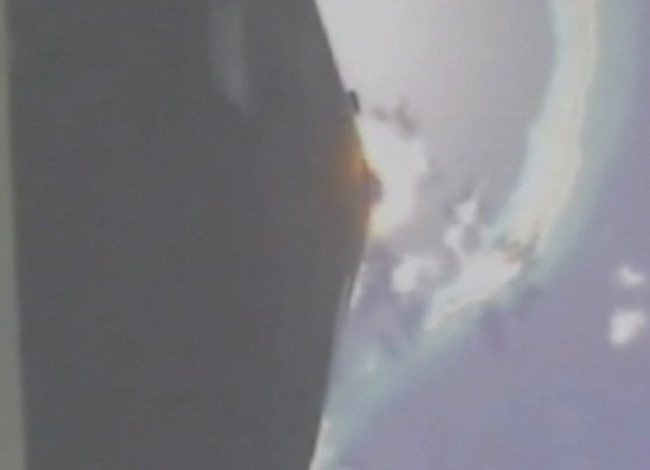
Falcon1's latest launch occurred at 11:34 p.m. Eastern time following an earlierabort and appeared to be going well until a video transmission from the rocketstopped two minutes and 11 seconds into the flight. A SpaceX announcer saidthere had been a vehicle anomaly and abruptly signed off. SpaceX officialslater said the first and second stages of the rocket failed to separate. Muskhas made no public statement since the launch failure beyond the message toemployees, which was read to reporters and posted to the company's Web site.
SpaceXspokeswoman Diane Murphy said Aug. 4 that the company would hold a mediabriefing "as soon as we have definitively determined what wentwrong."
Accordingto U.S. Army Lt. Col. Harold A. Buhl, commander of the Army's Reagan Test Sitein the Kwajalein Atoll, the rocket safely splashed down in the Pacific Ocean"well east" of the Marshall Islands.
"Therewas no command flight termination action taken as the system ceased poweredflight following the anomaly, and the track to splash was within the clearedmaritime area," Buhl said in an Aug. 4 e-mail. "There was never anyrisk to personnel or property as the area was completely contained as openocean — no habitated islands or aviation/shipping lanes."
Lostin the failure was Trailblazer, an experimental satellite built by Poway,Calif.-based Space Dev for the Pentagon's Operationally Responsive SpaceOffice, along with a NASAsolar sail experiment and a payload adapter demonstration for the Malaysianspace agency.
- Video: Falcon 1's Second Flight
- Video: Dragon in Space
- Future of Flight