





NASA'sPhoenix Mars Lander scraped up some icy soil to analyze in its instruments,NASA announced on Tuesday.
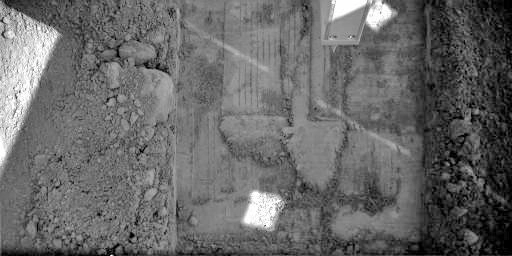
OnSaturday, the lander's 33rd Martian day, or sol, on the red planet, Phoenixenlarged the "Snow White" trench in the so-called Wonderland area.Two days earlier, the spacecraft dug downto the hard icy layer beneath the subsurface dirt with its robotic arm.
It thenused the rasp on the scoop at the end of the arm to make 50 scrapes in the iceand then heaped the scrapings into little piles each with about two to fourteaspoonfuls of ice. The scraping created a grid in the icy layer about 0.08inches (2 millimeters) deep.
On Sunday,mission scientists used the craft's Surface Stereo Imager to viewthe scrapings and agreed that they were ideal representatives of theboundary between dirt and ice.
Mission controllers commanded thespacecraft to scoop up some of the scrapings for analysis in the lander'sinstruments. Phoenix will first sprinkle some of the material into the Thermaland Evolved-Gas Analyzer (TEGA), which bakes surface samples and analyzes theircomposition. TEGA is especially sensitive to the signature of water and candetermine the melting point of ice.
Byanalyzing these samples from the Martian surface, scientists hope to determinewhether the water ice near the planet's north pole may once of have beenliquid, possibly creating a habitable zone for Martian microbial life.
- Video: Sounds From Phoenix Mars Lander's Descent
- Video: NASA's Phoenix: Rising to the Red Planet
- New Images: Phoenix on Mars!
