





Thisstory was updated at 8:28 p.m. EST.
CAPECANAVERAL, Fla. -- NASA's shuttle Atlantis and its seven-astronaut crew willhave to wait until Saturday to rocket toward the International Space Station(ISS) with a new European laboratory after a sensor glitch thwarted a Thursdaylaunch attempt.
Faultyreadings in two of four hydrogen fuel gauge sensors prevented Atlantisfrom launching from NASA?s Kennedy Space Center here at 4:31 p.m. EST (2131GMT). NASA flight rules call for three operational sensors in order to launch.
?Preliminaryindications are that we have an open circuit there,? said NASA shuttle launchdirector Doug Lyons after the scrub, adding that more analysis is required todetermine if that is the case and the circuit?s location. ?Once we isolatethat, we can determine the appropriate corrective action.?
Atlantisand its STS-122 astronaut crew are now set to launch spaceward Friday at 3:43p.m. EST (2043 GMT), with weather forecasts predict an 60 percent chancefavorable conditions at launch time.
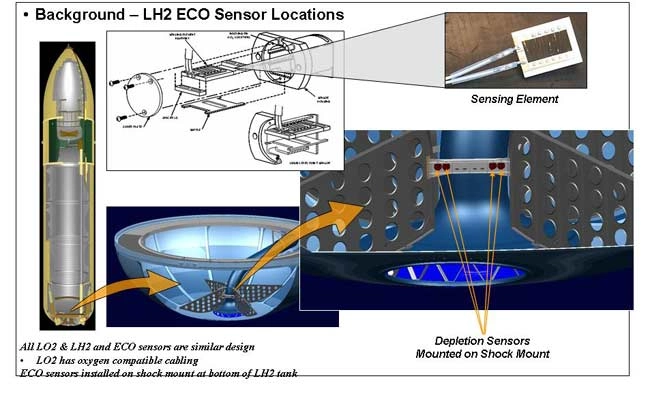
Known as EngineCut-Off (ECO) sensors, the instruments sit on the bottom of Atlantis?15-story external tank and serve as liquid hydrogen fuel gauges that ensure ashuttle?s three main engines shut down before their hydrogen supply runs dryafter liftoff. NASA shuttles consume more than 500,000 gallons (1.9 millionliters) of super-chilled liquid hydrogen and liquid oxygen propellant duringthe 8.5-minute flight into space.
?It is a redundant system,? Lyons said of the fuel sensors, adding that Atlantis? onboard computer shouldautomatically shut down the shuttle?s engines before the cut off sensors arerequired. ?But it is a system that?s critical to us, so we certainly want themto operate so we can go fly.?
While fueling Atlantis?tank, engineers found that two of the four hydrogen sensors failed a standardtest while covered in liquid hydrogen. The test, which commanded the sensors tofalsely read dry while awash in propellant, determines whether the sensors arefunctioning properly. Similar glitches have delayedseveral shuttle flights over the last two years, beginning with STS-114 -the agency?s first post-Columbia accident flight - in July 2005.
Commandedby veteran shuttle flyer Stephen Frick, Atlantis' planned 11-daymission will deliver the European Space Agency's Columbuslaboratory to the International Space Station (ISS) and swap out one memberof the outpost's three-astronaut crew. At least three spacewalks are planned duringthe mission to install Columbus and upgrade the ISS.
Set tolaunch spaceward aboard Atlantis with Frick are STS-122 pilot Alan Poindexter,mission specialists Rex Walheim, Leland Melvin, Stanley Love and European SpaceAgency astronauts Hans Schlegel and Leopold Eyharts.
The shuttlemission will mark NASA's fourth ISS construction flight of 2007 and the secondto add a new pressurized room to the orbital laboratory this year.
NASA mustlaunch Atlantis by Dec. 13 while the angles between the space station's solararrays and the sun are favorable to generate enough power while the orbiter isdocked. If the shuttle cannot launch by the window?s close, NASA will likelystand down until no earlier than Jan. 2 for another attempt, mission managershave said.
?The teamremains in good spirits,? Lyons said. ?And we are really confident that we canwork our way through this and get a few launch attempts in this window.?
If Atlantisis unable to launch Friday, a third attempt is possible on Saturday at 3:43p.m. EST (2043 GMT). The launch time for NASA's STS-122 mission occurs slightlyearlier each day as the flight window progresses in order to keep the shuttleon target to meet the ISS in orbit.
- SPACE.com Video Interplayer: NASA's STS-122: Columbus Sets Sail for ISS
- IMAGES: Discovery's STS-120 Mission in Pictures
- VIDEO: ISS Commander Peggy Whitson Takes Charge
