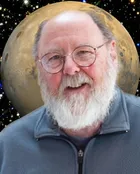
Thesecretive doings of the Blue Origin rocket team have become less guarded thanksto a first-hand account from the group's deep-pocketed backer: Jeff Bezos ofAmazon.com fame and fortune.
The questof BlueOrigin rocketeers is to create a passenger-carrying suborbital rocket,dubbed the New Shepard.
For thefirst time, detailsof the team's first development flight in the New Shepard step-by-stepproject have been made available [launchvideo]. That test took place nearlytwo months ago, on the morning of November 13, 2006 - from theirprivately-owned West Texasspace launch site in Culberson County, Texas [map].
Step bystep
"Welaunched and landed Goddard - a first development vehicle in the New Shepardprogram," Bezos noted Jan. 2 on the Blue Origin website. "The launch was bothuseful and fun. Many friends and family came to watch the launch and supportthe team," he said.
The Goddardvertical takeoff and landing rocket reached a maximum altitude of roughly 285feet (87 meters) on its first development flight [image].The rocket lifted off and landed upon the same pad on a set of legs. TheGoddard test hop was delayed a few days due to gusting winds in the area.
"We'reworking, patiently and step-by-step, to lower the cost of spaceflight so thatmany people can afford to go...and so that we humans can better continueexploring the solar system," Bezos reported. "Accomplishing this mission willtake a long time, and we're working on it methodically. We believe inincremental improvement and in keeping investments at a pace that'ssustainable."
Bezosexplained that "slow and steady" is the way to achieve results.
Thatphilosophy can be seen on the Goddard test rocket itself, imbued with thewords: "Gradatim Ferociter" - Latin for step-by-step, by degrees and fiercelydoing so with spirit.
"We do notkid ourselves into thinking this will get easier as we go along. Smaller, morefrequent steps drive a faster rate of learning, help us maintain focus, andgive each of us an opportunity to see our latest work fly sooner," Bezos said.
Reaction tothe Bezos account of the Blue Origin success was provided to SPACE.comin a statement from Patti Grace Smith, the Federal Aviation Administration's(FAA) Associate Administrator for Commercial Space Transportation (AST) inWashington, D.C.
"Jeff Bezosand the Blue Origin team are on the cutting edge of the entrepreneurial worldof private human spaceflight," Smith explained. "The FAA was pleased to approveand award the first-ever experimental permit to Blue Origin last September sothey could begin vehicle testing."
Smith saidthat at the start of the New Year, "Blue Origin is taking its already excellenteffort to another level. This is a hard working, gifted, safety conscious teamand their development approach underscores the professionalism thatcharacterizes the world of private space vehicle developers throughout theindustry."
Technologicaltip-off?
Noadditional details from Blue Origin were immediately available on follow-onflights of the Goddard, or subsequent vehicles.
However, a tip-offas to things to come was voiced by Bezos in his soliciting of new companyhires.
"We areparticularly looking for experienced propulsion engineers and experiencedturbomachinery engineers, as well as a senior leader to head our turbopumpgroup. Folks with turbopump or propulsion experience on large, modern,cryogenic engines such as the RS-68 are of particular interest," Bezos explained.
The RS-68is the largest liquid oxygen-liquid hydrogen booster in existence, capable ofproducing 650,000 pounds of thrust at sea level. It was built by Pratt &Whitney Rocketdyne for Boeing's Delta 4rocket.
Anotherhigh priority, Bezos continued, is for an experienced leader for our structuresteam. "Structures experience on large, modern vehicles such as Delta IV orAtlas V is of particular interest," he added.
Thatinterest in "large, modern, cryogenic engines" is a clue according to SPACE.comsources.
Coldfacts: cryogenic speculation
Blue Originhasreported they are using hydrogen peroxide in the present vehicle - amonopropellant that's easy to start with, but does not yield great performance.But using hydrogen peroxide is clearly sufficient for an early prototypevehicle that is only flying up a few thousand feet.
Hydrogenperoxide is probably also easier to throttle - a key for up and down,legged-landing operations.
Speculationsuggests that it is likely that Blue Origin rocketeers will have to transitionto a bi-propellant combination in future vehicles. That will give them moreperformance, with hydrogen peroxide as the oxidizer and most likely some kindof refined kerosene as the fuel.
But neitherpropellant is a cryogenic.
The Bezosspotlighting of super-cold cryogenic engine technology involves a subset ofrequirements that are very distinct from those of non-cryogenic engines.
One theoryis that Blue Origin might be reevaluating the decision to use hydrogen peroxideinstead of liquid oxygen as the oxidizer. Switching to liquid oxygen wouldimprove performance and have certain implications for ground operations.
NewShepard stats
Last year,Blue Origin turned in a draft environmentalassessment (EA) for their West Texas launch site to the FAA's CommercialSpace Transportation office.
In thatdocument, the rocket group said the strategy is to build the New Shepardsuborbital vehicle incrementally, starting with low-altitude tests, progressingto higher-altitude testing, and culminating with commercial flights. Earlytesting would use prototype vehicles that are smaller and/or less capable thanthe proposed final design.
Each newtrial product would fly to higher altitudes and/or demonstrate additionalsubsystems than the previous prototype. Eventually, Blue Origin proposes toperform multiple flight tests of the actual operational New Shepard ReusableLaunch Vehicle (RLV) system carrying Blue Origin personnel before commencingcommercial operation.
As detailedin the EA, the New Shepard RLV system would be comprised of a propulsion moduleand a crew capsule capable of carrying three or more space flight participantson roundtrip treks from the ground to the edge of space. The crew capsule isperched on top of the propulsion module. The stacked vehicle would have a roughlynose cone shape with a base diameter of approximately 22 feet (7 meters) and aheight of approximately 50 feet (15 meters).
Flightplan
Blue Originexplained in last year's EA that ten or fewer flight tests could be conductedin 2006, each to an altitude of approximately 2,000 feet (610 meters) for lessthan one minute.
In the2007-2009 time period there would be continued flight testing of prototypevehicles with incrementally increasing capability. During these years, BlueOrigin proposed to gradually expand the operational envelope of its vehicles,conducting 25 or fewer launches per year.
A widerange of tests were noted in the EA, ranging in altitude from under 2,000 feet(610 meters) to greater than 325,000 feet (99,060 meters), lasting one minuteor less to over 10 minutes. Development tests of the crew capsule abort systemwould be conducted during this time frame.
In the 2010and beyond slot, according to the EA, commercial operations could commence withthe operational New Shepard vehicle. The flight rate would depend on marketdemand, but Blue Origin explained that they anticipated rates up toapproximately 52 launches per year of the New Shepard RLV.
- VIDEO: Blue Origin's Goddard Vehicle Test Launch
- BLOG: Jeff Bezos' Blue Origin Reveals Rocket Launch Details
- Tourism Update: Jeff Bezos' Spaceship Plans Revealed
- Special Report: The New Space Race
- Space Tourism: A Multimedia Special Report