


With a firmtesting plan in hand and its fuel tank factory back on track, NASA is targetingMay 2006 for the launch of its next space shuttle mission.
The Maylaunch target, while not set in stone, will allow engineers time to complete aseries of tests to determine why potentially dangerous chunks of foaminsulation broke free from the shuttle Discovery's external tank during itsJuly launch, NASA officialssaid. They believe that a combination of worker-caused damage, old applicationtechniques and other factors appear to have contributed to the debris event.
"We don'tsay we're setting a launch date, but we're clearly aiming for May," said BillGerstenmaier, NASA's associate administrator for space operations, during aFriday press conference. "May looks very doable."
A 20-daylaunch window opens on May 3 for the space shuttle Discovery, NASA officialssaid, adding that more discussion is needed before the window becomes a firmflight target.
NASAofficials previously aimed at March2006 to launch the second post-Columbia accident flight - STS-121 aboardthe Discovery - but said today that recoveryefforts from Hurricanes Katrina and Rita led to a loss of about threemonths of work.
The storms battered NASA'sMichoud Assembly Facility in New Orleans, where external tanks are built andinvestigators were studying the foam shedding issue, and the surrounding area,though the plant itself did not suffer the worst damage, NASA officials said.
"Our biggestproblem, frankly, at Michoud is not the damage to the plant," said Wayne Hale,NASA's space shuttle program manager. "It's the damage to the workers' homes."
More than500 workers of Michoud's 2,000-person strong workforce have resumed theirduties, NASA officials said. The facility's workforce is expected to return toits full strength by Dec. 1.
"Finalschedule setting will depend on how soon the workforce can get back online,"Hale said of NASA's STS-121 launch plans.
Trackingdebris shedding
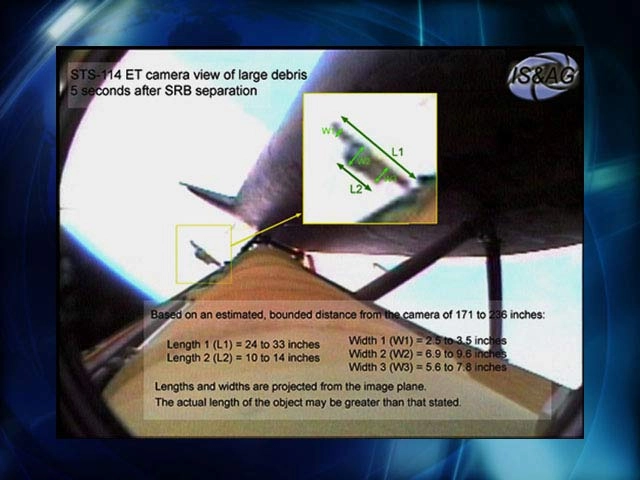
A one-poundpiece of foam insulation brokefree from protective ramp during Discovery's July 26 launch, but did not strikethe orbiter. NASA, however, had worked for 2 ? years to prevent the shedding oflarge foam debris after Columbiadisaster that killed seven astronauts on Feb. 1, 2003.
During Columbia's launch, a 1.67-pound piece of foam fell from its fuel tank and gouged a hole inthe protective heat shield along the orbiter's left wing leading edge. Theresulting damage allowed hot atmospheric gases to enter the wing during reentryand rip the vehicle apart.
RichardGilbrech, who is leading NASA's "tiger team" investigating the foam sheddingproblem, external tank workers may have inadvertently crushed or cut foam alonga protuberance air load (PAL) ramp, which shields exterior tank cables andpressurized lines during launch, while instituting post-Columbia accident fixes.
Anolder spray application technique - instead of a newer, enhanced method - andthermal stresses along the seam of where PAL foam meets acreage foam, may also havecontributed to debris shedding on Discovery's tank, Gilbrech said.
"Idon't know if we'll ever identify one root cause," Gilbrech said.
Engineersplan to conduct tests to determine how much force is required to crush foam, aswell as perform non-destructive tests on the next external tank to fly - ET-119- which NASA shippedto Michoud last month. Tank workers will also remove ET-119's PAL ramp andslice it into 1/8th-inch pieces to further study the foam'sintegrity, NASA officials said.
Thosetests and others must be completed before the fuel tank is shipped back toNASA's Kennedy Space Center (KSC) for Discovery's STS-121 flight, they added.
"Beforewe set an official launch date, we've got to get through some of the near termwork," Hale said. "I think we're beginning to get our hands well around theproblems we have."
- NASA Ships Space Shuttle Fuel Tank to New Orleans Factory
- Future Shuttle Flight Dates Uncertain in Hurricane's Wake
- Special Report: Complete Coverage of NASA's STS-114 Mission
