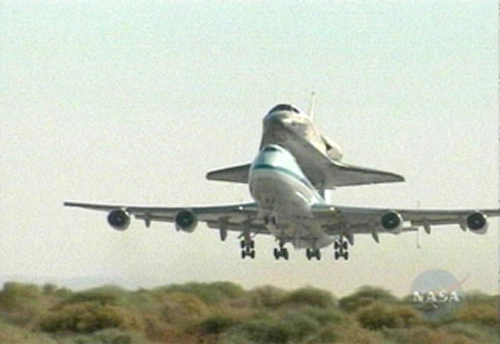
Perchedatop a Boeing 747 jumbo jet, the space shuttle Discovery began its homewardtrek toward NASA's Kennedy Space Center in Florida Friday, a two-day trip fromCalifornia.
The 100-tonspaceship and its carrier craft began the first leg of their flight, athree-hour trip from NASA's Dryden Flight Research Center and Edwards Air ForceBase to Altus Air Force Base in Oklahoma, at 11:31 a.m. EDT (1531 GMT).
"It wasperfect," NASA Dryden spokesperson Leslie Williams said of the departure.

Discovery landedat Edwards on Aug. 9 after carrying its STS-114 astronaut crew on a14-day spaceflight to the International Space Station (ISS).
The mission markedNASA's first shuttle flight since the loss of seven STS-107 astronauts aboardthe Columbia orbiter, whichbroke apart while reentering the Earth's atmosphere on Feb. 1, 2003. A piece offoam insulation fell from Columbia's external tank and pierced its heat shieldduring its launch, which led to the disaster, investigators found.
Discovery'sSTS-114 crew, commanded by veteran Eileen Collins, tested a series ofinspection and orbiter repair methods during their flight. Unexpected foamloss seen during Discovery's July 26 launch prompted shuttleofficials to hold back on future orbiter flights until engineers cansolve the problem, though NASA has set March2006 as a tentative launch target.
On Thursday,shuttle officials tappedDiscovery for NASA's second return to flight test mission, STS-121 commanded byastronaut Steven Lindsey, to fly no earlier than March 4, 2006. The flight wasslated to use the Atlantis orbiter.
"It's notuncommon to change vehicles and, related to the flight, it's totallytransparent to the [astronaut] crew," NASA spokesperson James Hartsfield saidfrom Johnson Space Center in Houston, Texas.
Afterrefueling at Altus, Discovery's carrier 747 aircraft will ferry the orbiter to BarksdaleAir Force Base in central western Louisiana, where the piggybacked spacecraftwill stay for the night before heading toward KSC's Shuttle Landing Facility inCape Canaveral, Florida Saturday.
While ferryflights from Edwards to KSC typically cost about $1 million and take up to aweek, Discovery's move was delayed by severe storms and difficulties connectinga protective cone over Discovery's engine bells delayedthe process, NASA officials said.
