NASA's X-59 jet is on the verge of finally breaking the sound barrier.
The X-59 is a supersonic aircraft designed with a radical elongated geometry that aims to reduce the volume of the sonic booms it can create when breaking the sound barrier. NASA's goal with the X-59 is to help develop "quiet" supersonic technologies that could lead to aircraft designs that minimize the impact of sonic booms on the ground below, which could potentially enable current restrictions on supersonic flight to be lifted.
After making its first test flight in October 2025 and going on 14 test flights since March 2026, the X-59 is finally ready to take on its first supersonic flight sometime this month, NASA says. According to the agency, the aircraft will reach Mach 1.4 (925 miles per hour or 1,489 kilometers per hour) at approximately 55,000 feet (16.7 kilometers). "What comes next is the first time this one-of-a-kind aircraft will fly supersonic," said Cathy Bahm, project manager for NASA's Low Boom Flight Demonstrator. "Completing the first mission-conditions flight is especially meaningful — it's the moment where we begin validating the aircraft in the environment it was designed for," Bahm said in a statement.
NASA recently completed several key milestones in the X-59 testing program ahead of this first supersonic flight attempt. Just last month, the jet retracted its landing gear for the first time, revealing how the aircraft will look when in full flight.

The X-59 has also recently pushed its speed as high as Mach 0.95, or around 627 mph (1,009 km/h) and made its first pair of test flights in a single day. Engineers and technicians working on the program now have a much better understanding of the aircraft and its unique systems.

One of the most unique features of the X-59 is what's known as its eXternal Vision System, or XVS. Because the nose of the X-59 is so elongated, pilots wouldn't be able to see what's in front of the aircraft out of a forward windscreen — if it even had one.
The X-59 was designed without a forward windscreen at all, and instead uses a series of cameras that feed into an augmented reality display. Through the XVS, X-59 pilots get a view of what's in front of the aircraft with its nose completely removed from the picture.

The X-59 has so far been flying under what NASA refers to as "Phase 1" of its test program, which was designed to gauge the initial performance of the aircraft at low speeds and make sure it's airworthy. NASA has also been validating test instruments to help measure shockwaves the X-59 produces.
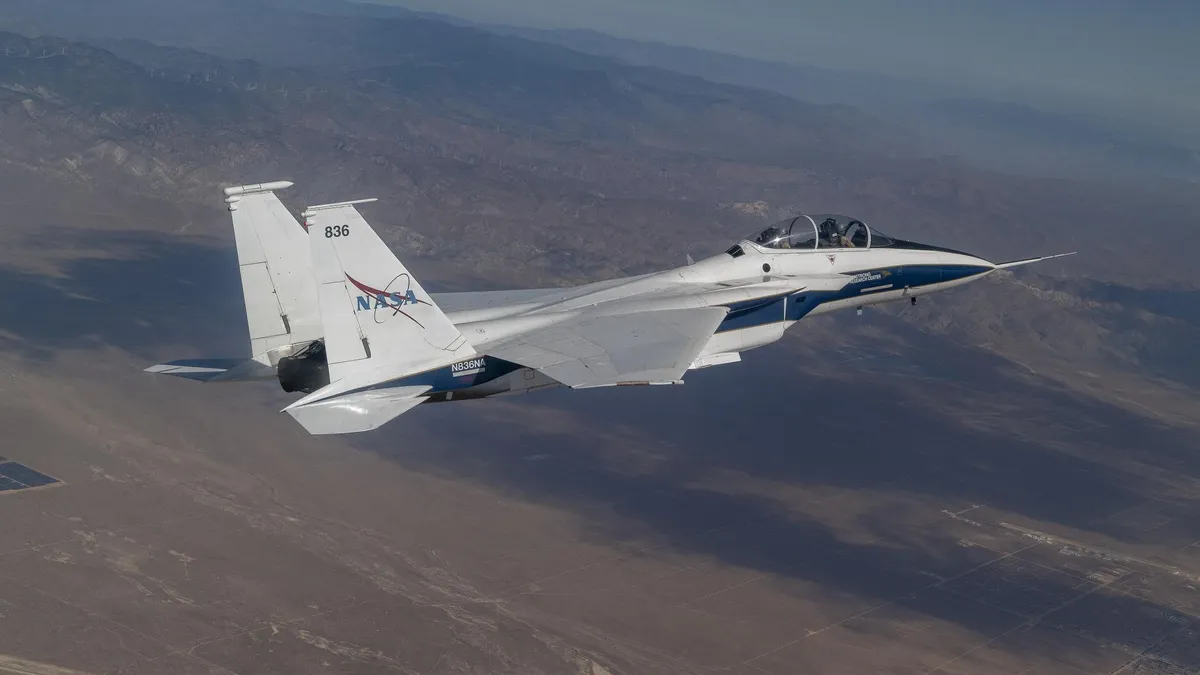
After making its first supersonic flight in upcoming tests, NASA will begin Phase 2 of the X-59 test campaign some time later in 2026.
That phase will be key for NASA's overall goal for the mission: reducing the impact of the sonic boom that is perceived on the ground below the aircraft as it flies over at above the speed of sound.
Supersonic flight has been prohibited above land within a certain distance of the U.S. since 1973 due to how disruptive the thunderous sonic booms are to people on the ground. NASA hopes the technologies developed for the X-59 can enable supersonic flight restrictions to be lifted over the continental U.S., paving the way for commercial supersonic flight once again.
"As we look ahead to the upcoming flights, we're poised to open the envelope even further — moving boldly toward the mission test point this aircraft was built to achieve," Bahm said in NASA's statement. "Flying supersonic and reaching these milestones isn't just progress; it's the realization of years of perseverance, innovation, and teamwork. Each step brings us closer to Phase 2, and to the future of commercial supersonic flight."
Aside from NASA, several private companies including Colorado's Boom Supersonic are developing aircraft capable of quieter supersonic flight. Boom Supersonic made its first successful supersonic flight last year, becoming the first civil aircraft to go supersonic over the continental United States.
Commercial supersonic flight would enable much faster travel times and could be a major boon to disaster relief, medical transport and more.