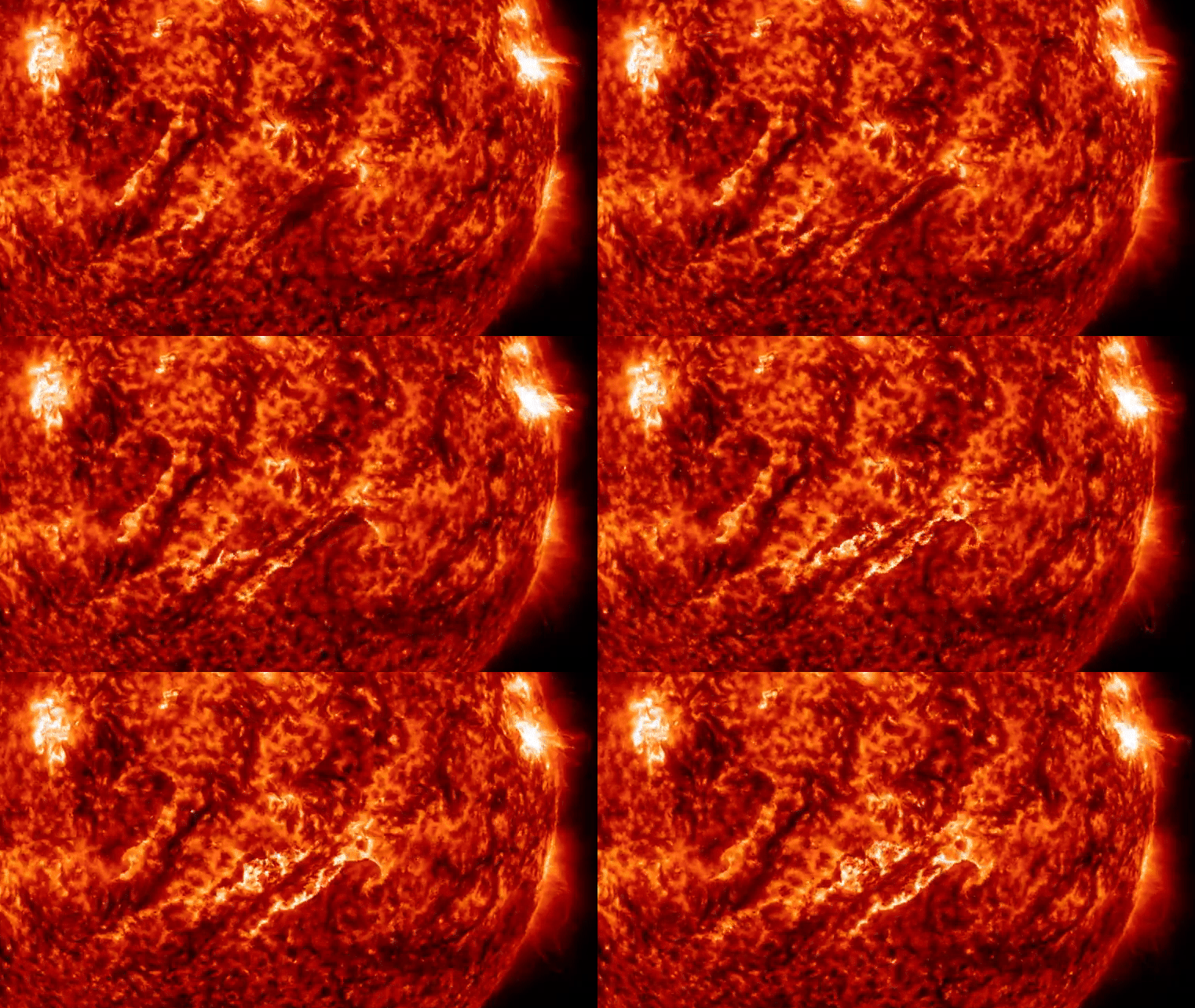
— Two CMEs are headed toward Earth.
— Impact is expected on April 16.
— A G2 (moderate) geomagnetic storm watch is in effect.
— Auroras could be visible as far south as New York and Idaho.
Heads up, aurora chasers! Earth's magnetic field is about to get a one-two punch from the sun — and the result could be an impressive show of northern lights stretching into mid-latitudes.
The NOAA Space Weather Prediction Center (SWPC) has issued a geomagnetic storm watch for April 16, as two coronal mass ejections (CMEs) are expected to strike in close succession. These CMEs were launched by a rare double eruption of solar magnetic filaments on April 12 and April 13. According to NOAA and Spaceweather.com, the CMEs could lead to G2-class (moderate) geomagnetic storm conditions, increasing the chances of visible auroras not just in Canada, but also across the northern-tier U.S. states like New York and Idaho.
"These #solarstorms will likely travel slowly, but they are dense and thus could pack a decent punch!" Space Weather Physicist Tamitha Skov wrote in a post on X. "Still waiting for coronagraph data to inform model runs, but impact could be late April 15 or early April 16."
Twin Filaments launch while crossing through the Earth-Strike Zone! These #solarstorms will likely travel slowly, but they are dense and thus could pack a decent punch! Still waiting for coronagraph data to inform model runs, but impact could be late April 15 or early April 16. pic.twitter.com/TcagnKrcNsApril 13, 2025
CMEs are massive clouds of charged solar particles that can rattle our planet's magnetic field. This interaction triggers geomagnetic storms — and, when strong enough, can spark impressive aurora displays beyond their usual high-latitude range.
What to expect

According to NOAA's three-day space weather outlook, geomagnetic activity is expected to increase late on April 15 or early April 16, peaking during the day and tapering off afterward. Timing CME impacts can be tricky, so keep your aurora alerts turned on and stay flexible — these storms don't always stick to a strict schedule.
Predicting the exact time of arrival for the CMEs is incredibly difficult as space weather, like weather on Earth, is a fickle creature.
Keep in mind that even if a CME hits Earth, the effect on auroras depends on the magnetic field alignment within the CME. If the alignment allows it to connect with Earth's magnetosphere, it could result in spectacular northern lights displays. However, if Earth's magnetosphere "closes the door" on the CME, aurora chasers might be left disappointed.
When checking space weather data from resources like Space Weather Live, pay close attention to the Interplanetary Magnetic Field (IMF), especially the Bz value, which indicates the north-south direction of the IMF. For a strong connection to Earth's northward-pointing magnetosphere, the Bz needs to be oriented southward, according to Space Weather Live.
Check out our aurora live updates blog for the latest northern lights forecasts and alerts.