• TechMediaNetwork
  • LiveScience
  • SPACE.com
  • Newsarama
  • TopTenREVIEWS
advertisement


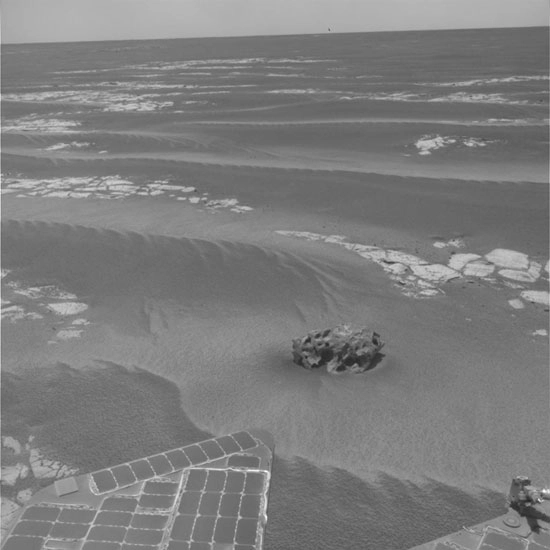
NASA's Mars Exploration Rover Opportunity has found a rock that apparently is another meteorite. Dubbed Shelter Island, the meteorite is about 18.5 inches (47 centimeters) long. Image Credit: NASA/JPL-Caltech


This view of a rock called "Block Island," the largest meteorite yet found on Mars, comes from the panoramic camera (Pancam) on NASA's rover Opportunity. This is a false-color, red-green-blue composite view generated from images taken through the Pancam's 750-nanometer, 530-nanometer and 430-nanometer filters. The exaggerated color is used for enhancing the visibility of differences among the types of rock and soil materials. Credit: NASA/JPL-Caltech/Cornell


The triangular pattern of small ridges seen at the upper right in this image and elsewhere on the Mars meteorite Block Island is characteristic of iron-nickel meteorites found on Earth, especially after they have been cut, polished and etched. Credit: NASA/JPL-Caltech/Cornell/USGS
Mars Meteorite Reveals Clues Into Planet's Past
Rover Spots Possible Meteorite on Mars
Opportunity Rover Passes 10-Mile Mark on Mars
SPACE.com Video Show - Rover Tracks on Mars
Video - Opportunity's Mars Marathon
Mars Rovers Most Amazing Discoveries

Mars Rover Spots Another Meteorite
By SPACE.com Staff

posted: 12 October 2009
10:43 am ET

NASA's intrepid Mars rover Opportunity has found yet another meteorite on the surface of the red planet.

Opportunity stumbled upon this new meteorite, dubbed "Shelter Island," less than three weeks after driving away from a larger meteorite that the rover examined for six weeks.

The rover began its approach to the meteorite with a 92-foot (28-meter) backwards drive on Oct. 1, the rover's 2,022nd day on Mars.

Opportunity and its twin rover Spirit — which is currently embedded in a soft spot of soil called Troy — have been on the Martian surface for more than five years.

Shelter Island is a pitted rock is about 18.5 inches (47 cm) long. The meteorite was first detected in images taken two Martian days earlier. (A Martian day is 24 hours and 40 minutes long.)

Two Martian days after its backward drive, Opportunity turned around to face the meteorite. In the days that followed, it made a final 3.3-foot (1-meter) move to put the rock within reach of the rover robotic arm . Mission managers are now planning to use the arm to contact the meteorite and make measurements.

Opportunity has driven about 2,300 feet (700 meters) since it finished studying the meteorite called "Block Island" on Sept. 11, 2009.

Block Island weighs at least half a ton, is composed of iron and nickel, and is likely too large to have plunged through the current thin atmosphere of Mars without being obliterated upon impact, scientists say.

Both meteorites have been found during Opportunity's trek to its next target, Endeavour Crater.

Opportunity also found a third meteorite, Heat Shield Rock, in 2004.


New Starry Night Pro Version 6
$149.95
Explore More


Site Map | News | SpaceFlight | Science | Technology | Entertainment | SpaceViews | NightSky | Ad Astra | SETI | Hot Topics
Image Galleries | Videos | Reader Favorites | Image of the Day | Amazing Images | Wallpapers | Games | Community | Reviews
about us | FREE Email Newsletter | message boards | register at SPACE.com | contact us | advertise with us | terms & conditions | privacy statement
DMCA/Copyright
  What is This?
<