





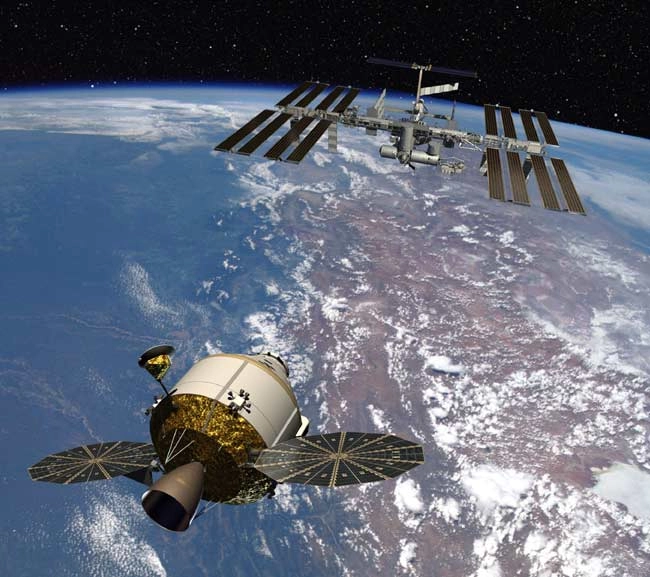
WASHINGTON -- NASA Administrator Mike Griffin told aSenate panel Wednesday that development of Orioncrew spacecraft and the Ares launch vehiclewill be delayed four to six months, pushing the first operational flight of thenew system into 2015.
Griffin said the slip isunavoidable in the face of a flat 2007 budgetthat denies NASA's exploration program about half of the more than$900 million increase it was seeking [image].
"Thereduction does not halt any planned work we were going to do on [Orion andAres] but it does stretch it out," Griffin told the Senate Commerce space andaeronautics subcommittee.
Hesaid the slip would delay everything from the planned April2009 test flight of the Ares I-1 rocket to the first operational flight,which had been targeted to occur no later than 2014.
"Wecan expect a slip into early 2015," he said.
NASA's Orionspacecraft is a capsule-based successor to the space agency's agingthree-shuttle fleet -- Discovery,Atlantis and Endeavour -- which is due to be retired in2010 after construction of the International SpaceStation (ISS) is complete.
Thespacecraft are expected to be capable of launching astronaut crews to the ISSand teams to the Moon under NASA's vision to return humansto the lunar surface by 2020. To be built by Lockheed Martin,the Orion spacecraft is expected to launch atop the planned Ares I rocket.A larger booster, the Ares V, would be used for unmanned cargo and hardwarelaunches [image].
Orion's nowplanned slip in its first crewed flight lengthens the expected gap in NASA'sability to independently launch astronauts into space once the space shuttlefleet is retired. The space agency plans to rely on current agreements with ISSpartners for crew and cargo flights and is studying the possibility ofpurchasing commercial spaceflight services under its Commercial OrbitalTransportation System (COTS) program.
SPACE.comStaff Writer Tariq Malik contributed to this report from New York City.