


Thisstory was updated at 10:31 a.m. EST.
After daysof glitches and tweaks, a new recycling system designed to turn astronaut urineback into drinking water is apparently working well aboard the InternationalStation.
The spacestation?s urine processor, part of a larger wastewaterrecycling system, worked non-stop for a full four-hour test and longer lateMonday to the delight of astronauts and NASA engineers. The systemis crucial if the space station is to jump to double-sized, six-personcrews next year.
?Notto spoil it, but I think up here we?re feeling, the appropriate words are?Yippee!?? station commander Michael Fincke said after the four-hour mark.
?Therewill be dancing later,? Mission Control joked back.
Finckesaid it made a few noises like a ?washing machine in a spin cycle? for a shorttime but then went back to normal.
Anothervital test at the station early Tuesday checked the health of a massivestarboard side gear designed to turn the station?s right side solar arrays sothey always face the sun and maximize power production.
Endeavourshuttle astronauts performed a four-spacewalkoverhaul on the vital 10-foot (3-meter) gear over the last week to replacedamaged bearings, lubricate it and clean out metal shavings that had cloggedits intricate mechanism.
The test ranabout three hours, or two laps around Earth for the station, with flightcontrollers finding that the gear was running smoother and drawing less powerthan it did before its unprecedented spacewalk clean and lube job.
Spacestation flight director Ginger Kerrick said flight controllers will be keepinga close eye on the power levels and vibrations from the starboard solar arraygear, but it will likely take several months before engineers will know theresults of the Endeavour crew?s repairs.
Urinerecycler results encouraging
The urinerecycler is part of the station?snew Water Recovery System delivered by Endeavour last week to collectastronaut urine, sweat and other wastewater and distill it back into potablewater for drinking, food preparation, bathing and oxygen generation. The systemis part of a $250 million regenerative life support designed to sustain largerspace station crews with fewer supply runs from visiting spacecraft, with thefirst six-person crew due to arrive at the orbiting lab next May.
But thesystem?s urine processor only worked in spurts over the last few days,operating from as little as two hours to a peak performance of about 3 1/2hours. NASA extended the Endeavour crew?s stay at the space station by an extraday Monday to allow more time to work with the balky device.
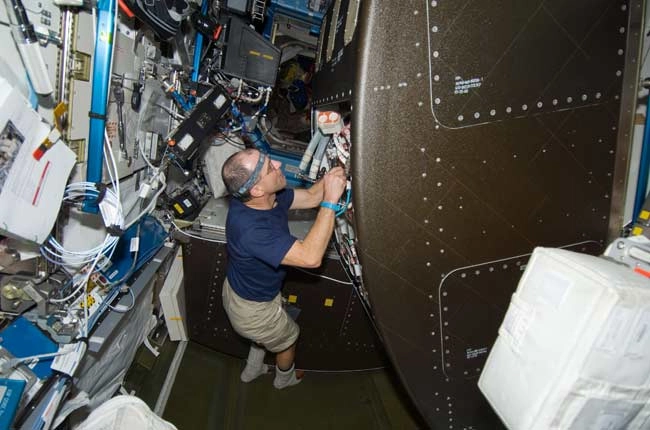
Fincke and Endeavourastronaut Don Pettit removed a set of washer-like vibration dampeners fromthe system during their first repair attempt Sunday. On Monday, the added apair of support brackets to hold the system?s centrifuge in place moresecurely.
Monday?sovernight test set a new bar. Mission Control shut the unit down after thesuccessful test and then restarted it for a new trial early Tuesday morning.
?I'd liketo congratulate the entire team because we've been operating for four hours andtwo minutes now,? Fincke said before going to sleep late Monday.
Finckeloaded the urine processer up with a new batch and told Mission Control not toworry about running out.
?We?ve gota full tank of yesterday?s coffee here ready to fill up at any time,? Finckesaid.
?Soundslike a dirty job, but somebody?s got to do it,? Mission Control replied.
Themachine is designed to spend about four hours distilling water from astronauturine. Endeavour astronauts will return samples of the processed water back toEarth for analysis, though NASA engineers plan to run more tests for 90 daysbefore astronauts can begin drinking it.
?Ithink if we can get past the four-hour mark, I think we?re going to be good,?Pettit said.
- New Video - Drinking Water From Space Urine
- Video - Space Station Acrobatics
- New Images - Stunning Views Endeavour's STS-126 Night Launch
