


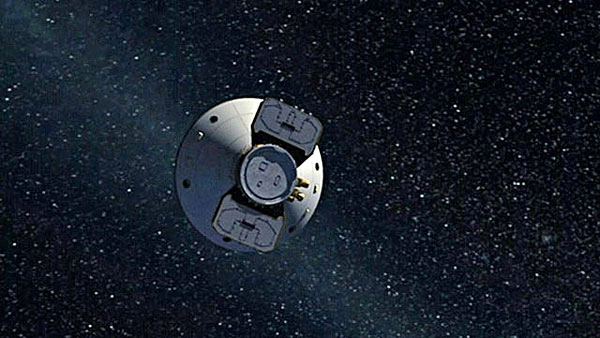
Three roboticpaparazzi orbiting the planet Mars are adjusting their flight paths to track anincoming NASA probe due to land on the red planet in late May.
The planmarks the first time that three orbiters will follow a landing on Mars and isexpected to return an unprecedented level of coverage throughout the entry,descent, and landing of NASA?s Phoenix Mars Lander on May 25.
"Wewill have diagnostic information from the top of the atmosphere to the groundthat will give us insight into the landing sequence," said David Spencer,deputy project manager at NASA's Jet Propulsion Laboratory (JPL) in Pasadena, Calif.? Such information would help deal with landing problems, and lead toimproved designs for future landers.
Launchedon Aug. 4, 2007, Phoenix is aiming for a site farther north than anyprevious mission to Mars. There, the lander will use its robotic arm to samplethe surface for soil and ice, as well as scan for conditions that could supportmicrobial life.
The threeorbiters - NASA?s Mars Odyssey, Mars Reconnaissance Orbiter (MRO) and Europe?sMars Express - are maneuvering to be in the right place at the right time whenPhoenix enters the Martian atmosphere at more than 12,750 miles per hour(20,519 kph).
"Wehave been precisely managing the trajectory to position Odyssey overhead when Phoenixarrives, to ensure we are ready for communications," said Bob Mase, themission?s manager at JPL. "Without those adjustments, we would be almostexactly on the opposite side of the planet when Phoenix arrives."
NASA?s MROspacecraft will make bigger adjustments, with one firing of thrusters on Feb. 6and at least one more course correction planned in April. The European SpaceAgency's Mars Express orbiter, meanwhile, has also positioned itself to recordtransmissions from Phoenix during the landing.
Even NASArovers Spirit and Opportunity, currently exploring the martian surface, have helpedout by simulating transmissions from Phoenix to rehearse the orbiters?operations for the big day.
On thatday, Odyssey will turn its robotic eyes from the heavens to point an ultrahigh-frequency antenna towards the descending Phoenix. A high-gain antenna willstream information back to Earth as Odyssey watches Phoenix slow itself throughheat-shield friction, a parachute, and then firing descent rockets. That allowsthe lander to hit the Martian surface on three legs at just 5.4 miles per hour(2.4 m/s).
MRO andMars Express will start recording Phoenix transmissionsas backup data "about 10 minutes before landing," according to BenJai, mission manager at JPL for MRO.
Until then,all three orbiters are scoping out Mars for a suitable landing site.
- VIDEO: NASA's Phoenix: Rising to the Red Planet
- VIDEO: Looking for Life in All the Right Places
- Top 10 Amazing Discoveries by NASA's Mars Rovers