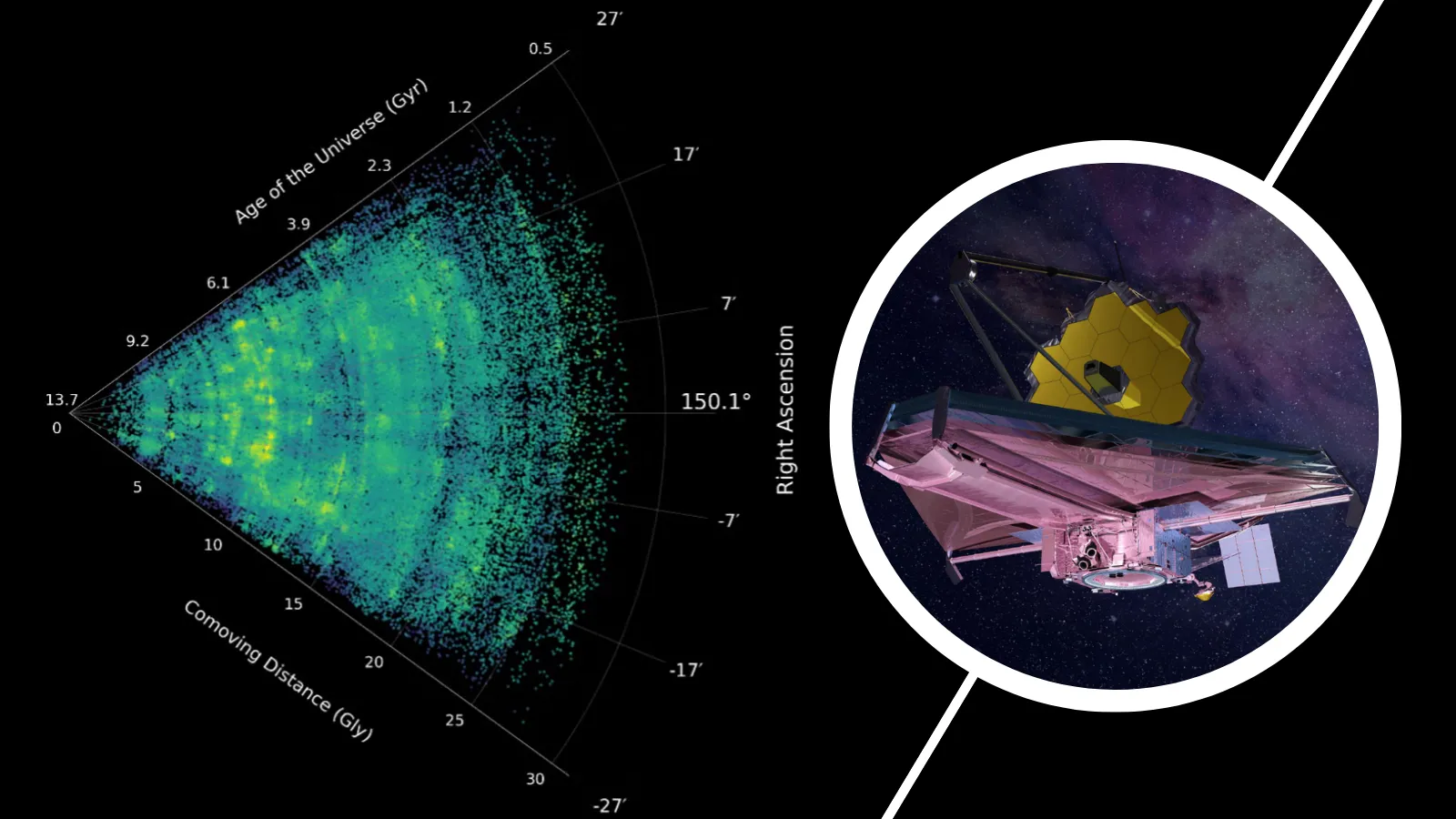
Using the James Webb Space Telescope, astronomers have mapped the "cosmic web" of galaxies — the largest structure in the universe — with unprecedented detail.
This is the largest James Webb Space Telescope (JWST) survey conducted to date, and is known as COSMOS-Web. It traces a network of galaxies back to when the universe was about 1 billion years old.
The cosmic web is the term scientists use to describe a skeleton-like framework of filaments and sheets of dark matter and gas along which galaxies gathered and evolved over time, which is punctuated by nearly empty voids. Thus, the cosmic web forms the architecture of the universe — it's a singular, intricate, far-reaching structure that traps galaxies and galactic clusters like flies strung along the sticky silk web of a greedy spider.
The results obtained by the COSMOS-Web team further demonstrate the power of the JWST to refine and redefine our view of the universe since the $10 billion space telescope began beaming data back to Earth in the summer of 2022.
"JWST has completely changed our view of the universe, and COSMOS-Web was designed from the start to give us the wide, deep view we need to see the cosmic web," leader of this research, Hossein Hatamnia of the University of California, Riverside (UCR), said in a statement. "For the first time, we can study the evolution of galaxies in cluster and filamentary structures across cosmic time, all the way from when the universe was a billion years old up to the nearby universe."
By the "nearby universe," Hatamnia means up to a distance of around 1 billion light-years. The solar system is estimated to be around 2 light-years wide, giving you an idea of just how far astronomers consider our cosmic backyard to extend. COSMOS-Web extends this by another 13 or so billion light-years.
That kind of depth of view is the only way astronomers can get a true picture of the cosmic web.
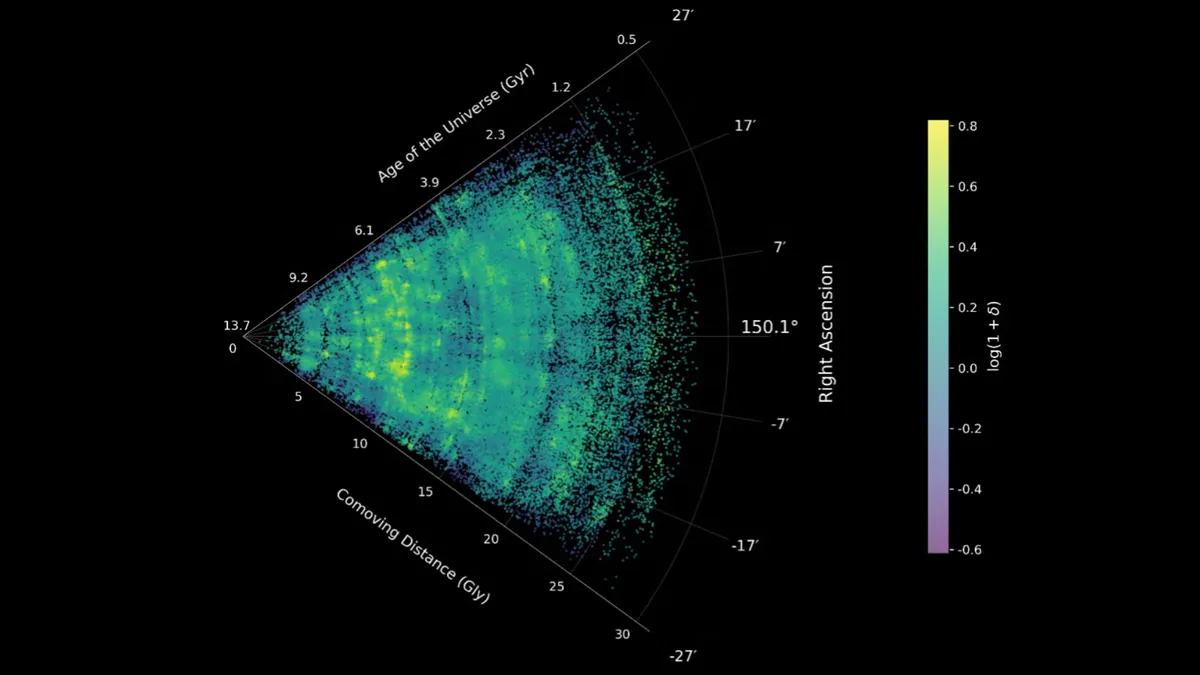
The large-scale structure delivered by COSMOS-Web provides a wealth of information greater than that provided by earlier maps of the same region of sky captured by the Hubble Space Telescope. Team member and UCR scientist Bahram Mobasher explained that comparing Hubble and JWST shows that many cosmic structures had been "smoothed over" in data from the JWST's space telescope predecessor.
"The jump in depth and resolution is truly significant, and we can now see the cosmic web at a time when the universe was only a few hundred million years old, an era that was essentially out of reach before JWST," Mobasher said. "What used to look like a single structure now resolves into many, and details that were smoothed away before are now clearly visible."
The impressive leap in detail provided by the JWST and COSMOS-Web is the result of the unification of two of this powerful new space telescope's key strengths.
"The telescope detects many more faint galaxies in the same patch of sky, and the distances to those galaxies are measured far more precisely," Hatamnia said. "Each galaxy can therefore be placed into the correct slice of cosmic time, sharpening the map's resolution."
The team's research was published on May 6 in The Astrophysical Journal.