





Latest about Solar Eclipses

A total solar eclipse on Aug 2, 2027, will be visible across southern Europe, North Africa and the Middle East. Find out more about where to see the 'eclipse of the century' in our guide.

Reference Discover the 'eclipse of the century' with this comprehensive total solar eclipse 2027 guide. Find out where to see it, the timings of totality and possible weather conditions for key locations.
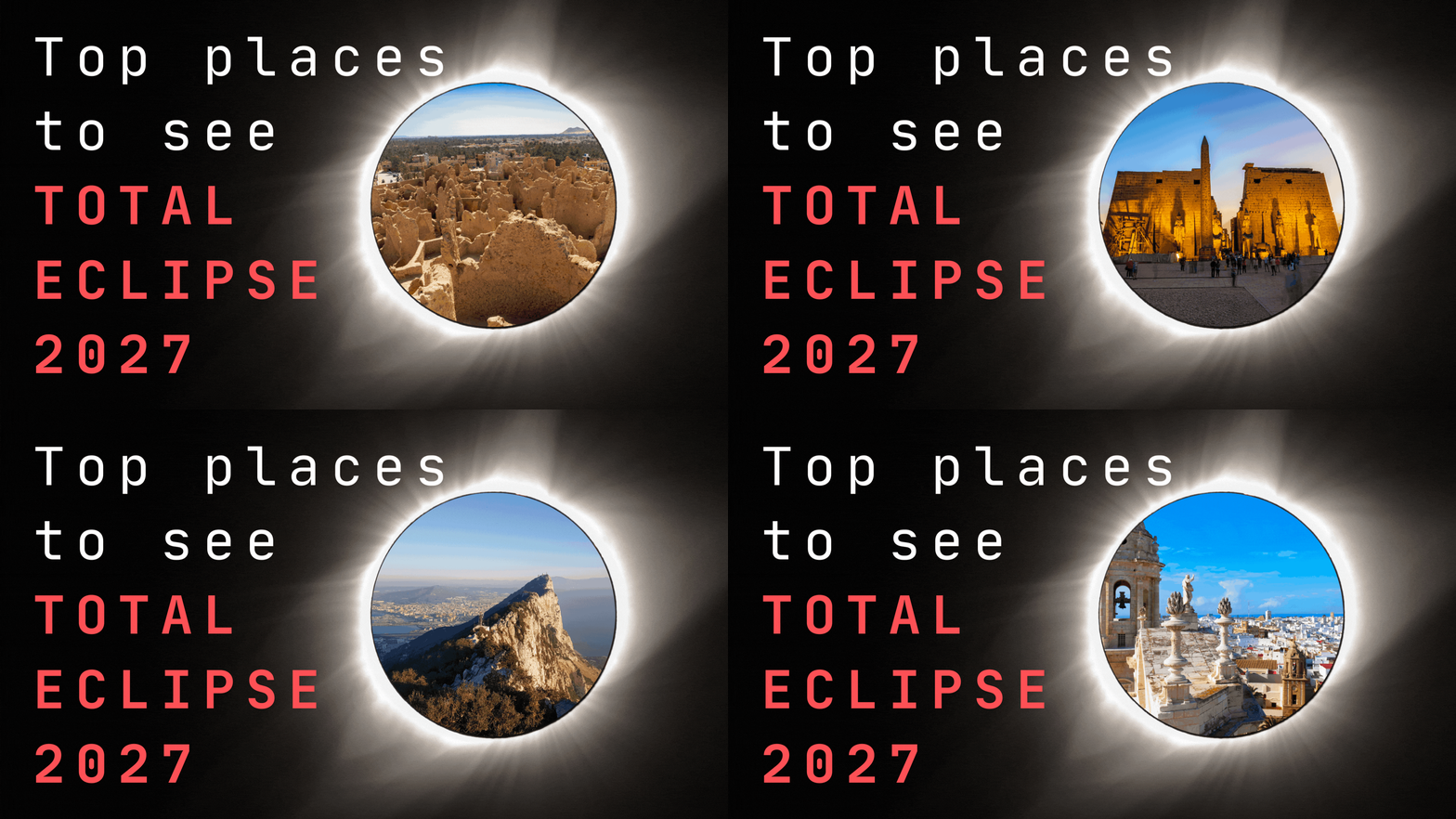
The best scenic places across Southern Europe, North Africa and the Middle East to see the total solar eclipse on Aug. 2, 2027.

I journeyed to the path of totality in Spain to watch the Aug. 12 total solar eclipse with a group of passionate citizen scientists. Here's my story.


Reference A solar eclipse occurs when the moon positions itself between Earth and the sun, casting a shadow over Earth. We explore the type of solar eclipses here.

On Aug. 21, 1914, a total solar eclipse temporarily darkened skies across Europe and Asia.

Joe Rao took to sea aboard the cruise ship Le Boréal to watch the total solar eclipse on Aug. 12, 2026. Here's what it was like.

