


This story was updated at 12:33 p.m. ET.
WASHINGTON ? The chief of NASA?s space shuttle program saidTuesday that the agency could technically continue to fly its three agingorbiters beyond their planned 2010 retirement if ordered to do so by PresidentBarack Obama and lawmakers. All it would take would be the extra funding neededto pay for it.
Space shuttle program manager John Shannon said NASA spendsabout $200 million a month on its spaceshuttle program. That?s about $2.4 billion a year that would be required tokeep the shuttle flying beyond their 2010 retirement date, he said.
?I think the real issue that the agency and the nation hasto address is the expense,? Shannon told reporters in a mission briefing.
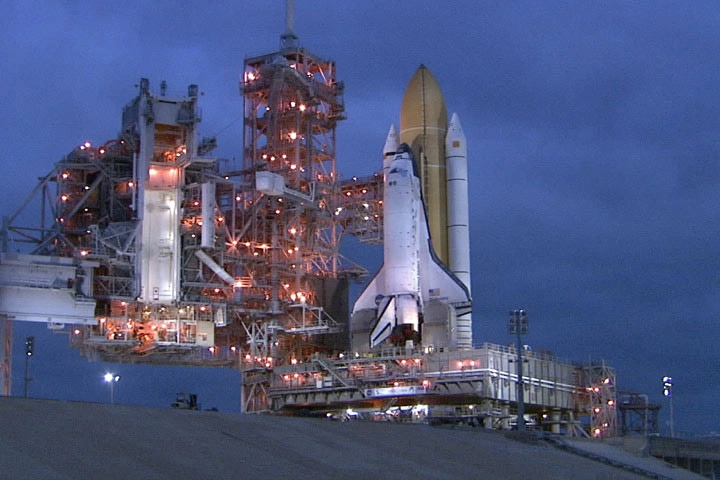
NASA currently plans to retire the space shuttle fleet inthe fall after flying the last of four final shuttle missions remaining forthis year. The next shuttle to fly is Discovery, which is poised to blast offon April 5 to deliver vital supplies and spare parts to the International SpaceStation.
The fleet?s retirement would end more than 29 years of U.S.space shuttle flights and leave NASA without a dedicated American spacecraftfor launching astronauts into orbit.
Some U.S. senators and members of Congress have expressedsupport for extendingthe shuttle program, with Senator Kay Bailey Hutchison (R-Texas) filing abill last week formally seeking a reprieve for NASA?s space shuttle fleet.
Last month, President Barack Obama proposed canceling theConstellation program building NASA?sshuttle replacement ? the Orion crew exploration vehicle and its Aresrockets ? as part of his 2011 budget request for the space agency. Instead, thepresident asked NASA to provide more support to private companies that arebuilding commercial spacecraft, which could launch astronauts to theInternational Space Station.
The 2011 budget request would extend the space station?slife through at least 2020 and set aside $6 billion over five years to spurcommercial spacecraft development. The president plans to hold a specialmeeting in Florida on April 15 to discuss his plan for American human spaceflight.
Shannon said NASA already has the external tank and twinsolid rocket boosters for at least one extra shuttle mission beyond the fourremaining flights.
That tank and its boosters are currently reserved for arescue mission in case NASA?s finalshuttle flight runs into serious trouble, but could potentially be used todeliver more supplies and cargo to the space station if approved.
NASA has already begun shutting down some parts of the spaceshuttle program, but could restart assembly lines if ordered to do so. Theagency has launched a new study to touch base with its shuttle programsuppliers to see what is available and what might be needed to support anextension, Shannon said.
There is also the issue of recertifying NASA?s spaceshuttles for continued flight beyond 2010.
The decision to retire the shuttle fleet ? which consists ofthe Discovery, Atlantis and Endeavour orbiters ? was made in the wake of the tragic2003 loss of the? space shuttle Columbia and its seven-astronaut crew as theyreentered Earth?s atmosphere.
An investigation board suggested that NASA recertify its space shuttles to makesure they were safe for continued flight if they were to continue launchingbeyond a planned retirement. NASA planned to mothball the shuttles and replacethem with safer capsule-based spacecraft and new rockets to launch them.
Shannon said studies into how best to go about thatrecertification process have been underway since 2005. The agency has also metwith aviation experts for long-running programs, like the U.S. Air Force?s B-52bomber program, to determine new ways to inspect shuttles to recertify them. ?
After meeting the B-52 bomber experts, NASA added 23 extrainspection points to its shuttle health checks, Shannon said.
?We feel like we?ve addressed recertification,? Shannonsaid, adding that lawmakers and experts would have to weigh in on NASA?sefforts to make sure they align with the Columbia investigation board?srecommendations.
Shannon said there would be a gap of about two years betweenthe order to resume building shuttle fuel tanks and the time the next one wouldbe delivered. That gap could potentially be shortened by spacing out theremaining shuttle missions, he added.
With the shuttle fleet?s retirement looming amid calls forits extension, NASA has been keeping tabs on the morale of shuttle workers withsurveys for technicians and managers every four months, Shannon said.
?From a personal standpoint, I just think it?s amazing thatwe?re headed down a path where we?re not going to have any vehicles at all to launchfrom the Kennedy Space Center for an extended period of time; to give up allthe lessons learned and the blood, sweat and tears that we?ve expended to getthe space shuttle to the point where it is right now where it is performing somagnificently,? Shannon said. ?But it?s a money discussion, and if we don?thave the resources to do that and to continue to logistically supply the InternationalSpace Station, then I understand it.?
- Special Report ? NASA Launching in New Direction
- Video ? What's Next For NASA?
- Senator Proposes Bill to Extend Space Shuttle Program
