





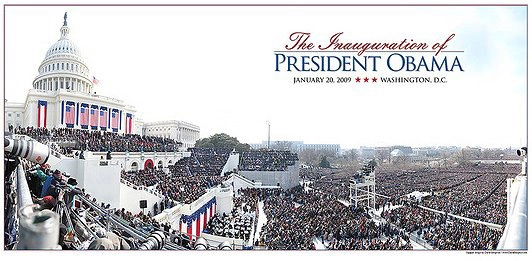
WASHINGTON? Some 30 leaders from across the U.S. military, intelligence, civil andcommercial space arenas have come together to urge U.S. President Barack Obamato address the systemic problems they say are now plaguing the entire U.S.space enterprise.
Thenonpartisan, independent Committee for U.S. Space Leadership, composed ofcurrent space industry professionals and former top military and civil spaceofficials, has concluded the U.S. space industrial work force problems, loominggaps in important space-basedcapabilities and widespread program overreach can only be remedied byincreased White House involvement.
Failure toact, the group said in a memo to the president, could result in further erosionof U.S.leadership in space. The memo, a copy of which was provided to SpaceNews, is being circulated on Capitol Hill and among White House officials.
Recentstudies such as the so-called Allard Commission chaired by former MartinMarietta chief A. Thomas Young have come to similar conclusions on U.S. spacemanagement and leadership but were focused more narrowly on nationalsecurity. The Committee for U.S. Space Leadership is more broadly focused,encompassing all U.S. space activities, said retired U.S. Air Force Lt. Gen.Michael Hamel, a member of the group and a former commander of Air Force Spaceand Missile Systems Center in Los Angeles. The committee is making broadrecommendations, avoiding the specific organizational and programmatic onesmade by previous panels.
"Ithink there's widespread recognition that we have serious issues and challengesacross the space community," Hamel said in a Feb. 19 interview."What's been a little bit different about what we've tried to advocate isalthough we have distinctive space sectors in military, civil, intelligence,commercial, the fact is these are all highly interconnected. Many of the problemswe see in one sector are paralleled in others."
Thecommittee held briefings with U.S. House and Senate staffers Feb. 9, and is nowconsidering its options for how to proceed.
The group'smemo to the president says the United States' space sectors are in worseshape today than they were a decade ago. Space provides direct, tangiblebenefits to the country, including a $250 billion annual global market, aninnovative and highly skilled work force, expanded knowledge about the Earthand solar system, and the ability to rapidly and effectively respond withmilitary force anywhere on the planet, the memo says. But these benefits werederived largely from Cold War competition with the Soviet Union, guided bypresidential involvement.
The nationtoday is at a critical point in the evolution of space as a nationalenterprise, the memo says. Space is closely linked to itemson Obama's agenda including the economy, national security, education,employment, energy and the environment.
"Justas the mastery and use of maritime and air domains helped define the course ofworld affairs and the histories of the 19th and 20th centuries, so too masteryof space will be a defining feature of the 21st century," it says.
Committeemember James Armor, a retired Air Force major general, said concerns about theerosion of U.S. space capabilities were raised during meetings of the SpacePartnership Council, which he hosted as director of the Pentagon'sNational Security Space Office. The council includes the heads of NASA,Air Force Space Command and the U.S. National Reconnaissance Office.
"Theywere starting to see the problems across the board, for example, the ability todo the systems engineering in large, complex systems acquisition," Armorsaid in a Feb. 19 interview. "They were all concerned about it.
"[TheCommittee on U.S. Space Leadership] quickly converged as a group to understandwhat was lacking was a vision and leadership from a White House level. Whenthere were stovepipe issues from each domain that cut across other domains andagencies, they just weren't getting resolved at the White House level. The Bushadministration issued what I thought was a pretty good [National Space Policy]in 2006, but there was no implementing strategy among all the departments andagencies. So a good policy is necessary, but you have to follow through with adecision-making mechanism."
Thecommittee's memo makes six key recommendations:
- Establish a White House focal point, such as a National Space Council, to set priorities, provide management oversight and coordinate decisions and actions across the departments and agencies. The council should include senior White House and cabinet-level engagement.
- Assess and mitigate potential gaps in defense, intelligence and civil space capabilities.
- Consider creating a Presidential Space Advisory Board, similar to the president's Intelligence Advisory Board, to provide independent advice and outreach to the space sectors and public.
- Revise national space policy to establish a strategic direction and clear priorities, and align space programs to achieve broader national objectives.
- Devise a strategy to achieve these space policy goals by the end of 2009.
- Assign priority to the nation's space program by linking space activities to the president's broader priorities.
- New Video - Fragmentation: The Expanding Danger of Space Debris
- Mars Rover Technology Yields Mega-Photo of Obama Inauguration
- Video - NASA's Constellation Journey Begins: Part 1, Part 2