





Thisstory was updated at 12:44 p.m. EST.
NASA haslaunched seven shuttle missions since the loss of seven astronauts aboard Columbia five years ago today, but the disaster still resonates as the space programprepares for its most ambitious year yet since it resumed orbiter flight.
Beginningwith the Atlantis orbiter?s planned Feb. 7 launch to the International SpaceStation (ISS), NASA hopes to launch up to six shuttle flights this year — fiveof them dedicated to orbital construction. The lessons from Columbia, however,are always close by, mission managers said.
?I thinkevery day about Columbia and how that came about, and how we can preventsimilar events,? NASA?s shuttle chief Wayne Hale said this week, attributingthe accident to what Apollo astronaut Frank Borman called a ?failure ofimagination.?
Legacyof Columbia
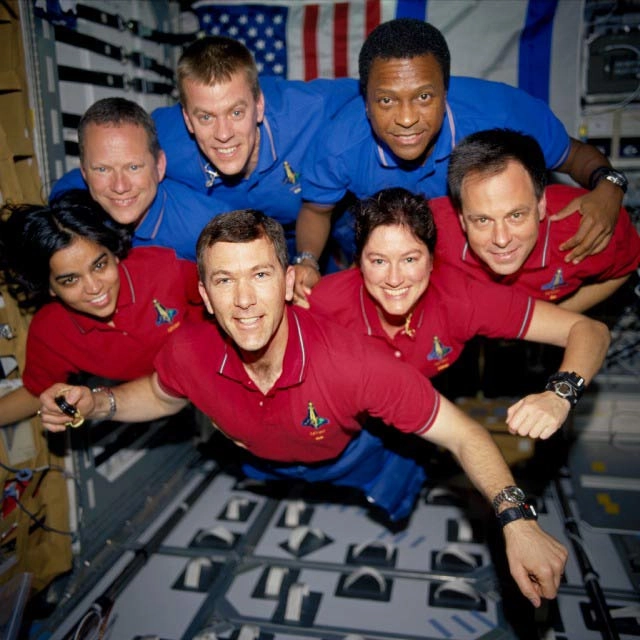
Columbia broke apart whilereentering the Earth?s atmosphere one early Saturday morning on Feb. 1, 2003,bringing to a tragic end what had until then been a successful 16-day sciencemission. The shuttle?s destruction claimed the lives of mission commander RickHusband, pilot Willie McCool and mission specialists Michael Anderson, KalpanaChawla, David Brown, Laurel Clark and Ilan Ramon — Israel?s first astronaut.
Monthslater, investigators would trace the physical cause of the accident to asuitcase-sized chunk of foam that popped free from Columbia?s external fueltank during its Jan. 16, 2003 launch. The foam punched a hole in the orbiter?sheat shield along its left wing leading edge, leaving it vulnerable to thesuperheated atmospheric gases during landing.
Butinvestigators also faulted NASA?s internal culture for contributing theaccident, a point the space agency has worked hard ever since to prevent fromresurfacing.
?I think wehad a culture that was very adversarial in a lot of ways, where bad news wasnot particularly well received,? Hale told SPACE.com, adding that theagency has since strived to foster more open communications. ?I think that hasallowed a lot of the workforce to feel much more comfortable in bringing thingsforward that they would have been more hesitant to in the old days.?
NASA heldan official Day of Remembrance on Thursday to recallColumbia?s crew, as well as astronauts killed in the Challenger accident in1986, the 1967 Apollo 1 fire and others who died in the pursuit ofspace exploration. Astronauts, agency officials, dignitaries and Columbia crew family members gathered today at a public memorial service at the KennedySpace Center Visitor?s Center in Cape Canaveral, Fla. ?
?I?m amazedthat it?s been five years,? said Evelyn Husband-Thomas, the widow of Columbia?s commander, during the service. ?This morning I could not stop thinking aboutRick and Willie, and Kalpana and Mike and Laurel and Ilan. All of our familieswent through so much that day. We so miss them and we will never forget them.?
NASA chiefMichael Griffin stressed that the agency must always remember that human lives,and the nation?s space program, ride on its daily decisions.
?The more we remember those real reasons, the longer it willbe before we have another cause for mourning,? Griffin said in a statement.
Returningto flight
NASAreturned its shuttle fleet to flight in July 2005 after spending more than twoyears and $1.4 billion to develop new heat shield inspection and safety tools.That year, the agency flew one shuttle flight and followed with three more2006, and another three in 2007.
Formerastronaut Eileen Collins, who commanded NASA?s first post-Columbia mission STS-114,said the accident taught her that spaceflight is more dangerous and complicatedthan she realized. But it did not damper her support for the endeavor, shesaid.
?I believethat one of the most important things that we?re doing as a country, if not themost important thing, is leaving our planet and exploring space,? Collins said.
Astronautsnow use a sensor-tipped extension of their shuttle?s robotic arm to scan forheat shield damage in orbit. Before a shuttle docks at the ISS, stationastronauts make a complete photographic survey of its heat shield, then returnthe images to Earth for analysis. Meanwhile, engineers continueto develop new tools, some of which will be tested during shuttle flightsthis year, while tweaking orbiter fuel tanks to reduce the risk of foam debrislike that which struck down Columbia.
?Thereseems to be a lean towards excessive caution,? said John Logsdon, director ofthe Space Policy Institute at George Washington University, in an interview.
Logsdonsaid that, unlike its post-Challenger years, NASA has not slid back into acomplacency or comfort zone during the last five years of shuttle flight.
The factthat the agency delayed Atlantis? launch from early December to next week toidentify and fix a recurringfuel gauge sensor glitch is an example of its reinvigorated approach tosafety, Logsdon said.
?They weretempted to say these sensors weren?t needed, but they didn?t,? Logsdon said of thesensors, which serve as a backup system to shut down an orbiter?s main enginesbefore their fuel tank runs dry.
Logsdonsaid much of the shuttle?s success since Columbia lies with top NASA leaderslike Griffin and Hale, who have demonstrated a scrupulous and strong commitmentto safety.
Theirsuccessors, he hopes, will continue that track record as NASA retires its threeremaining space shuttles to make way for their capsule-based successor — theOrion Crew Exploration Vehicle and its Ares rockets.
?Some day,historians will look back at our hardware and our technology an consider itprimitive and risky, just as well look back at the early sailing ships andshake our head,? said William Gerstenmaier, head of NASA space operations,during today?s memorial, adding that those early explorers accomplished amazingfeats. ?We do not fully know what our efforts in space will enable for futuregeneration. But if we carefully and creatively apply our technology and acceptsome risk, the benefits to future generations are unlimited.?
NASA plansto retire the shuttle fleet by September 2010 after flying up to 13 moreshuttle flights to complete station construction and overhaul the Hubble SpaceTelescope.
?I thinkyou can carry attitudes over,? Logsdon said of the shift to a new spacecraft.?And that new system is designed to be a much safer system.?
- VIDEO: Columbia's Crew: In Their Own Words
- GALLERY: Columbia's STS-107 Shuttle Crew
- VIDEO: NASA's Apollo 1 Tragedy
