





CAPECANAVERAL, Fla. - NASA's planned launch of the space shuttle Discovery issuffering an extended delay, with engineers still puzzled over a fuel sensorglitch that scrubbed an attempted space shot two days ago.
"Right nowwe are on a day-by-day basis until we find and fix the problem," said WayneHale, NASA's deputy shuttle program manager, adding that once a fix is made,Discovery could launch four days later. "What is that date going to be? I don'tknow."
NASA hadhoped to launch Discovery and its STS-114 astronaut crew on July 13 after a twoand a half year hiatus from shuttle flight that followed the 2003 Columbia disaster that destroyed one orbiter and killed seven astronauts. The mission,designed to test new tools and techniques for shuttle flight safety, couldlaunch by late next week, but only if engineers are able to not only isolatethe anomaly, but fix it fast.
"That wouldrequire a very near-term, lucky find," Hale said during a press briefing hereat NASA's Kennedy Space Center (KSC). "But we are not in any sense of the wordpessimistic about making the July [launch] window. We are here for theduration."
NASA hasuntil July 31 to launch Discovery if it is to make the current launch windowunder shuttle flight restrictions. Clear, daylight views of Discovery's launch,external tank separation and docking at the International Space Station (ISS) arerequired to track any debris or damage to the orbiter's thermal protectionsystem. To get those views, NASA must launch the orbiter by the end of themonth or wait until the next launch window for those conditions, which opens onSept. 9.
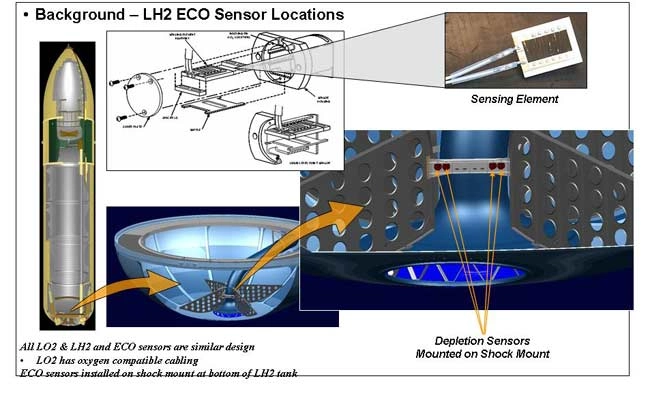
Flightcontrollers scrubbedDiscovery's July 13 launch after a fuel level sensor inside the orbiter'sexternal tank failed a standard countdown test. The sensor, one of four used tomeasure liquid hydrogen fuel levels inside the external tank, tracks propellantduring launch to make sure Discovery's main engines shut down before the tankruns dry. If the sensors don't perform properly during launch - reporting afull status when the tank is dry, or an empty status when fuel still remains -it could spell disaster for the shuttle and its crew.
Engineersaren't sure whether the faulty sensor readings detected during the July 13countdown are the result of a bad sensor, wiring problems or the complicatedelectronics box inside Discovery that processes the sensor readings. If theproblem is with the box, NASA does have a spare, but that unit has voltageissues and it could take anywhere between 10 days and three weeks to build anew one, shuttle officials said earlier this week.
Twelveteams of engineers are working through the weekend to try and pin down the fuelsensor anomaly.
"We need toknow that the problem doesn't have implications for more sensors," said JohnMuratore, manager of space shuttle systems and engineering at KSC, adding thatengineers must tread softly inside Discovery. "Every time we go into the shipto do something, there's...the risk of damaging something we can't repair."
The sensorproblem has come up before, on a different external tank, which shuttleengineers mated to Discovery and later filled with fuel during an April tankingtest. But after wiring and electronics box adjustments, and a second tankingtest that showed no sensor glitches, the matter was deemed an "unexplainedanomaly."
Now, Halesaid, shuttle engineers will do as much as possible to understand the currentproblem before they consider flying with it unresolved.
"We're offto try to find this problem and solve it, not fly with some unexplainedsituation," he added.
- Fixing NASA: Complete Coverage of Space Shuttle Return to Flight
