A massive coronal hole has formed in the sun's atmosphere, unleashing a powerful stream of solar wind toward Earth. Nearby, a second, slightly smaller coronal hole is also directing solar wind our way.
There is a great chance of strong northern lights, especially at high latitudes this weekend. Recent solar activity has prompted the U.S. National Oceanic and Atmospheric Administration's (NOAA) Space Weather Prediction Center to issue a minor G1 geomagnetic storm warning for Jan. 4 and Jan. 5.
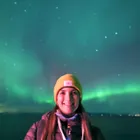
While geomagnetic storm watches of this level are not uncommon, it's not something to ignore. A recent uptick in geomagnetic activity produced stunning northern lights displays that reached deep into mid-latitudes over New Year's. Aurora chasers at high latitudes may be in for another spectacular treat. Make sure those camera batteries are charged!
For an up-to-date breakdown of geomagnetic activity over the next 3 days, check out NOAA's SWPC 3-day forecast. NOAA classifies geomagnetic storms using a G-scale, which ranks their intensity from G1 (minor) to G5 (extreme). The recent geomagnetic storm watch NOAA issued is rated as a G1.
Coronal holes appear as dark areas in the sun's corona — the outer atmosphere — when viewed in extreme ultraviolet (EUV) and soft X-ray imagery, according to NOAA. These 'holes' appear dark because they are cooler than the surrounding material. Coronal holes allow solar wind to escape from the sun more readily, resulting in streams of relatively fast solar wind. When directed at Earth, these solar wind streams can interact with our planet's magnetic field and trigger geomagnetic storm conditions.

Though G1 conditions are predicted for the weekend, remember that space weather, much like Earth's weather, is unpredictable and difficult to forecast. Even though geomagnetic storm warnings at this level are not uncommon, they can occasionally amount to nothing.
To stay updated on space weather and know the best times and places to catch auroras, consider using a space weather app tailored to your location. One app I recommend is "My Aurora Forecast & Alerts," available on both iOS and Android. Another great tool is the "Space Weather Live" app on iOS and Android which offers more in-depth insights into current space weather conditions and their potential for aurora activity.