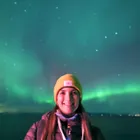
Keep up to date with northern lights forecasts, alerts and geomagnetic storm warnings with our aurora forecast live blog.
A fresh blast of solar wind is set to enhance aurora activity just in time for Valentine's Day.
If conditions are right, the northern lights could be visible as far south as northern Michigan and Maine over the coming days.
The National Oceanic and Atmospheric Administration (NOAA) has predicted G1 (minor) geomagnetic storm conditions on the evening of Thursday (Feb. 13) and high activity throughout Friday (Feb. 14), as a fast-moving solar wind stream heads for Earth. According to Spaceweather.com first contact with the solar wind stream is expected on Feb. 14, just in time for Valentine's Day.
What's driving the active aurora conditions?
This upcoming geomagnetic storm is driven by a high-speed solar wind stream flowing from a coronal hole — a vast region in the sun's atmosphere where solar wind escapes more easily. Solar wind speeds have appeared elevated throughout the week, ranging from 311 to 373 miles per second (500 to 600 kilometers per second), and in fact already sparked G1 storm conditions on Feb. 9. Another wave of speedy solar wind is expected to arrive between Feb. 12 and Feb. 13, which is what could set the stage for G1 storm conditions on Feb. 14.
When the solar wind reaches Earth's magnetic field, it brings a stream of charged particles that interact with our atmosphere. These interactions energize atmospheric gases, causing them to glow and produce the mesmerizing northern lights (aurora borealis) in the Northern Hemisphere. Faster, denser solar wind can further enhance these displays, intensifying their brightness and activity. The stronger the geomagnetic storm, the farther south the auroras can be seen.
Where and when to see the northern lights this week
The best chances for aurora sightings will be at high latitudes, including Canada, Alaska and parts of the northern U.S. If geomagnetic activity is strong enough, skywatchers in northern Michigan and Maine may get a special Valentine's Day light show. The best viewing conditions require clear, dark skies away from city lights.
Space weather is unpredictable, so keeping an eye on real-time forecasts is essential. One app I use is "My Aurora Forecast & Alerts," available for both iOS and Android. However, any similar app should work well. I also use the "Space Weather Live" app, which is available on iOS and Android, to get a deeper understanding of whether current space weather conditions are favorable for aurora sightings.
While there's no guarantee, this geomagnetic storm could make for an unforgettable Valentine's Day under the dancing auroras. Keep your eyes on the sky!