Where Can You Catch The Best Views of Comet ISON?
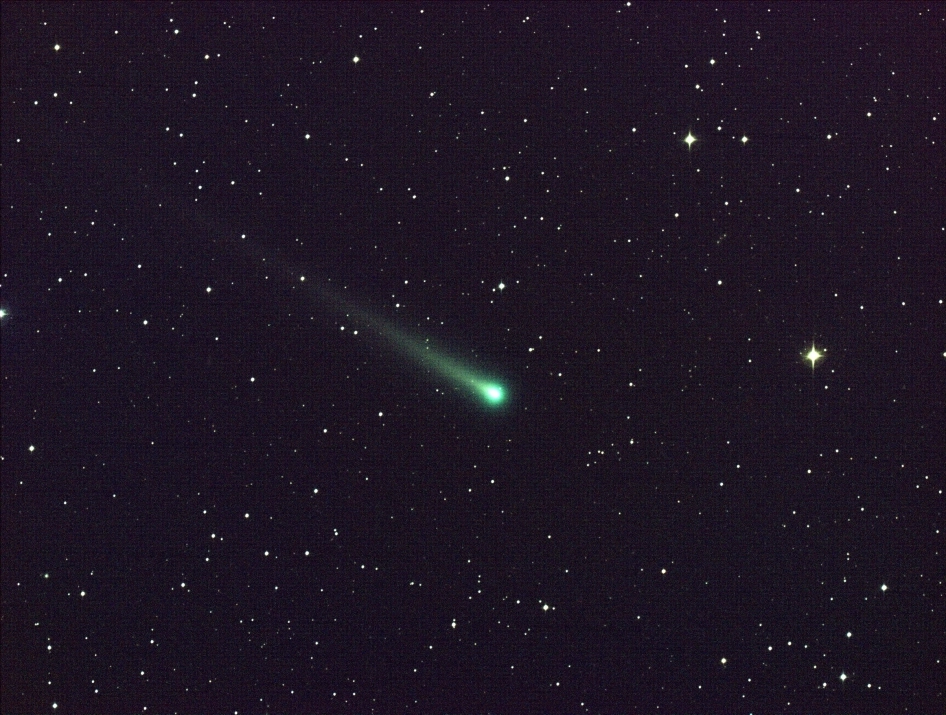
Will Comet ISON fly in the night sky, or fizzle? Astronomers are anxiously watching the comet's integrity as it gets to its closest approach with the sun, on Nov. 28. Meanwhile, observatories across the United States are gearing up to show the comet off in public telescopes — if it survives, of course.
"The best locations to view Comet ISON would be any place dark, away from artificial lights, with clear sky, lower humidity and a low eastern horizon, with no trees, buildings or mountains in the way," Zolt Levay, the imaging group lead in the office of public outreach for Baltimore's Space Telescope Science Institute, said in an e-mail to LiveScience's OurAmazingPlanet.
"The best places would likely be in the Southwest, at higher elevations," he added. "There it's more likely to be clear, the air is drier (less haze), and it's easier to get away from city lights and find an elevated location. Other locations might be beaches on the Atlantic Coast, away from city lights. This provides an unobstructed view east, although there would be more haze than at a higher, desert location." [5 Great Places To Observe Comet ISON]
Darker or lighter? Whatever you prefer
Whether your preference or place of residence is an urban or rural location, there are different spots to suit various kinds of stargazers.
Many national parks, especially in the West, boast dark skies, low humidity and a rocking view of the night sky. Great Basin National Park (in Nevada) and Bryce Canyon National Park (in Utah) are far from annoying city lights and are open for astronomy year-round. Bryce Canyon also hosts regular astronomy nights during the winter, allowing visitors to take in the night sky with an expert guide.
If using a borrowed telescope is more your style, there are a range of observatories across the country that have public viewing nights available. One of them, the Appalachian State University Dark Sky Observatory, is used by professional astronomers — meaning its skies are dark indeed, as the scientists need clear views of the sky to perform their research.
The Harvard-Smithsonian Center for Astrophysics Observatory in Cambridge, Mass., and Griffith Observatory in Los Angeles, are near city lights, but boast easy access to the cities. They also have frequent opportunities for visitors to look through telescopes to get a good look at Comet ISON.
Editor's note: This story has been updated to correct an error introduced in editing: The date of Comet ISON's closest approach to the sun, which is Nov. 28, not Nov. 22.
Follow Elizabeth Howell @howellspace. Follow OurAmazingPlanet @OAPlanet, Facebook and Google+. Original article at LiveScience's OurAmazingPlanet.